VoS NEWS DESK | INTERNATIONAL BUSINESS & TECHNOLOGY | 27 OCTOBER 2026
The announcement represents a significant workforce development for Microsoft, one of the world's largest technology companies. The business employed approximately 223,000 full-time workers at the end of June, making the voluntary exit offer one of the most extensive programmes of its kind announced by the company in recent years. However, Microsoft has not disclosed how many employees it expects to accept the offer, and the number of workers eligible to participate should not be confused with a confirmed target for job losses.
According to reports published on 26 October, the programme is available to employees at vice-president level and below who work in participating teams in the four eligible countries. Some employees in data centres, sales and marketing are excluded, while the precise eligibility requirements depend on the relevant teams and positions.
The company has described the initiative as a voluntary exit offer rather than a compulsory redundancy exercise. Eligible workers can consider leaving with financial support and resources intended to help them plan their next career move. The programme therefore differs from an announcement that a fixed number of employees will immediately lose their jobs.
Microsoft's chief people officer, Amy Coleman, informed employees about the initiative in an internal communication. The company presented the offer as a way to provide greater flexibility to people already considering opportunities outside the organisation. The announcement did not establish a specific number of departures that Microsoft intends to achieve through the scheme.
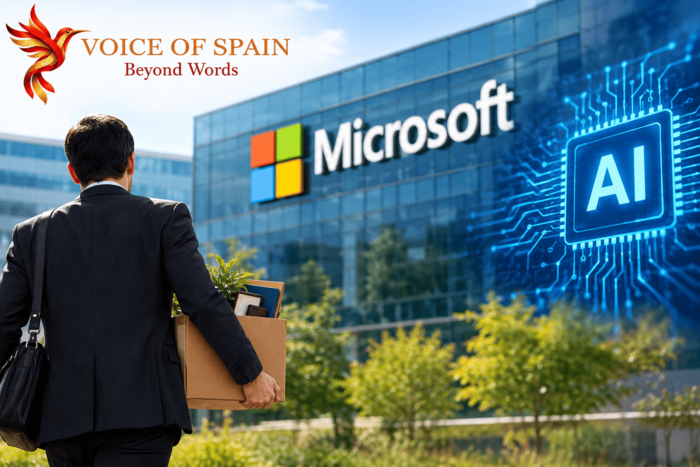
The timing is particularly significant because Microsoft is committing substantial resources to artificial intelligence. The company is investing in AI systems, computing infrastructure and data centres to support its products and services, including its Copilot tools and cloud-based offerings. These investments are part of a wider industry shift in which technology businesses are attempting to secure a competitive position in a rapidly evolving market.
Artificial intelligence has created opportunities for new products, improved productivity and expanded digital services. At the same time, the cost of developing and operating advanced AI systems has increased the pressure on technology companies to review spending, staffing structures and the allocation of resources. Microsoft's latest initiative comes against this wider background of restructuring and investment.
The voluntary exit offer also follows workforce changes earlier in 2026. Microsoft previously introduced a voluntary retirement programme for a group of eligible employees in the United States. The company subsequently announced thousands of job cuts during the summer, including changes affecting its Xbox gaming operations. The latest offer extends the opportunity to leave voluntarily to a broader group of employees across several countries.
For workers, the programme presents both an opportunity and a source of uncertainty. Employees who already intend to change careers may welcome financial assistance and the chance to make a planned transition. Others may be concerned about future opportunities within the company, particularly if AI adoption changes the skills and roles that employers prioritise.
The consequences could extend beyond Microsoft itself. The company operates across cloud computing, software development, cybersecurity, gaming and enterprise services, with teams and business partners spread throughout the global economy. Changes to its workforce may therefore attract attention from technology professionals, contractors, recruitment firms and businesses that depend on Microsoft's products and services.
The United Kingdom and India are particularly relevant to the international dimension of the announcement because employees in both markets are included in the programme. The availability of voluntary exit packages does not mean that every Microsoft employee in either country is eligible. Participation is restricted to selected teams, and the company has not published a comprehensive country-by-country breakdown of potential departures.
The announcement also raises questions about the relationship between technological progress and employment. AI tools can automate certain tasks, assist workers with complex activities and change the way organisations manage information. However, the overall effect on employment depends on how businesses introduce the technology, whether new roles are created and whether workers receive opportunities to develop relevant skills.
For policymakers and education providers, developments of this kind reinforce the importance of digital skills, technical training and professional development. Employees who can adapt to changing technologies may find new opportunities, while those in affected roles may need access to retraining and career support.
Microsoft's next steps will be closely watched by investors and employees alike. The company is expected to report its quarterly financial results later this week, providing further information about its financial performance as it continues to invest in AI. Those results may offer additional context for understanding its spending priorities, although the voluntary exit announcement alone does not establish that artificial intelligence is directly replacing all the positions covered by the offer.
The central question is how Microsoft will balance its investment in new technology with the stability and development of its workforce. The number of employees who accept the offer, the areas affected and the company's future recruitment plans will help determine the programme's longer-term significance.
VoS STRATEGIC INSIGHT
Microsoft's voluntary exit offer highlights a major challenge facing the global technology sector: how to finance rapid innovation while managing the human consequences of organisational change.
The availability of exit packages gives eligible employees a degree of choice, but it also reflects the scale of the changes taking place across the industry. Businesses are reassessing which skills they need, how teams should be organised and how much capital should be directed towards emerging technologies.
For employees, the most important priorities are access to clear information, fair financial arrangements and meaningful opportunities to develop new skills. For employers, transparent communication and responsible workforce planning will be essential to maintaining confidence during periods of transformation.
The wider lesson is that technological progress should not be measured solely by investment levels or the capabilities of new AI systems. Its long-term value will also depend on whether businesses can improve productivity, create sustainable opportunities and help workers adapt to a changing employment landscape.
Source: Associated Press (AP), Sky News and TechCrunch.