VoS NEWS DESK | INTERNATIONAL POLITICS | 28 OCTOBER 2026
Brazil has entered a sensitive political period following the presidential election, which saw Luiz Inácio Lula da Silva defeat Flávio Bolsonaro in a closely contested race. The result represents a significant setback for the Bolsonaro political movement, which had sought to return to power and reverse the direction of the current government. However, the aftermath of the vote has become increasingly contentious, with disputes over the result and legal proceedings involving the defeated candidate attracting considerable attention.
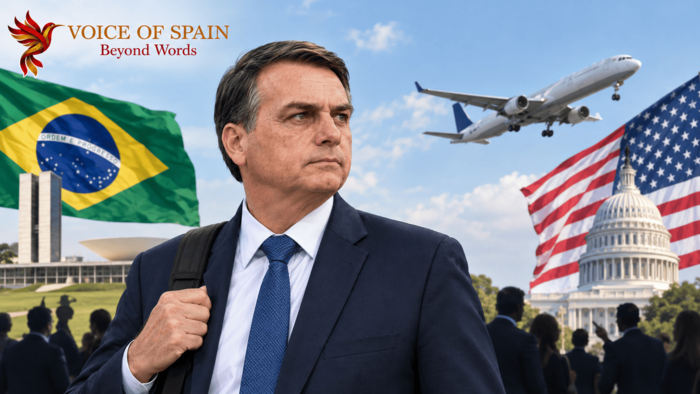
According to Reuters and other international media organisations, Flávio Bolsonaro left Brazil for the United States on Tuesday, 27 October, after refusing to comply with a Supreme Court order to surrender his passports. Multiple sources cited by news organisations reported his departure, although details about his precise whereabouts and travel arrangements were initially unclear. US officials also indicated that Washington would issue entry visas to Bolsonaro and members of his family.
The circumstances surrounding his departure are particularly significant because Brazilian authorities had reportedly restricted his international travel in connection with an ongoing investigation. Reports linked the passport order to a money-laundering probe. Bolsonaro has denied wrongdoing, and the allegations should not be treated as established criminal findings. The legal proceedings nevertheless place his political future under considerable pressure at a time when he is preparing to lead the opposition following his electoral defeat.
The election result has also exposed divisions within Brazil’s political landscape. While Bolsonaro and some of his supporters have challenged the outcome, members of his political camp have accepted the result and begun considering their next steps. The dispute illustrates the difficulties facing political movements that experience a narrow defeat while maintaining a strong support base. It also raises questions about how Brazil’s institutions will manage challenges to the election result and ensure that the transition of political authority proceeds within the constitutional framework.
Relations between Brazil and the United States may become another important aspect of the developing story. President Donald Trump has maintained political links with the Bolsonaro family, and the US administration’s decision to grant visas to Flávio Bolsonaro and his family has attracted attention in Brasília. Lula has criticised the reported departure, while the wider dispute has the potential to complicate diplomatic relations between the two largest countries in the Americas.
For Brazil, the immediate challenge is to prevent the post-election dispute from undermining public confidence in democratic institutions. The authorities must ensure that investigations proceed according to the law, that any allegations are assessed through due process and that political disagreements do not lead to further instability. At the same time, the incoming political period will require the government and opposition to address economic concerns, public services and other domestic priorities that remain central to voters’ lives.
International observers will be watching whether Bolsonaro continues to challenge the election result from abroad, how Brazilian courts respond to developments in the investigations and whether Washington’s position creates additional diplomatic friction. The coming weeks could help determine whether the dispute remains primarily a legal and political confrontation or develops into a wider issue affecting relations between Brazil and its international partners.
VoS STRATEGIC INSIGHT
Flávio Bolsonaro’s reported departure highlights the complicated relationship between electoral defeat, political accountability and the rule of law. A democratic election does not eliminate the right to challenge decisions through lawful procedures, but neither should political influence exempt individuals from judicial orders or legal scrutiny. Brazil’s institutional stability will depend on transparent investigations, respect for constitutional processes and restraint from political leaders on all sides. For the United States, managing relations with Brazil while navigating the controversy will require careful diplomacy and a clear distinction between political engagement and the independence of Brazil’s legal system.
Source: Reuters; AFP; Associated Press.