VoS NEWS DESK | EDUCATION | 5 OCTOBER 2026
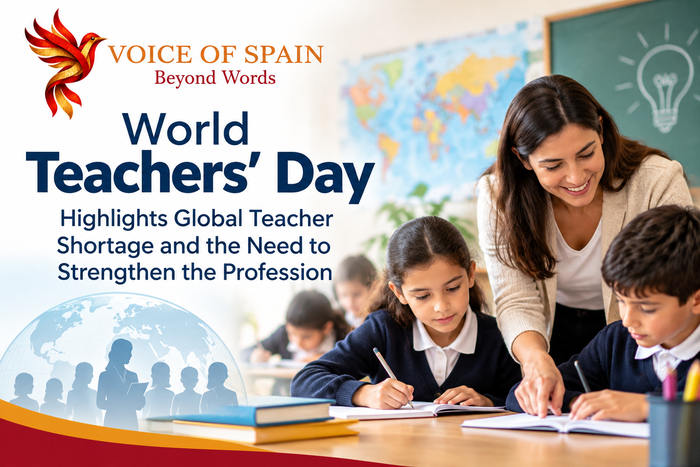
Teachers around the world are being recognised today for their central role in educating future generations, while governments and education organisations are being urged to strengthen the profession and provide educators with the support necessary to succeed.
The 2026 World Teachers’ Day theme is “Standing with teachers: 60 years of protecting the profession, advancing its status and shaping our futures.” The theme focuses on the need to protect teachers' professional, social and material status while ensuring that educators have a meaningful voice in decisions affecting education.
The anniversary provides an opportunity to examine how the teaching profession has changed since the 1966 ILO/UNESCO Recommendation established international benchmarks concerning teachers' rights and responsibilities, professional preparation, recruitment, employment and working conditions.
Six decades later, teachers are facing a new set of pressures. UNESCO has highlighted challenges connected with digital technologies, climate change, inclusion, migration and displacement, all of which are affecting education systems and the daily responsibilities of teachers.
One of the most serious concerns remains the shortage of qualified teachers. Countries in different regions are struggling to recruit and retain sufficient numbers of educators, creating pressure on schools and placing additional workloads on teachers who remain in the profession.
The shortage is not simply a question of numbers. Education systems must also consider teachers' working conditions, professional development, salaries, workload and opportunities to participate in education policy decisions.
UNESCO's 2026 message calls on governments and partners to protect, promote and elevate the status of teachers, recognising that strong education systems depend on educators who are properly prepared, supported and valued.
World Teachers’ Day is also being used to highlight examples of innovative teacher-development programmes around the world. UNESCO has selected ten finalists for the 2026 UNESCO-Hamdan Prize for Teacher Development, with initiatives from countries including India, Indonesia, Mexico, Palestine, Türkiye, Uganda, Ukraine, Ethiopia and Brunei Darussalam.
These programmes demonstrate different approaches to strengthening teaching, including multilingual education, teacher-to-teacher learning, professional development, rural education, community leadership and maintaining learning during crises.
The UNESCO-Hamdan Prize ceremony is taking place as part of the global World Teachers’ Day celebrations at UNESCO Headquarters in Paris. Three organisations will ultimately receive the 2026 prize, which recognises initiatives contributing to better teaching and learning.
The day also serves as a reminder that teachers influence far more than examination results. They help develop students' critical thinking, social skills, creativity and ability to participate in society.
As technology continues to transform classrooms, the role of teachers is also evolving. Artificial intelligence and digital learning tools can provide new opportunities, but they do not remove the need for skilled educators who can guide students, evaluate information and create supportive learning environments.
UNESCO has therefore emphasised that the future of education requires investment in the people who deliver it. Improving teacher preparation, professional development and working conditions can help education systems become more resilient and inclusive.
The 2026 observance also comes at a time when education systems in many countries are dealing with rapid technological change, demographic pressures and disruptions caused by conflict and displacement.
For millions of students, teachers remain the most important link between educational policy and what happens inside the classroom. Ensuring that they have adequate resources and professional support is therefore essential to improving learning outcomes.
VoS STRATEGIC INSIGHT
World Teachers’ Day 2026 highlights a fundamental issue facing education worldwide: there can be no strong education system without a strong teaching profession.
The global teacher shortage requires long-term solutions rather than temporary recruitment drives. Governments need to make teaching an attractive and sustainable career by improving working conditions, professional development, career opportunities and teachers' participation in decision-making.
The increasing use of technology and artificial intelligence makes this even more important. Teachers will increasingly need opportunities to develop new digital skills while retaining the professional autonomy required to decide how technology should be used in classrooms.
The 60th anniversary of the 1966 ILO/UNESCO Recommendation therefore provides more than an opportunity to celebrate teachers. It is also a moment for governments and societies to reconsider how educators are recruited, trained, supported and valued.
If countries succeed in strengthening the teaching profession, the benefits will extend beyond classrooms — supporting stronger education systems, better learning opportunities and more resilient societies for future generations.
Source: UNESCO / International Labour Organization / Education International.