VoS NEWS DESK | MIDDLE EAST & HUMAN RIGHTS | 17 OCTOBER 2026
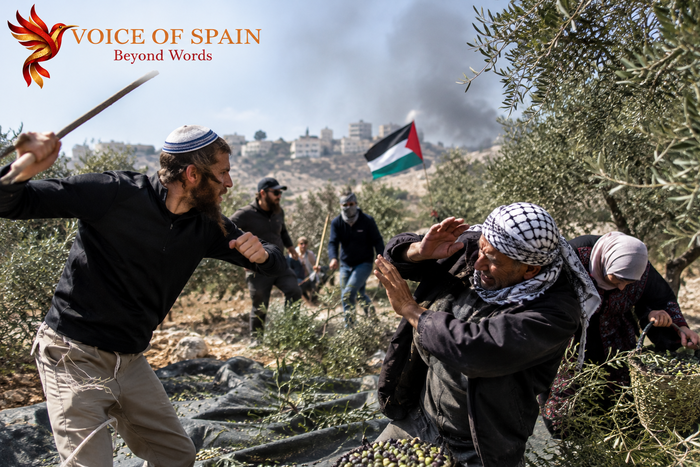
The latest incidents occurred in and around the West Bank village of Abu Falah, where dozens of masked settlers reportedly attacked Palestinians gathering olives and a group of journalists. According to Reuters, approximately 80 settlers took part in the assault, throwing stones, burning olive trees and injuring at least two people, including Washington Post photojournalist Heidi Levine.
Levine sustained serious injuries, including a broken rib, lacerations and a significant hand injury that required surgery. Her injuries have drawn further attention to the dangers faced by journalists reporting on violence in the occupied Palestinian territory. The incident also raises questions about the protection of civilians and media workers during confrontations involving settlers and Palestinian communities.
The olive harvest is one of the most important agricultural seasons for Palestinian families. Olive oil production provides income for farmers, supports local businesses and contributes to household livelihoods in communities across the West Bank. For many families, olive groves have been maintained across generations, giving the harvest economic, cultural and emotional significance.
Attacks on farmers can therefore have consequences extending beyond immediate physical injuries. When trees are burned, crops are stolen or access to farmland is obstructed, families may lose income that supports them throughout the year. Damage to mature olive trees can also affect production for several seasons, making recovery difficult for small-scale agricultural households.
The latest attack forms part of a broader pattern of reported violence during the 2026 olive harvest. Palestinian officials and international news organisations have documented incidents involving assaults on farmers, destruction of trees, theft of produce and restrictions on access to agricultural land. The Reuters report cited at least 170 settler attacks since late September, reflecting the scale of concern during the harvest period.
According to accounts of the Abu Falah incident, Israeli military personnel arrived during the violence and used tear gas and warning shots, while the assault continued. Israeli officials have said the incident is under investigation. The circumstances surrounding the response by security personnel, including whether sufficient steps were taken to protect those under attack, are likely to remain a focus of scrutiny.
The United States State Department expressed concern over the violence and offered consular assistance following the injuries to the American journalist. The incident has reinforced calls for accountability and for measures to protect civilians and media workers in areas where violence is reported.
The West Bank has experienced repeated tensions linked to settlement expansion, land access and competing claims over territory. The international community generally considers Israeli settlements in occupied Palestinian territory illegal under international law, while Israel disputes aspects of this legal position. These unresolved disagreements remain central to the wider conflict and complicate efforts to achieve a lasting political settlement.
For Palestinian farmers, the immediate priority is often more practical: reaching their land safely, harvesting their crops and protecting their families. Where farmers fear violence or are unable to access their groves, agricultural production suffers and local communities face further economic uncertainty.
The attacks also raise questions about the responsibilities of authorities to investigate alleged offences and ensure that those responsible are held accountable. Credible investigations, effective protection for vulnerable communities and consistent enforcement of the law are important for preventing further violence and restoring confidence in public security arrangements.
International attention is likely to remain focused on whether the latest incidents lead to meaningful action. Statements of concern may increase diplomatic pressure, but lasting improvements will require effective protection on the ground, transparent investigations and safeguards that allow Palestinian civilians to carry out ordinary activities without fear of attack.
VoS STRATEGIC INSIGHT
The violence surrounding the olive harvest demonstrates how the Israeli-Palestinian conflict affects civilian life beyond major military confrontations. Damage to agricultural land and attacks on farmers threaten household incomes, undermine community security and deepen distrust between populations living in the same territory.
The safety of journalists is equally important. Independent reporting helps document events, enables the public to understand developments and allows allegations of wrongdoing to be examined. Attacks on media workers can restrict access to information and make it more difficult to establish what happened.
A credible response requires more than condemnation. Authorities must investigate reported attacks, protect civilians and journalists, and ensure that legal accountability applies consistently. Protecting farmland and enabling farmers to harvest their crops safely are also practical measures that can reduce economic harm.
Ultimately, the olive harvest should be a season of work and community life rather than fear. Preventing further violence will require sustained attention to civilian protection, respect for international law and concrete action to address the conditions that allow repeated attacks to occur.
Source: Reuters — Israeli settlers burn olive trees, injure journalist in West Bank attack · The Washington Post — Israeli settlers attack Palestinians and photographer in the West Bank