VoS NEWS DESK | INTERNATIONAL DEFENCE | 9 OCTOBER 2026
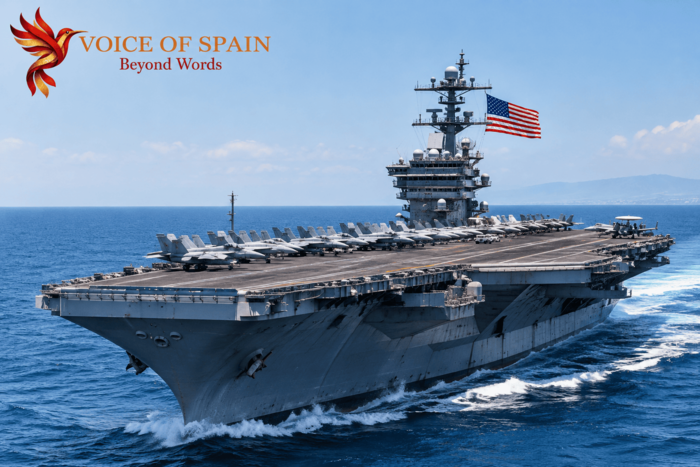
The USS Abraham Lincoln is one of the United States Navy’s nuclear-powered aircraft carriers and serves as a major component of American maritime power. Carriers of this class are designed to operate far from the United States, providing a mobile platform for combat aircraft, surveillance operations, maritime security and a range of military missions. Their ability to remain deployed for extended periods allows Washington to maintain a military presence in strategically important regions without relying exclusively on land-based facilities.
The carrier’s return to San Diego follows a deployment lasting more than 300 days, an extended period that underlines the scale of operational commitments facing the US Navy. Long deployments require sustained coordination between ships, aircraft, maintenance teams, logistics personnel and military command structures. They also place considerable demands on sailors, who must remain prepared for rapidly changing circumstances while spending months away from their homes and families.
The USS Abraham Lincoln’s deployment has attracted particular interest because of the broader security environment in which American naval forces have been operating. Tensions across the Middle East, the protection of international shipping routes and the need to maintain a credible military presence have made aircraft carriers important instruments of US foreign and defence policy.
Aircraft carriers offer military commanders considerable operational flexibility. Unlike permanent military bases, which are tied to particular locations and may require complex diplomatic arrangements, a carrier strike group can move across international waters and reposition in response to emerging developments. Its presence can support surveillance, deter potential adversaries, protect maritime interests and provide a platform for air operations when authorised.
A carrier strike group typically operates alongside guided-missile destroyers and other supporting vessels, with additional assistance from replenishment ships, submarines and land-based logistical networks. Together, these capabilities allow the group to operate over long distances while maintaining defensive protection and supporting a broad range of naval missions.
The return of the Abraham Lincoln also highlights the importance of naval deployments during periods of regional instability. When tensions rise, governments frequently use the movement and positioning of military vessels to demonstrate readiness, reassure partners and signal that they retain the ability to respond to a potential crisis. Such movements can carry diplomatic significance even when no military engagement takes place.
However, an extended deployment should not automatically be interpreted as evidence that a new conflict is imminent. Aircraft carriers are used for a variety of purposes, including routine presence missions, training, deterrence, maritime security and crisis response. Their movements must therefore be considered alongside official statements, operational announcements and the wider diplomatic situation.
For the sailors returning to California, the end of such a long deployment marks the conclusion of months of demanding work at sea. Carrier operations involve continuous flight-deck activity, aircraft maintenance, navigation, engineering, communications and security responsibilities. These tasks must be carried out under strict procedures, often in challenging weather conditions and during periods of heightened operational alert.
The human cost of prolonged deployments is another important aspect of the story. Time away from family life can place pressure on service members and their relatives, particularly when deployment schedules change or operational requirements prevent sailors from returning home as expected. A carrier’s return therefore represents more than a military development; it is also a significant event for the communities and families connected to the ship.
At the institutional level, the conclusion of a lengthy deployment gives naval planners an opportunity to assess equipment, personnel readiness and maintenance requirements. Aircraft carriers are complex platforms that require extensive technical support. Before another major deployment, a ship may need maintenance, inspections, training and the replenishment of essential supplies. The precise schedule depends on its condition, operational priorities and the Navy’s wider deployment requirements.
The return also raises questions about the long-term sustainability of maintaining a strong naval presence across several regions simultaneously. The United States has global security commitments involving Europe, the Indo-Pacific, the Middle East and other maritime areas. Each commitment requires a combination of ships, aircraft, personnel, maintenance capacity and logistical support.
Keeping aircraft carriers deployed for extended periods can help meet immediate strategic requirements, but it can also create challenges for fleet readiness. Ships need maintenance, sailors require recovery time and aircraft must undergo inspections and repairs. If operational demands remain high for prolonged periods, naval planners must balance the need for a visible presence abroad against the requirement to prepare forces for future missions.
The wider international implications depend on how American naval deployments evolve in the coming months. A carrier returning to its home port does not, by itself, establish whether another vessel will replace it in the region or whether the United States intends to reduce its military presence. Those questions depend on official deployment decisions, regional developments and the priorities of American defence leadership.
For international observers, the development offers an opportunity to examine the relationship between military readiness and diplomatic strategy. Naval power can provide governments with options during a crisis, but its effectiveness also depends on communication, coordination with allies and the availability of credible diplomatic channels. Military positioning may influence negotiations, yet it cannot independently resolve the political disputes that produce international instability.
As the United States continues to manage competing security priorities, the experience of the USS Abraham Lincoln illustrates the operational demands of maintaining a global naval presence. Its return to San Diego marks the end of a substantial period at sea, while the questions surrounding fleet readiness, personnel welfare and future deployments remain central to the wider discussion about American maritime strategy.
VoS STRATEGIC INSIGHT
The return of the USS Abraham Lincoln after more than 300 days at sea demonstrates both the reach and the limitations of modern naval power. Aircraft carriers allow the United States to project military capability across great distances, respond to crises and signal its commitment to regional security. However, their effectiveness depends on sustainable deployment schedules, properly maintained equipment, trained personnel and reliable logistical support.
The strategic challenge for Washington is to preserve deterrence without placing excessive pressure on its fleet or the personnel who operate it. Extended deployments may provide short-term flexibility, but long-term readiness requires a balance between forward military presence and sufficient time for maintenance, training and recovery.
The development also illustrates why naval movements should be assessed within their wider diplomatic context. A carrier’s return does not necessarily indicate either escalation or de-escalation. Its significance will depend on subsequent deployments, the security situation in key maritime regions and the decisions made by US defence officials. Ultimately, a credible maritime strategy requires not only military strength but also careful diplomacy and a sustainable approach to global commitments.
Source: US Navy | US Department of Defense | Reuters | Associated Press