VoS NEWS DESK | INTERNATIONAL | 23 October 2026
Election administration is one of the most politically sensitive responsibilities in the United States. Although federal law establishes important requirements for federal elections, individual states retain substantial authority over practical arrangements, including voter registration systems, polling procedures, ballot administration and the counting of votes. Local election officials also play a significant role in ensuring that voting takes place according to applicable laws and established procedures.
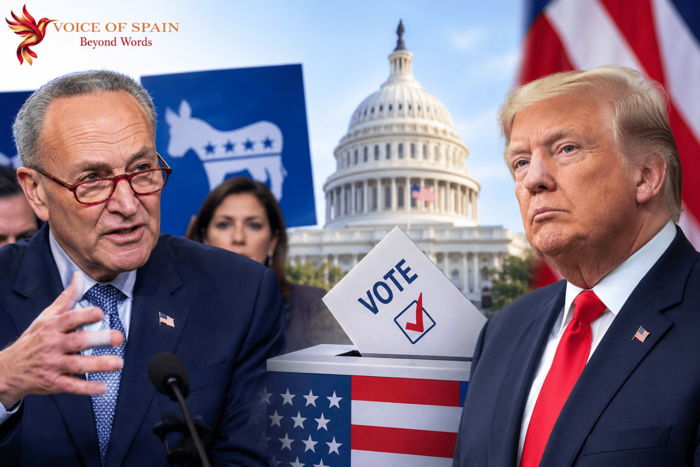
The legal challenge against the Trump administration reflects wider disagreements over the limits of presidential authority and the independence of state election systems. Democrats argue that attempts to impose federal control must be examined against constitutional protections and existing election laws. The administration's reported proposals have therefore become part of a broader national debate over how electoral responsibilities should be divided between federal and state authorities.
The dispute is particularly significant because the United States is preparing for its November 2026 midterm elections. These elections will determine control of seats in the House of Representatives and the Senate, making election administration a major political issue. The outcome will influence the balance of power in Congress and could affect the administration's ability to advance its domestic legislative agenda.
The lawsuit reportedly argues that federal officials have sought to pressure state authorities to remove people from voter registration lists, question the eligibility of certain voters and restrict the counting of some ballots. Democratic organisations contend that these actions could interfere with lawful voting procedures and create uncertainty among voters and election officials. They are asking the federal courts to intervene and prevent what they describe as unlawful interference in state-administered elections.
The Justice Department, meanwhile, maintains that its actions are intended to uphold federal election law and protect the integrity of the electoral system. The administration's position centres on ensuring that only eligible citizens vote and that election rules are properly enforced. The disagreement therefore involves competing arguments about election security, federal enforcement powers and the responsibilities of state governments.
The legal dispute also raises questions about the reliability of information used to identify potentially ineligible voters. Election officials must distinguish between genuine cases of ineligibility and errors in registration records, particularly when large numbers of voters are involved. Incorrectly identifying eligible citizens could create administrative complications and undermine public confidence, while inadequate verification could also weaken confidence in the accuracy of voter registration systems.
The timing of the case makes it especially important. With the midterm elections approaching, state and local officials must prepare polling stations, verify registration records, organise postal voting and ensure that ballots are handled in accordance with the law. A major legal ruling could influence how these responsibilities are carried out and clarify the limits of federal intervention.
Beyond the immediate dispute, the case highlights a longstanding feature of American democracy: election administration is shared across different levels of government, with states retaining substantial responsibilities under the existing legal framework. Changes to this arrangement can have far-reaching implications for political competition, voting access and the public's trust in democratic institutions.
The proceedings may also become an important test of the balance between executive authority and the independence of state election officials. The court will need to consider the legal basis for the challenged actions, the evidence presented by both sides and the extent to which the measures comply with federal law and constitutional principles.
VoS STRATEGIC INSIGHT
The dispute over federal control of elections demonstrates how questions of electoral integrity can become a wider constitutional and political confrontation. Ensuring that elections are secure is important, but measures intended to protect voting systems must also comply with the law and safeguard eligible voters' rights. The court's response could have implications beyond the immediate midterm elections, particularly for the relationship between the federal government and the states. Public confidence will depend on transparent procedures, reliable voter records, clear legal standards and the fair treatment of voters regardless of their political preferences.
Source: Associated Press — Democrats sue to block Trump administration from usurping states' authority to administer elections; ABC News — Democrats sue Trump administration over alleged election pressure campaign.