VoS NEWS DESK | EDUCATION | 4 OCTOBER 2026
Education systems around the world are facing growing pressure to prepare students for challenges that extend beyond examinations. Young people need academic knowledge, but they also require communication skills, decision-making abilities, awareness of their rights and responsibilities and the confidence to deal with difficult situations.
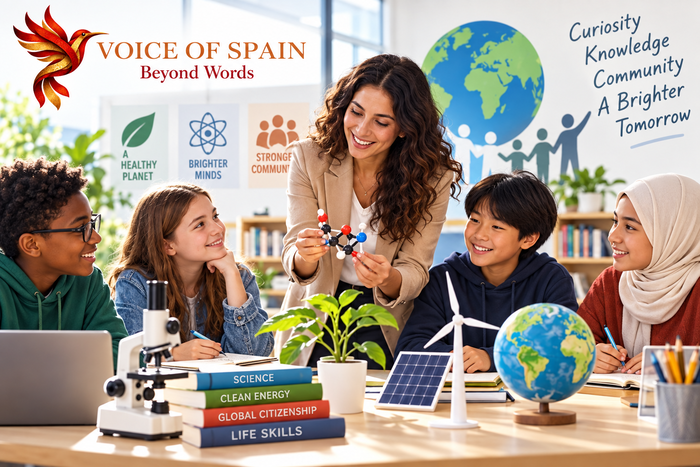
UNESCO's latest education focus includes teachers in Zambia who are integrating Life Skills and Health Education into classroom subjects. The approach seeks to make lessons more relevant to students' everyday experiences.
Teachers are using classroom discussions and practical activities to help students understand issues including health, relationships, social responsibility, child marriage, substance abuse and gender-based violence.
The approach reflects a broader change in the way education is viewed. Schools are increasingly expected not only to transfer information but also to help students understand how knowledge can be applied in everyday life.
Science subjects can provide particularly useful opportunities for this approach. Chemistry and biology can be connected with health, nutrition, environmental protection and personal safety, while civic education can help students understand their communities, rights and responsibilities.
Teachers are therefore increasingly expected to perform several roles at the same time. They remain responsible for academic learning, but they may also act as mentors, advisers and trusted adults who help students understand difficult social issues.
UNESCO's emphasis comes ahead of World Teachers' Day, which provides an opportunity to recognise the contribution of educators around the world.
Teachers are central to the quality of education because even the best-designed curriculum cannot succeed without educators who are properly trained, supported and equipped to deliver it.
The international education community has repeatedly highlighted the need to strengthen the teaching profession. Recruitment, training, working conditions and professional development all affect the ability of teachers to provide effective education.
Another important issue is the growing gap between traditional classroom learning and the skills required in modern society. Students are entering a world shaped by digital technology, artificial intelligence, climate change, economic uncertainty and rapidly changing employment patterns.
This makes adaptable learning increasingly important.
Schools must help students understand information, evaluate sources, communicate effectively and make responsible decisions. These abilities can be useful regardless of the career a student eventually chooses.
UNESCO's focus also highlights the importance of creating safe classroom environments. Students are more likely to discuss sensitive issues when they feel respected and protected.
Teachers consequently require appropriate training to manage difficult discussions and provide students with reliable information.
The education sector also faces the challenge of ensuring that life-skills education does not replace core academic learning. Instead, the two areas can complement each other, allowing students to understand how academic knowledge connects with everyday decisions.
World Teachers' Day therefore provides an opportunity not only to celebrate educators but also to consider the conditions in which they work.
VoS STRATEGIC INSIGHT
The development of practical, life-oriented education reflects an important shift in the global education debate. Academic achievement remains essential, but knowledge becomes more valuable when students can apply it to real situations.
Teachers are at the centre of this transformation. A well-supported teacher can turn a science lesson into an opportunity to discuss health and the environment, or transform civic education into a practical understanding of responsibility and community participation.
For education systems, the long-term challenge will be finding the right balance between examination performance, academic knowledge and practical life skills.
As technology continues to change the workplace and society, students will need more than the ability to memorise information. They will need to think, communicate, adapt, solve problems and make informed decisions.
Source: UNESCO; UNESCO World Teachers' Day materials; education-sector statements.