VoS NEWS DESK | EDUCATION | 22 OCTOBER 2026
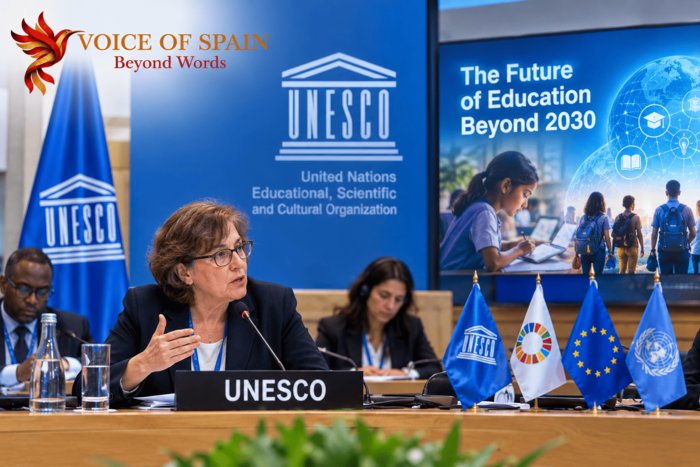
As the 2030 deadline for the Sustainable Development Goals approaches, UNESCO is encouraging governments, educators, researchers and international organisations to consider how education systems should evolve to meet future challenges. The discussions extend beyond school enrolment and academic achievement, examining how education can prepare learners to respond to environmental pressures, technological change, social inequality and increasingly complex global problems.
One important area of this work is Education for Sustainable Development (ESD). UNESCO has highlighted the need to ensure that sustainability remains central to education policy and classroom learning after 2030. The approach seeks to equip learners with the knowledge, practical skills and critical thinking required to make informed decisions and contribute to more sustainable societies.
In September 2026, UNESCO and its partners brought together experts and practitioners for a Global Expert Symposium on Education for Sustainable Development Beyond 2030 in Munich, Germany. Discussions explored how education can remain relevant in a world facing environmental, economic, technological and social changes. Participants considered the importance of long-term planning, cooperation between different sectors and the involvement of communities in shaping future learning priorities.
The discussions also emphasised that education for sustainability should not be limited to environmental awareness. It connects environmental protection with economic development, human rights, peace, social justice and global citizenship. This broader perspective recognises that learners need to understand how decisions in one area can affect communities and societies in other ways.
UNESCO has also been preparing for the World Conference on Education for Sustainable Development, scheduled to take place in Nairobi, Kenya, in January 2027. The conference is expected to contribute to ongoing international discussions about strengthening sustainability education and establishing priorities for the years beyond 2030. The outcomes of earlier consultations, including the Munich symposium, are intended to inform this wider process.
Another significant milestone took place in July 2026, when UNESCO hosted the Transforming Education Summit +4 at its headquarters in Paris. The meeting brought together international leaders, ministers, young people and representatives from education organisations to review progress towards Sustainable Development Goal 4, which calls for inclusive, equitable and quality education for all.
The summit addressed several key areas, including digital transformation, greener education systems, teacher development, skills training and learning in crisis situations. Participants highlighted the need for sustainable education financing and stronger support for teachers and students. They also stressed that access to education must be accompanied by efforts to improve the quality, relevance and inclusiveness of learning.
Young people are expected to play an important role in shaping the future education agenda. UNESCO's consultations have included students and youth representatives, recognising that those who will experience the consequences of future education policies should have opportunities to contribute to their design. Their participation can help policymakers better understand the skills, learning environments and support systems young people need.
The challenges facing education systems vary considerably across countries. Some struggle with shortages of teachers, classrooms and learning materials, while others face questions about the responsible use of artificial intelligence, digital access and the changing requirements of the labour market. Conflict, displacement, poverty and climate-related emergencies can also interrupt learning and widen existing inequalities.
For this reason, the post-2030 education agenda will need to accommodate different national circumstances while maintaining shared international objectives. Cooperation between governments, schools, universities, communities and international institutions will be important in developing policies that are practical, inclusive and adaptable.
UNESCO's continuing work reflects a broader recognition that education is not simply a means of acquiring qualifications. It can also help societies strengthen resilience, encourage peaceful cooperation and prepare people to participate responsibly in economic and civic life. The challenge for the international community is to translate these principles into accessible, adequately funded and effective education programmes.
VoS STRATEGIC INSIGHT
The future of global education will depend on whether countries can turn international commitments into measurable improvements in classrooms and communities. Investment in teachers, equitable access to digital learning, sustainable education financing and meaningful youth participation will be essential. Beyond 2030, successful education policies must prepare learners not only for employment, but also for responsible citizenship and the ability to respond to environmental and social challenges.
Sources: