VoS NEWS DESK | DIPLOMATIC MISSION | 6 OCTOBER 2026
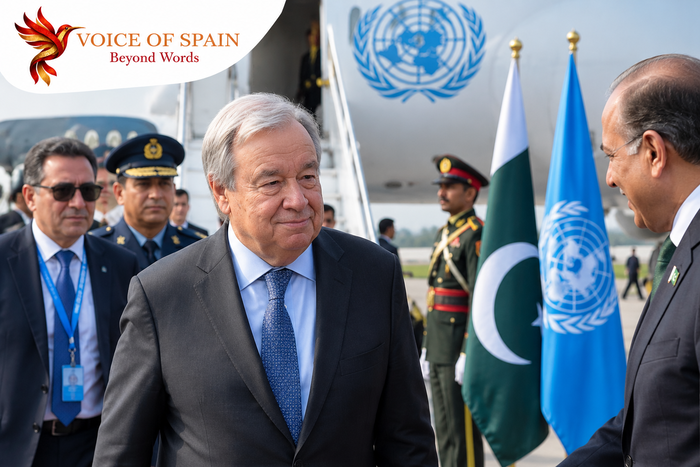
Guterres arrived in Islamabad on Monday and is scheduled to hold meetings with senior Pakistani officials during his stay. His visit comes as the United Nations continues to engage with countries across Asia and the Middle East over conflicts, humanitarian challenges and growing geopolitical tensions.
The UN Secretary-General's programme includes high-level meetings with President Asif Ali Zardari and Prime Minister Shehbaz Sharif, alongside discussions with other senior government representatives. The talks are expected to cover Pakistan's regional diplomatic role and its relationship with the United Nations.
One of the most important issues surrounding the visit is Pakistan's potential role in US-Iran diplomatic efforts. Islamabad has previously offered to facilitate communication between Washington and Tehran, particularly as tensions between the two countries have increased.
Pakistan's geographical position and longstanding diplomatic relationships with countries across the Middle East give Islamabad a potentially important role in regional diplomacy. The country maintains relations with both the United States and Iran, allowing it to act as a possible communication channel when direct dialogue becomes difficult.
Guterres's arrival therefore comes at a time when international organisations are closely watching diplomatic initiatives aimed at preventing further escalation.
The UN chief is also expected to discuss wider regional security issues, including developments in Afghanistan and relations between Pakistan and Afghanistan. The situation along the Pakistan-Afghanistan border remains an important concern for Islamabad, particularly because instability can affect security, trade and humanitarian conditions.
Afghanistan is also expected to feature in broader regional discussions involving neighbouring countries. Pakistan has repeatedly called for peaceful solutions and greater international engagement to address Afghanistan's security and humanitarian challenges.
Another important element of Guterres's visit is the relationship between Pakistan and the United Nations. Pakistan has historically contributed to UN peacekeeping operations and remains one of the organisation's important partners in international peace and security efforts.
The Secretary-General's visit also provides an opportunity to discuss climate change, development and humanitarian cooperation. Pakistan remains highly vulnerable to climate-related disasters, and international support for climate resilience and sustainable development continues to be a major issue for the country.
The UN has previously highlighted the severe humanitarian and economic consequences of climate-related disasters affecting Pakistan. Guterres himself has repeatedly called for greater international support for countries facing the greatest climate risks.
His visit is therefore not limited to security diplomacy. It also provides an opportunity for Pakistan to raise economic, development and humanitarian priorities at the highest level of the United Nations.
The diplomatic significance of the visit has been further strengthened by the rapidly changing international environment. Conflicts in the Middle East, tensions between major powers and continuing instability in South Asia have increased the importance of international mediation.
Pakistan is seeking to position itself as a constructive diplomatic actor capable of maintaining dialogue with different sides. Engagement with the UN Secretary-General provides Islamabad with an opportunity to reinforce that message internationally.
For the United Nations, meanwhile, maintaining communication with Pakistan is important because of the country's strategic location and its influence in South Asian and regional affairs.
The visit comes at a time when diplomacy is increasingly being used to prevent regional conflicts from expanding into wider confrontations. Guterres's meetings in Islamabad could therefore contribute to discussions on how international organisations and regional governments can work together to reduce tensions.
VoS STRATEGIC INSIGHT
António Guterres's visit highlights Pakistan's growing importance as a diplomatic bridge between competing regional and international powers.
Pakistan's ability to maintain communication with both Western countries and Iran gives Islamabad a potentially valuable position at a time when direct diplomatic channels are under pressure.
For the United Nations, cooperation with Pakistan is equally significant. Islamabad's location, regional relationships and contribution to international peacekeeping make it an important partner in addressing conflicts extending beyond South Asia.
The visit also demonstrates that modern diplomacy increasingly depends on mediation, communication and maintaining channels of dialogue, even between countries that remain deeply divided.
If Pakistan succeeds in facilitating meaningful communication between major powers, its diplomatic influence could increase considerably. However, any mediation effort will require careful balancing, as Islamabad must maintain its relationships with international partners while protecting its own security and economic interests.
Source: United Nations / Arab News reporting.