VoS NEWS DESK | INTERNATIONAL WEATHER & DISASTER MANAGEMENT | 24 OCTOBER 2026
Taiwan is assessing the damage caused by Typhoon Champi after the powerful storm swept past the island on Saturday, 24 October. The storm brought destructive gusts, heavy rainfall and dangerous sea conditions, disrupting daily life across several areas and placing emergency services under considerable pressure.
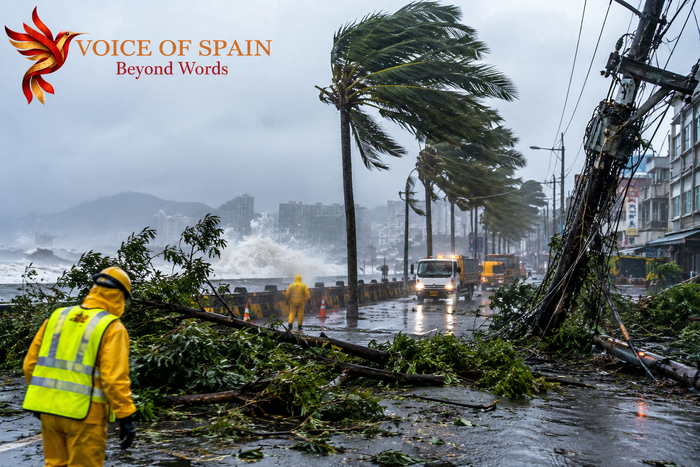
According to Taiwan’s emergency authorities, one person died and 527 people were injured as a result of the storm. The fatality was reported in Liuqiu Township, Pingtung County, where a man was swept away by waves generated by the severe weather. Many of the reported injuries were associated with falling trees, damaged electricity cables, falling objects and other hazards caused by strong winds.
The storm’s strength created significant challenges for residents, transport operators and emergency responders. Trees were uprooted, roadside structures were damaged and heavy rain affected roads and public spaces. Officials warned that the risks could persist even as the storm weakened, particularly in mountainous areas and along exposed coastlines.
Taiwan’s Central Weather Administration reported that Champi was still producing maximum sustained winds of around 126 kilometres per hour near its centre, with stronger gusts recorded in exposed locations. At one point, a gust exceeding 221 kilometres per hour was recorded at Sandiao Cape in New Taipei, illustrating the intensity of the weather system as it approached the island.
The effects on electricity supplies were also substantial. Taiwan Power Company reported that more than 167,000 households had lost electricity at one stage of the storm. Many connections were subsequently restored, although repair teams continued dealing with damage to local infrastructure and power distribution networks.
Transport services faced considerable disruption. The authorities reported that 242 flights had been cancelled by Saturday, following much more extensive cancellations on Friday. The disruption affected passengers, airlines and airport operations, while road users faced additional risks from fallen trees, standing water and reduced visibility.
In Taipei and other parts of northern and central Taiwan, the storm affected businesses, public services and everyday activities. Authorities declared a second day of closures for offices and schools in several areas as a precaution against continuing heavy rain and hazardous conditions. Such measures were intended to limit unnecessary travel and reduce the risk of further injuries.
Although Champi has begun to weaken, meteorological officials have continued to monitor its movement and the possibility of further rainfall. The system was reported to be approximately 150 kilometres east of Taiwan as it turned northwards towards the Chinese coast. Forecasts indicated that it could eventually move towards southern Japan, although the precise impacts would depend on its subsequent path and changing intensity.
The storm’s development is particularly notable because it reached super typhoon strength and became one of the strongest Pacific storms reported during 2026. While tropical cyclones are more common during the summer months, they can also develop in autumn, meaning that coastal communities must remain prepared beyond the traditional peak season.
Taiwan has extensive experience in preparing for typhoons, including weather monitoring, public warnings, emergency shelters and coordinated responses by local authorities. Nevertheless, even well-prepared areas can face serious consequences when powerful winds and heavy rainfall occur together. Damage to electricity networks, transport infrastructure and buildings can create secondary risks long after the strongest winds have passed.
Recovery efforts will require inspections of damaged infrastructure, the removal of fallen trees, repairs to electricity supplies and the assessment of affected public facilities. Authorities must also ensure that injured residents receive appropriate treatment and that communities facing continuing weather warnings have access to reliable information.
The storm offers a further reminder that disaster preparedness involves more than forecasting the arrival of severe weather. Timely warnings, public cooperation, resilient infrastructure and effective emergency coordination all play a role in reducing casualties and limiting economic losses.
As Champi moves away from Taiwan, the immediate priority is to complete emergency operations and restore disrupted services while remaining alert to further hazards. The final assessment of damage and the full economic impact will become clearer as conditions improve and recovery work progresses.
VoS STRATEGIC INSIGHT
Typhoon Champi demonstrates the continuing vulnerability of densely populated coastal regions to powerful tropical weather systems. Even when a storm weakens after passing an island, damaged infrastructure, dangerous waves and heavy rainfall can continue to threaten lives and livelihoods. Investment in resilient electricity networks, reliable early-warning systems, emergency planning and public awareness can reduce the impact of future storms. Taiwan’s recovery will depend not only on restoring essential services but also on assessing the lessons that can strengthen preparedness for increasingly disruptive extreme-weather events.
Source: Reuters — Typhoon Champi sweeps past Taiwan, leaving one dead and more than 500 injured