
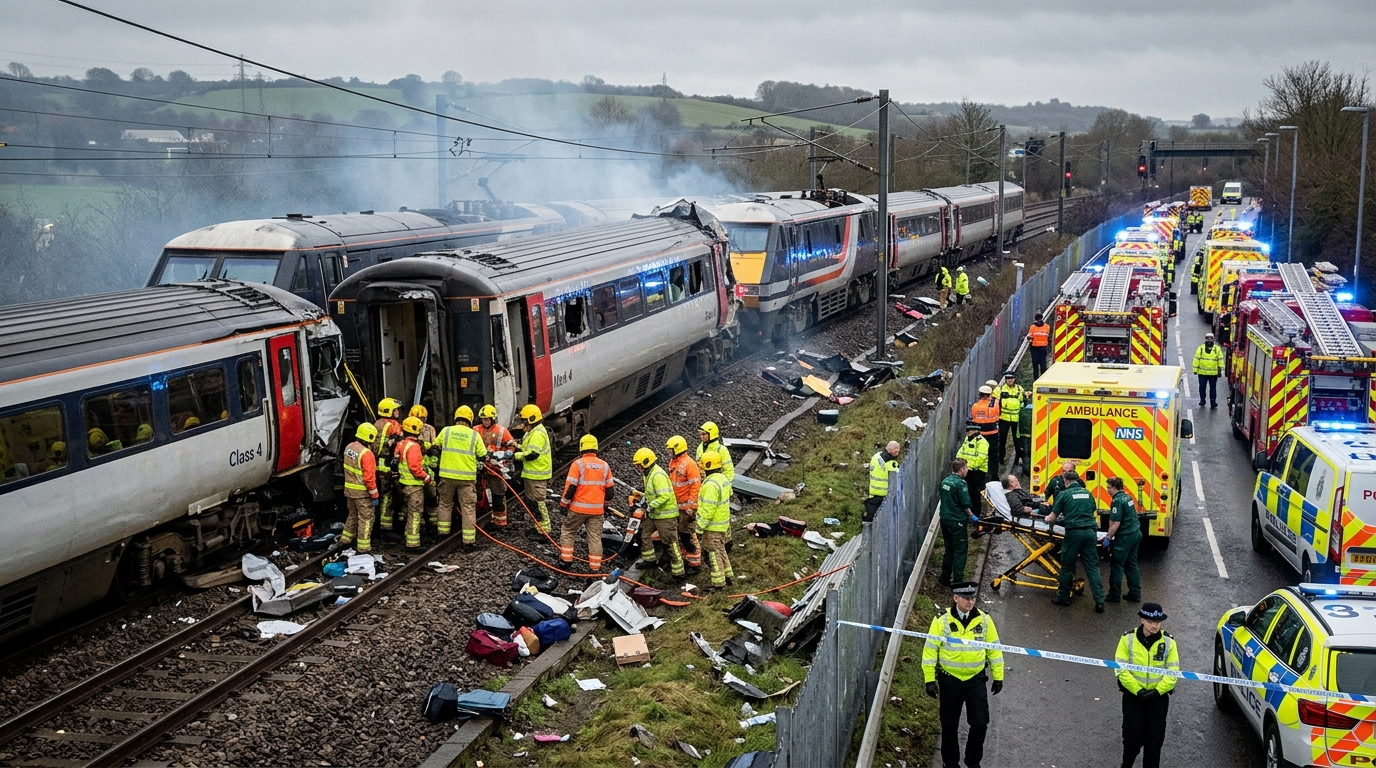
British Transport Police responded to a significant railway incident on Friday when two trains collided in the Bedford area, approximately 56 miles north of London, triggering a major emergency response operation. The collision occurred in a densely populated region of southeast England, prompting immediate mobilization of multiple emergency services including fire and rescue teams, ambulance services, and police units. Unverified footage circulating on social media platforms depicted the aftermath of the collision, with reports indicating multiple casualties resulting from the impact. The Bedford area, a major market town and important transportation hub in Bedfordshire, experienced significant disruption to rail services as emergency personnel worked to assess the situation and provide medical assistance to affected passengers and crew members. The incident raised immediate concerns about railway safety protocols and the adequacy of collision avoidance systems on Britain's rail network. Transport authorities initiated comprehensive investigations into the circumstances leading to the collision, examining factors such as signaling systems, train speeds, weather conditions, and operator procedures. The collision occurred during a period of heightened scrutiny regarding UK rail safety following previous incidents, making this event particularly significant for public confidence in the national rail infrastructure.
Emergency services established a comprehensive response operation at the collision site, with rescue teams working to extract passengers from damaged train carriages and provide emergency medical treatment to the injured. The incident prompted authorities to implement alternative transportation arrangements for passengers affected by the rail service disruption, including bus replacement services and coordination with other transport operators. Bedfordshire Fire and Rescue Service issued public warnings urging residents to avoid the immediate vicinity of the collision site to allow emergency personnel unobstructed access for rescue and recovery operations. Media reports indicated that the collision resulted in multiple casualties, though exact numbers remained unclear during the initial emergency response phase. The incident sparked immediate discussions among transport safety officials, railway operators, and government representatives regarding the need for enhanced safety measures and infrastructure improvements on the UK rail network. Investigators from the Rail Accident Investigation Branch began preliminary examinations of the collision site, collecting evidence and interviewing witnesses to determine the precise sequence of events leading to the incident. The collision highlighted ongoing concerns about aging rail infrastructure, the need for modernized signaling systems, and the importance of comprehensive safety protocols in preventing similar incidents. This event underscored the critical importance of continuous investment in railway safety technology and operator training to protect the traveling public and maintain confidence in Britain's transportation systems.
.png)
.png)
.png)
.png)
.png)
.png)
.png)
.png)