VoS NEWS DESK | INTERNATIONAL ENERGY & GEOPOLITICS | 9 OCTOBER 2026
The Strait of Hormuz occupies a critical position in the global energy system. It connects the Persian Gulf with the Gulf of Oman and the wider Arabian Sea, providing a major export route for oil and petroleum products produced by countries across the Gulf region. Its geographical importance means that any prolonged disruption can affect energy exporters, shipping companies, refineries, manufacturers and consumers far beyond the Middle East.
Under normal circumstances, a substantial proportion of the world's oil and liquefied natural gas shipments passes through this narrow maritime corridor. Countries that depend on imported energy are particularly exposed to interruptions because a reduction in available supplies can increase procurement costs, complicate transport arrangements and intensify competition for alternative sources.
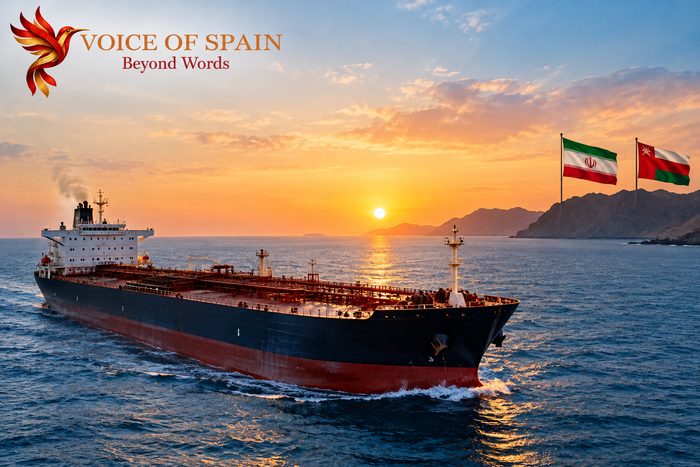
Recent developments have heightened these concerns. Reuters reported on 8 October that the number of vessels passing through the Strait of Hormuz had fallen to its lowest level in more than two months amid escalating attacks on tankers. The report also indicated that crude oil movements through the route had declined from their wartime peak, underlining the continuing disruption to maritime traffic.
The decline in shipping activity reflects a combination of security risks, uncertainty over permitted routes and the difficulties faced by commercial operators attempting to move cargo through an increasingly dangerous environment. Tanker operators must consider not only the possibility of direct attacks but also insurance costs, crew safety, navigation restrictions and the potential for vessels to become stranded or delayed.
On 7 October, a tanker was reportedly struck by multiple projectiles in waters off Qatar, according to reporting published by The Guardian on 8 October. The incident contributed to wider concerns about the safety of commercial vessels operating in the Gulf. Further warnings from Iranian authorities about maritime routes have added to uncertainty over which shipping corridors can be used safely.
The consequences extend beyond individual ships. Oil tankers are a central part of the international supply chain, connecting producing countries with refineries and consumers across Asia, Europe and other regions. When vessels are delayed, rerouted or prevented from operating, the effects can spread through shipping schedules, port operations, refining capacity and the cost of delivering fuel.
Energy markets have responded sharply to the changing security situation. On 8 October, oil prices rose amid concerns over tanker attacks and the possibility of further interruptions to supplies. Brent crude briefly moved above US$105 a barrel, according to reporting by the Financial Times and The Guardian.
By Friday, 9 October, however, prices had edged lower as comments from US President Donald Trump about discussions with Iran eased some immediate fears of further military escalation. Reuters reported Brent crude at US$103.53 a barrel and US West Texas Intermediate at US$90.97 in early trading. Despite the decline, the market remained sensitive to developments affecting Gulf shipping and the broader conflict.
These movements illustrate how rapidly oil markets can react to changes in geopolitical expectations. Prices reflect not only the volume of oil currently available but also expectations about future supplies, the likelihood of further attacks, the duration of shipping disruptions and the potential response of governments.
When traders believe that supplies may become more difficult to obtain, prices can rise even before a major physical shortage reaches consumers. Conversely, indications that diplomatic negotiations may reduce the risk of further escalation can ease some of the pressure, although the effect may be temporary if shipping conditions remain dangerous.
For governments, the challenge is to prevent a regional security crisis from developing into a prolonged international energy emergency. Higher oil prices can increase transport costs, raise the price of electricity and industrial production in some markets, and add to inflationary pressure. Countries that import large quantities of fuel may face additional pressure on foreign exchange reserves and public finances if energy bills remain elevated.
The impact is particularly important for developing economies, where higher fuel costs can affect transport operators, farmers, small businesses and households. In countries that subsidise energy prices, governments may also face difficult decisions about whether to absorb part of the additional cost or allow more of it to be passed on to consumers.
Industrial economies are not immune. Manufacturers depend on reliable supplies of fuel and petrochemical feedstocks, while airlines, shipping companies and road transport operators face higher operating expenses when energy prices rise. Businesses may eventually pass some of these costs on to customers, creating wider inflationary effects throughout the economy.
The Strait of Hormuz crisis also exposes the limitations of alternative export routes. Some Gulf producers can redirect part of their oil through pipelines that bypass the waterway, while other suppliers can adjust shipping arrangements or draw on available inventories. These measures can help cushion disruptions, but they cannot necessarily replace all the volumes normally transported through the strait.
Reuters reported that some oil flows had been redirected through alternative routes as the maritime situation deteriorated. Nevertheless, the continued decline in vessel traffic demonstrates that rerouting alone cannot remove the security risks facing the wider energy supply chain.
Governments and energy companies must therefore balance immediate supply requirements against the risks of operating in contested waters. Possible responses include drawing on strategic reserves, adjusting export schedules, using alternative pipelines where capacity is available and coordinating with international partners to monitor maritime security.
Strategic petroleum reserves can provide temporary relief when commercial supplies are disrupted. However, reserves are finite, and their ability to stabilise markets depends on the scale of the interruption, the speed at which stocks can be released and the willingness of governments to coordinate their actions. They cannot indefinitely compensate for the loss of a major export corridor.
Maritime security has consequently become a central concern for international policymakers. Naval patrols, surveillance systems, intelligence-sharing arrangements and coordination with commercial shipping operators can help assess threats and protect vessels. Yet military protection alone cannot guarantee the safe movement of every tanker, particularly when attacks, retaliation and competing territorial claims create a constantly changing operating environment.
The risk of further escalation is another major concern. A new attack on a commercial vessel could prompt retaliatory action, increase military activity or lead shipping companies to suspend operations. Each development could make insurance more expensive and discourage operators from using routes that would otherwise be commercially attractive.
The diplomatic dimension remains equally important. Statements from Washington and Tehran can influence market expectations, but traders and shipping companies will look for evidence that any diplomatic progress produces a practical improvement in maritime security. Announcements of negotiations may reduce immediate anxiety; sustained improvements in vessel movements and credible guarantees for commercial shipping would provide stronger evidence of recovery.
The wider international community also has an interest in preventing the crisis from spreading. Energy importers, oil-producing countries, maritime organisations and major trading economies all depend on predictable transport routes. A prolonged disruption could force governments to reconsider their energy strategies, accelerate diversification efforts and place greater emphasis on energy efficiency and supply resilience.
For shipping companies, the immediate priority remains the safety of crews and cargo. Decisions about whether to enter the Gulf, wait offshore or use alternative routes must account for constantly changing security assessments and commercial conditions. Delays can be expensive, but sending vessels into areas of elevated danger can carry far greater human and financial consequences.
For oil-producing countries, the situation presents a different set of challenges. Higher prices may support export revenues, but the benefits can be offset by lower shipment volumes, increased security expenditure and damage to critical infrastructure. Producers also face uncertainty about whether customers will continue to rely on established suppliers or seek longer-term alternatives if disruptions persist.
The crisis may therefore have implications beyond short-term price movements. Companies could reconsider inventory policies, diversify procurement arrangements or invest in more flexible supply chains. Governments may place greater emphasis on strategic reserves, renewable energy, nuclear power where appropriate, and improved regional energy interconnections to reduce vulnerability to individual chokepoints.
However, such adjustments take time. Oil remains essential to transport, aviation, shipping, agriculture and numerous industrial processes. Even where alternative energy technologies are expanding, sudden interruptions to established petroleum supply routes can create immediate difficulties that cannot be resolved quickly.
The outlook for the coming days will depend on several connected factors: the frequency of attacks on commercial vessels, the level of maritime traffic through the strait, developments in US-Iran relations, the availability of alternative export routes and the response of global energy producers.
If diplomatic engagement leads to a sustained reduction in hostilities and commercial vessels regain confidence in the route, some of the pressure on oil prices could ease. If attacks continue and tanker movements remain restricted, energy markets may face renewed volatility, with consequences for importers, businesses and households around the world.
At present, the situation demonstrates how a regional security confrontation can rapidly become a global economic concern. The Strait of Hormuz is not merely a geographical passage between two bodies of water; it is a critical link in the international energy system. Its stability affects the movement of commodities, the cost of transport and the economic calculations of governments across multiple continents.
VoS STRATEGIC INSIGHT
The Strait of Hormuz crisis highlights the close relationship between maritime security, energy dependence and global economic stability. The waterway's strategic importance means that even a temporary decline in shipping activity can create significant uncertainty for oil markets, particularly when attacks on tankers occur alongside wider military confrontation.
The immediate priority for the international community should be the protection of commercial shipping, the reduction of risks to civilian crews and the preservation of safe maritime passage. Diplomatic engagement is essential because sustained military tension can discourage shipping operators, increase insurance premiums and prolong disruption even when alternative export routes remain available.
For energy-importing countries, the situation reinforces the importance of diversifying suppliers, strengthening strategic reserves and improving the resilience of transport and energy infrastructure. Such measures cannot eliminate geopolitical risks, but they can reduce the economic damage caused by a sudden interruption to a major supply route.
For markets, the key question is whether recent diplomatic signals will translate into safer shipping conditions. A decline in oil prices may reflect improved expectations, but lasting stability will require more than reassuring statements. It will depend on reduced attacks, reliable maritime access and a credible diplomatic framework that limits further escalation.
Ultimately, the future of the Strait of Hormuz will remain a matter of international concern because its security affects far more than the countries immediately surrounding it. A stable maritime corridor supports energy supplies, international trade and economic confidence; prolonged disruption threatens all three.
Source: Reuters | Financial Times | The Guardian | International maritime and energy market reporting