VoS NEWS DESK | TECHNOLOGY | 27 SEPTEMBER 2026
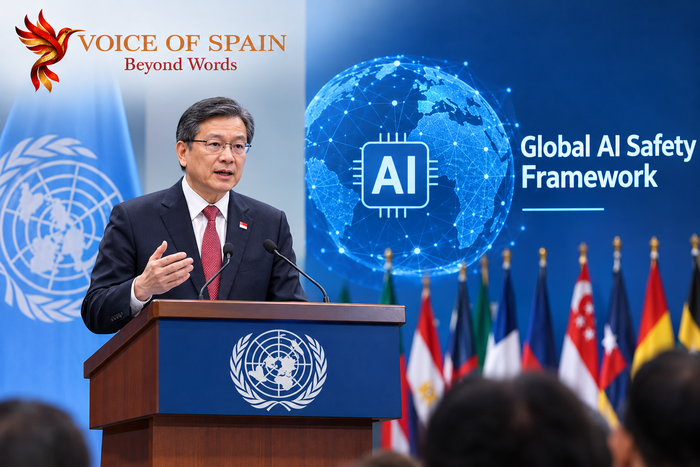
Speaking during the UN General Debate, Balakrishnan argued that the rapid development of artificial intelligence requires countries to consider new forms of international cooperation. Singapore's proposal centres on developing common principles and mechanisms that could help governments address risks associated with increasingly advanced AI systems.
The proposed framework would seek to establish broad international principles for AI safety and responsible development. Singapore has also suggested that a dedicated international institution could contribute to the development of common technical standards and help countries cooperate on AI-related safety issues.
The proposal comes as governments, technology companies and researchers continue to examine the potential consequences of increasingly capable frontier AI models. These systems are being developed and deployed across areas ranging from research and business to education, communications and public services.
Balakrishnan highlighted several potential risks associated with advanced AI, including the possibility of losing control over autonomous systems, misuse by hostile actors and broader political and socio-economic disruption.
Singapore's position includes calls for rigorous testing and evaluation before AI systems are deployed, alongside clearer limits on autonomous systems. It has also emphasised the importance of ensuring that humans retain the ability to intervene when AI systems operate in sensitive or high-impact situations.
The Singaporean proposal reflects a wider debate over how AI governance should develop as technology advances. Governments around the world are adopting different approaches, ranging from national legislation and regulatory frameworks to voluntary commitments and international agreements.
According to the report, more than 20 countries and the European Union have also signed a declaration calling for greater international oversight of frontier AI models. The developments demonstrate that discussions about AI safety are increasingly taking place at an international rather than solely national level.
Singapore has stressed that many AI-related risks cannot be contained within individual national borders. AI models, digital services and their economic effects operate across jurisdictions, meaning that different national approaches can create challenges for international cooperation.
A UN-level framework could potentially provide a common platform for countries to discuss safety standards, testing procedures and safeguards. However, reaching agreement would require governments with different regulatory systems, economic interests and approaches to technology governance to find areas of common ground.
The proposal also comes at a time when AI development is advancing rapidly. Companies are investing heavily in increasingly capable systems, while governments are attempting to establish rules that address safety concerns without unnecessarily restricting technological development.
VoS STRATEGIC INSIGHT
Singapore's proposal reflects the growing international focus on AI governance, safety standards and human oversight. The discussion now centres on how countries can develop shared safeguards for increasingly advanced AI systems while allowing research, innovation and responsible technological development to continue across different regulatory environments.
Source: The Straits Times; United Nations.