VoS NEWS DESK | INTERNATIONAL | 19 October 2026
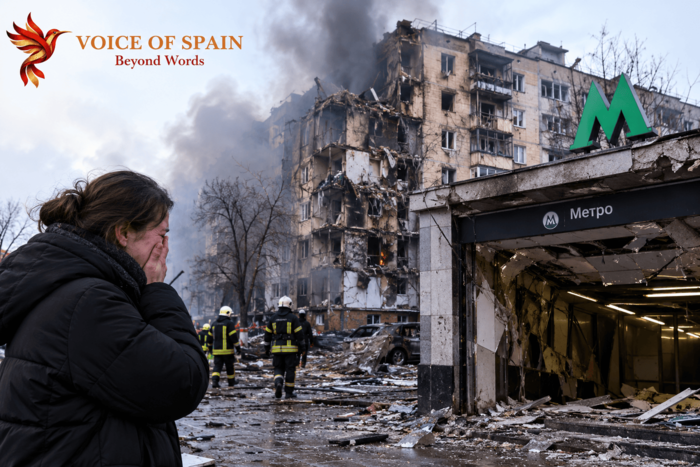
The reported strike has once again drawn attention to the vulnerability of Kyiv, a city that has faced repeated aerial attacks since Russia launched its full-scale invasion of Ukraine in February 2022. Although air-defence systems have played an important role in intercepting incoming threats, the possibility of falling debris, explosions and direct impacts continues to pose serious risks to residents and public infrastructure.
The reported death of a woman underlines the human consequences of the conflict. Behind every casualty figure are families and communities dealing with loss, uncertainty and the possibility of further attacks. Injuries caused by explosions and damage to residential buildings can also leave people temporarily displaced, particularly when homes become unsafe or basic utilities are interrupted.
Damage to transport infrastructure is another concern. Metro stations and underground transport networks are important components of Kyiv's daily life, helping residents travel to work, schools, hospitals and other essential destinations. During periods of heightened danger, underground stations can also provide shelter from aerial attacks. Any damage to these facilities can therefore create difficulties beyond the immediate area affected by a strike.
The latest reported incident demonstrates how the war continues to affect ordinary urban life. Residents must contend with air-raid alerts, disrupted routines and the possibility that residential neighbourhoods may be affected even when their principal concern is simply reaching safety. Emergency responders, medical teams and municipal services are also required to operate under difficult conditions when attacks occur.
Local authorities generally face several immediate priorities following an airstrike: locating injured people, securing damaged structures, checking for further hazards and restoring essential services. Buildings affected by explosions may require structural inspections before residents can safely return. Where windows, roofs or utility systems have been damaged, temporary repairs may be necessary to protect households from further harm.
The psychological impact is equally significant. Repeated alerts and attacks can contribute to prolonged stress among adults and children, particularly those who have already experienced displacement or the loss of relatives. The disruption of education, employment and access to healthcare can deepen the social and economic consequences of the conflict.
The reported incident also reinforces the importance of protecting civilian infrastructure under international humanitarian law. Parties to an armed conflict must distinguish between civilians and combatants and between civilian objects and military objectives. Attacks must comply with the principles of distinction, proportionality and precautions, and civilians must never be deliberately targeted.
Kyiv remains an important political, administrative and logistical centre for Ukraine. Attacks affecting the capital can have consequences for public confidence, infrastructure planning and emergency preparedness, even when the physical damage is concentrated in particular neighbourhoods.
Ukraine continues to rely on air-defence capabilities, early-warning systems and international military assistance to reduce the impact of Russian aerial attacks. However, protecting a large urban area against missiles, drones and other airborne threats is a complex task. Authorities must balance immediate emergency responses with longer-term investment in infrastructure resilience and civilian protection.
The international dimension remains important as well. Ukraine's partners continue to debate military support, air-defence supplies, sanctions and diplomatic options. At the same time, the prospects for a durable settlement remain closely connected to questions of territorial sovereignty, security guarantees and the conditions under which hostilities might end.
The latest reported casualties are a reminder that the consequences of the war extend far beyond the battlefield. Residential buildings, public transport and community facilities are essential to civilian life, and damage to these places can affect thousands of people indirectly even when the immediate casualty figures are limited.
As assessments of the damage continue, the key priorities will be the treatment of the injured, support for affected residents, the restoration of damaged infrastructure and measures to reduce the risk of further civilian casualties. Any definitive assessment of the strike, including responsibility for individual impacts and the full extent of the damage, should be based on verified evidence from relevant authorities and independent reporting.
VoS STRATEGIC INSIGHT
The reported attack in Kyiv illustrates the continuing difficulty of protecting civilians during a prolonged, high-intensity conflict. Air defence can reduce the threat, but it cannot eliminate every risk to residential areas and essential public services. Effective emergency planning, resilient infrastructure and sustained support for affected communities remain vital.
The wider strategic challenge is to prevent further escalation while maintaining pressure for a settlement that addresses Ukraine's security and sovereignty. Diplomatic initiatives may offer opportunities to reduce hostilities, but their credibility depends on meaningful commitments and practical measures that protect civilians. Ultimately, the human cost of the war makes civilian protection and the pursuit of a durable peace central international priorities.
Sources for Article 1
- Reuters — Russian strike kills woman and hits Kyiv subway station