VoS NEWS DESK | INTERNATIONAL SECURITY AND HUMANITARIAN AFFAIRS | 25 OCTOBER 2026
The proposed ceasefire centres on Oleshky, a town in Ukraine’s southern Kherson region, across the Dnipro River from territory controlled by Ukrainian forces. The area has remained close to the front line during the war, leaving civilians exposed to military risks and making the delivery of basic supplies increasingly difficult.
Before the conflict, Oleshky had a population of approximately 24,000 people. The number of residents remaining has fallen sharply as people have been displaced or evacuated. Estimates cited by the White House suggest that around 1,700 to 2,000 people remain, including approximately 50 children, although the figures are uncertain because a formal demographic count has not been carried out since 2022. Many of those who remain are older residents who may have difficulty leaving without organised assistance.
The humanitarian situation has been made more difficult by prolonged disruption to electricity, water supplies, heating, food distribution and medical services. Residents in areas affected by fighting can struggle to obtain medicines, maintain safe living conditions and access medical care. These difficulties are particularly serious for older people, people with disabilities and families with young children.
The destruction of the Kakhovka Dam in 2023 also caused extensive flooding across parts of the surrounding region, adding to the challenges facing communities already affected by the war. Damaged infrastructure, mined roads and the continuing danger of military activity have made travel and humanitarian access difficult.
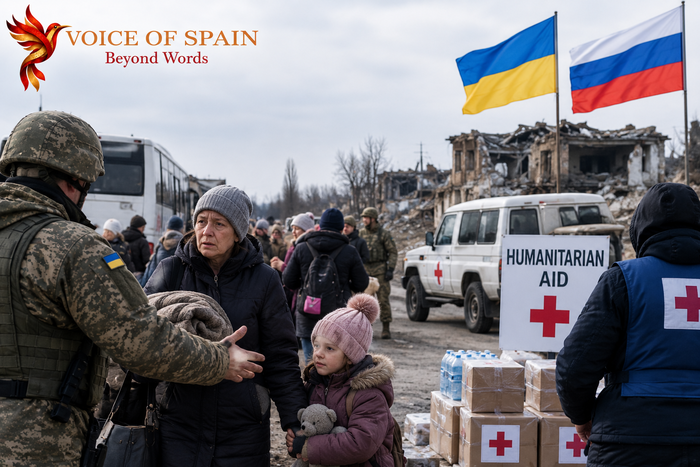
Under the proposed arrangement, the ceasefire is intended to provide a temporary pause in military operations within the designated area. Humanitarian teams would be able to assess residents’ needs, arrange the delivery of essential supplies and assist civilians who wish to evacuate. The plan is expected to involve coordination between representatives of the parties, including work to establish safe access routes and address the danger posed by landmines.
The precise implementation of such an arrangement is critical. A ceasefire on paper does not automatically make an area safe, particularly where unexploded ordnance, damaged roads and changing military positions may present continuing risks. Humanitarian workers need clear communication channels, agreed routes and reliable information about security conditions before attempting to enter dangerous areas.
The planned operation is intended to take place in stages. Access routes may first need to be assessed and cleared of mines, after which humanitarian assistance can be brought into the town. Residents who wish to leave can then receive support with transport and arrangements for reaching a safer destination. Officials have indicated that civilian needs and individual preferences will be considered during the process.
The negotiations involved representatives of Russia and Ukraine, with US First Lady Melania Trump playing a mediating role, according to the White House. The White House said discussions followed earlier humanitarian efforts involving the return of children separated from their families during the conflict. The agreement was presented as a focused initiative intended to address the immediate needs of vulnerable civilians rather than resolve the wider war.
Ukrainian officials have also discussed the timing and technical details of the humanitarian operation with their Russian counterparts. Reports on the agreement indicate that both sides have worked towards establishing a coordinated start to the ceasefire. Its effectiveness will depend on whether military forces comply with the agreed restrictions and whether humanitarian teams can safely carry out their work.
The agreement comes as diplomatic efforts to find a broader settlement continue. Ukrainian President Volodymyr Zelenskyy has indicated that technical-level discussions involving Ukraine, Russia and the United States are expected during the first half of November, with Abu Dhabi mentioned as a possible venue. Other locations have also been discussed, and final arrangements remain subject to confirmation.
These diplomatic contacts reflect continued efforts to establish communication between the parties despite the absence of a comprehensive peace agreement. Localised ceasefires can offer opportunities to reduce immediate suffering, test communication arrangements and demonstrate whether limited cooperation is possible even when wider political disagreements remain unresolved.
However, humanitarian agreements are vulnerable to violations, misunderstandings and changing battlefield conditions. The parties may disagree over responsibility for incidents, the movement of personnel or the interpretation of the agreed boundaries. Independent reporting, effective communication and clear procedures for responding to violations can help reduce these risks, although they cannot eliminate them entirely.
For the civilians of Oleshky, the immediate priority is access to food, medicine, clean water and safe transport. Humanitarian assistance must be delivered according to need, without discrimination based on political allegiance or the destination a person chooses when evacuating. People who remain in the town should not be forgotten simply because they are unable or unwilling to leave.
Medical needs require particular attention. Older residents and people with chronic illnesses may need regular treatment, essential medicines and assistance with mobility. Families with children may require food, hygiene products and safe accommodation. Humanitarian agencies must also consider the needs of people who have lost documentation, homes or contact with relatives during the conflict.
Civilian evacuation is a complex process that extends beyond moving people away from immediate danger. Those leaving may need temporary accommodation, medical assessments, transport, financial assistance and help reconnecting with family members. Authorities and humanitarian organisations must therefore plan for the period after evacuation as well as the journey itself.
The proposed ceasefire also raises questions about monitoring and accountability. Clear information about the designated area, the duration of the pause, permitted movements and procedures for reporting incidents can help humanitarian teams operate more safely. Where feasible, independent observation and transparent reporting can help establish whether the arrangement is being respected.
The agreement should not be interpreted as evidence that the broader conflict is nearing an end. A limited humanitarian pause can address urgent civilian needs without resolving the political and territorial disputes at the centre of the war. Nevertheless, if implemented successfully, it could provide immediate relief and demonstrate the value of narrowly defined cooperation.
The coming days will be important in determining whether the ceasefire begins as planned and whether humanitarian supplies reach those who need them. The most meaningful measure of success will be the number of civilians who receive assistance, the safety of humanitarian workers and whether residents who wish to leave are able to do so without being exposed to further danger.
VoS STRATEGIC INSIGHT
The proposed Oleshky ceasefire illustrates how limited agreements can serve an essential humanitarian purpose even when a wider political settlement remains out of reach. In areas where civilians face shortages of food, water, medicine and electricity, a temporary reduction in fighting can create an opportunity to deliver life-saving assistance and organise safe evacuations.
The agreement’s success will depend on practical implementation. Mine clearance, secure access routes, clear communication between the parties and respect for civilian protection must be treated as essential requirements. Humanitarian teams also need contingency plans in case conditions deteriorate or the ceasefire is disrupted.
Equally important is the principle that civilians must remain protected regardless of which side controls the territory where they live. Assistance should be based on need, while evacuation decisions should respect individual choices and provide people with clear information about available destinations and support.
The initiative should be viewed as a humanitarian step, not a substitute for a comprehensive peace process. Its wider value will lie in whether it reduces immediate suffering, builds confidence in practical coordination and supports further efforts to protect civilians across the conflict zone.
Source: Associated Press