VoS NEWS DESK | INTERNATIONAL DIPLOMACY | 17 OCTOBER 2026
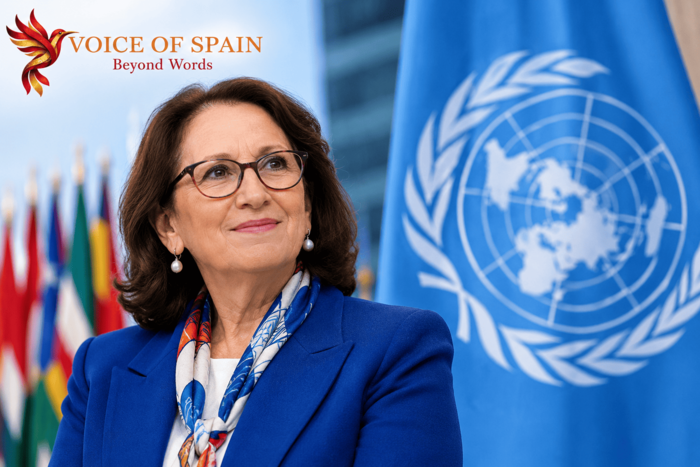
The selection of the next United Nations Secretary-General has entered a decisive stage as diplomats work to identify a candidate capable of securing sufficient support from the Security Council. Grynspan, who previously served as Vice-President of Costa Rica and has led the United Nations Conference on Trade and Development (UNCTAD), has gained prominence following the latest informal ballot held on Friday, 16 October.
According to diplomatic sources cited by Reuters, Grynspan received nine votes encouraging her candidacy, five discouraging votes and one vote expressing no opinion. Although the result places her among the strongest contenders, it does not guarantee her appointment. The decisive challenge is that at least two of the negative votes came from permanent members of the Security Council, whose opposition could prevent her nomination from progressing.
The Security Council consists of 15 members, including five permanent members: China, France, Russia, the United Kingdom and the United States. Under the UN selection process, a recommended candidate must secure at least nine affirmative votes and avoid a veto from any permanent member. This requirement means that broad diplomatic support alone may not be sufficient to secure the position.
Grynspan's emergence as a frontrunner therefore highlights the complicated balance between individual qualifications, regional representation and the political interests of powerful states. Her candidacy may appeal to countries seeking stronger international cooperation, but the opposition reflected in the ballot demonstrates that important disagreements remain unresolved.
The race also includes other candidates, such as Guyana's Carolyn Rodrigues-Birkett and Argentina's Rafael Grossi. Both have attracted support, yet the latest voting process has not produced a clear consensus. With the current Secretary-General, António Guterres, due to complete his term on 31 December 2026, the Security Council faces mounting pressure to reach an agreement within the remaining weeks.
The next Secretary-General will inherit a demanding international agenda. Armed conflicts, humanitarian crises, displacement, food insecurity and disputes between major powers continue to challenge the international system. The organisation is also under pressure to demonstrate that multilateral diplomacy can produce meaningful results when governments disagree over security, economic policy and international law.
Grynspan has highlighted the need to reform the United Nations, including reducing unnecessary bureaucracy, reviewing senior positions and eliminating duplication across agencies. Such proposals reflect wider concerns about administrative efficiency and the organisation's ability to deliver assistance effectively. Any reform programme, however, would require cooperation among member states and careful consideration of the UN's responsibilities across different regions.
The selection process is significant beyond the appointment of an individual leader. The Secretary-General represents the organisation internationally, supports diplomatic initiatives, raises concerns about humanitarian emergencies and works with member states to advance the UN's objectives. Although the office does not have the authority to dictate national policies, its influence depends on credibility, diplomatic judgement and the ability to build consensus.
The possibility of appointing the first woman to lead the United Nations has also brought renewed attention to representation in international institutions. Nevertheless, the final decision will depend on the candidate's ability to secure the necessary political backing rather than on any single consideration.
As negotiations continue, diplomats may explore whether existing candidates can overcome opposition or whether another name could emerge as a compromise. The latest ballot has left the contest open, underlining the difficulty of finding a candidate acceptable to the Security Council's permanent members while maintaining wider international confidence.
VoS STRATEGIC INSIGHT
The contest to appoint the next UN Secretary-General illustrates the tension between international expectations and the political realities of global governance. Grynspan's position as a frontrunner demonstrates that substantial support can be built around a candidate, but the possibility of a veto shows how a small number of powerful states can determine the outcome.
The next leader will need to address demands for reform while preserving the UN's capacity to mediate disputes, coordinate humanitarian assistance and encourage cooperation between countries with conflicting interests. Administrative changes may improve efficiency, but the organisation's influence will continue to depend on whether member states are willing to support collective action.
The coming weeks will therefore be crucial. A successful appointment would provide greater clarity about the UN's leadership for the next term, while continued disagreement could intensify calls to reconsider the selection process. Ultimately, the credibility of the organisation will depend not only on who takes office, but also on the ability of its members to work together on the challenges confronting the international community.
Source: Reuters — Grynspan holds lead for next UN chief as race enters decisive stage