VoS NEWS DESK | EDUCATION & NATIONAL AFFAIRS | 11 OCTOBER 2026
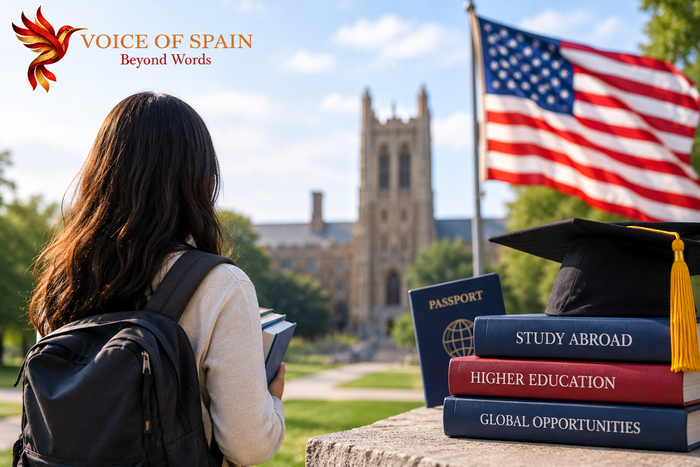
The case has drawn widespread attention across Pakistan because it involves a young graduate who had hoped to continue her education in the United States. Laiba Aijaz, who completed her bachelor's degree at the International Islamic University Islamabad and earned a gold medal, reportedly aspired to pursue further studies abroad. Her family allegedly placed considerable trust in an individual who claimed to be able to arrange admission and scholarship opportunities at an American university.
According to reports published by Pakistani news organisations, Laiba's family alleged that an intermediary had promised to secure her admission to a US university, with documents reportedly presented as evidence of an offer from Harvard University. However, the family said that the documents were subsequently discovered to be fraudulent. The discovery allegedly caused Laiba severe emotional distress, and police are investigating the circumstances surrounding her death.
The financial allegations have added another troubling dimension to the case. According to the FIA-related reporting published on 11 October, the suspects allegedly obtained approximately Rs9.3 million by promising to arrange a US visa and scholarship. The case reportedly involves Muhammad Nauman and Fatima Sarwar, who are accused of working together. Investigators allege that fake scholarship award letters, university admission offer letters and fee-payment receipts were used to mislead the family. These allegations remain subject to the legal process and must be assessed through the investigation and court proceedings.
Reports indicate that Laiba's family made significant financial sacrifices in the hope of securing better educational opportunities for her. Her father reportedly sold a plot of land and paid money towards the promised arrangements, while the family also sought additional funds to meet the expected costs. The case has highlighted the vulnerability of households that invest their savings and assets in the hope that overseas education will provide their children with improved career prospects.
For many Pakistani students, studying abroad represents years of academic effort and a potential route to professional advancement. Families may spend substantial sums on application procedures, language tests, university fees, documentation and visa-related expenses. When an intermediary claims to have privileged access to foreign institutions or promises a guaranteed scholarship, families can find it difficult to distinguish legitimate professional assistance from deception.
The latest developments have prompted action by law-enforcement authorities. Dawn reported on 11 October that Prime Minister Shehbaz Sharif had taken notice of the case and directed Islamabad's police leadership to pursue the accused. The FIA has also initiated proceedings, with reports indicating that a formal case was registered and investigators were examining the alleged financial transactions and documents.
Authorities are expected to examine how the alleged scheme operated, whether additional individuals were involved and whether other students or families may have been targeted. Investigators will also need to establish the authenticity of the documents, trace the payments and determine the precise roles of the people named in the case. The legal responsibility of each suspect will depend on the evidence gathered and the outcome of the judicial process.
The incident has also renewed concerns about individuals who allegedly misrepresent their professional identities to gain the confidence of prospective students. According to the FIA reporting, the accused allegedly presented himself as a person connected to a government institution. Such claims, when combined with promises of prestigious university admission, can create a false sense of security for families unfamiliar with international admissions procedures.
Students seeking admission to foreign universities can reduce their exposure to similar risks by verifying offers directly through official university websites and admissions offices. Scholarship details, registration certificates, tuition-payment instructions and visa requirements should be checked independently before money is transferred. Families should also be cautious of agents who guarantee admission, demand unusually large payments or discourage direct communication with the university.
Universities and relevant government agencies have an important role in improving public awareness. Clear information about legitimate application procedures, recognised education advisers and fraud-reporting channels can help students make informed decisions. Stronger cooperation between educational institutions, financial institutions and law-enforcement bodies may also assist in identifying suspicious transactions and preventing further harm.
The case remains a reminder that education-related fraud can have consequences extending far beyond financial loss. For students, overseas education may represent years of ambition, sacrifice and hope for a more secure future. When that hope is exploited, the effects can be devastating for both individuals and their families.
VoS STRATEGIC INSIGHT
The alleged fraud involving Laiba Aijaz highlights a serious weakness in the overseas education process: the gap between students' aspirations and their ability to independently verify the promises made by intermediaries. A prestigious university name, an apparent scholarship offer or claims of official connections should never be treated as sufficient proof that an admission arrangement is genuine.
Pakistan needs a stronger culture of verification around international education. Students and parents should be encouraged to confirm admission offers directly with universities, use traceable payment channels and consult official sources before making major financial commitments. Public awareness campaigns could help families recognise warning signs before their savings or property are put at risk.
The investigation must establish the facts, ensure due process and hold any proven offenders accountable under the law. At the same time, the case should encourage practical reforms that protect prospective students, improve transparency in education consultancy services and make legitimate overseas application routes easier to understand.
Ultimately, the value of international education lies in the opportunities it creates, not in promises made by unverified agents. Protecting students requires reliable information, effective enforcement and a system in which families can pursue educational ambitions without being exposed to exploitation.
Source: Dawn — PM takes notice of student’s death over visa fraud | Business Recorder — Suspect arrested in Rs9.3m fraud case | Aaj English TV — Suspect arrested in Laiba Aijaz case