VoS NEWS DESK | INTERNATIONAL | 10 OCTOBER 2026
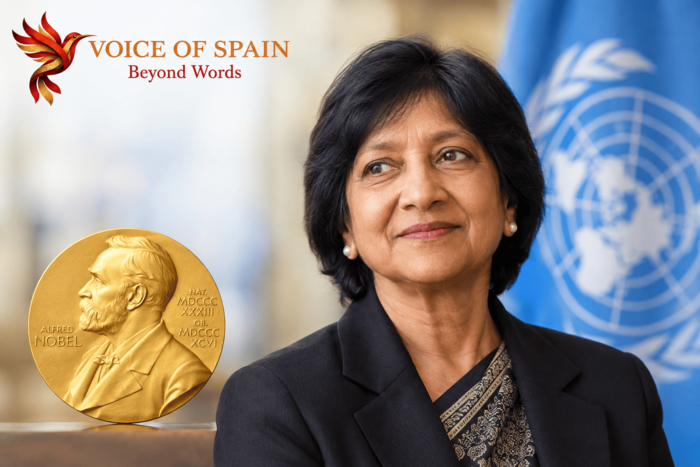
The announcement has brought renewed international attention to Pillay’s remarkable legal career, which spans several decades and includes important roles in South Africa’s struggle against apartheid, international criminal justice and the United Nations human rights system. Her work has focused on the principle that legal protections and fundamental human rights must apply to everyone, regardless of political influence, nationality, ethnicity or position within a government.
Born in Durban, South Africa, in 1941, Pillay grew up under apartheid, a system of racial segregation and discrimination that restricted the rights and opportunities of the country’s non-white population. Her personal experience of institutional discrimination helped shape her commitment to equality and justice. She entered the legal profession at a time when racial barriers remained deeply embedded in South African society, eventually becoming a prominent advocate for people facing discrimination and political persecution.
Pillay established her own law practice in 1967 and represented individuals affected by apartheid. Her legal work included defending anti-apartheid activists and challenging abuses of authority. She also helped expose the treatment of prisoners and supported efforts to strengthen their legal protections. Her career demonstrated how lawyers and independent legal institutions can play an important role in challenging discrimination, even when the political environment makes such work difficult.
Her achievements later extended beyond South Africa. Pillay became a judge at the International Criminal Tribunal for Rwanda, an institution established to prosecute those responsible for the 1994 genocide and other serious crimes committed during the conflict. She eventually served as the tribunal’s president, helping to advance international criminal jurisprudence and the recognition of crimes involving sexual violence.
One of the significant developments associated with the tribunal was the recognition that rape and other forms of sexual violence could constitute crimes against humanity and acts of genocide under the circumstances established by the court. These legal developments helped strengthen the recognition that sexual violence during armed conflict is not merely an individual act of abuse but can form part of a wider campaign of persecution and destruction against a population.
Pillay subsequently served as a judge at the International Criminal Court and became the United Nations High Commissioner for Human Rights from 2008 to 2014. In that role, she worked on international human rights concerns involving discrimination, political repression, conflict and the protection of vulnerable communities. The position placed her at the centre of discussions about the responsibilities of governments under international human rights law.
Her work at the United Nations also demonstrated the challenges faced by international institutions when legal principles come into conflict with political interests. Governments may publicly support human rights while disputing investigations, international criticism or legal proceedings directed at their own actions. Such disagreements can weaken international cooperation and make it more difficult to establish consistent standards of accountability.
Pillay has continued to contribute to international legal discussions in recent years. She chaired the United Nations Independent International Commission of Inquiry on the Occupied Palestinian Territory, including East Jerusalem, and Israel from 2021 to 2025. She has also served as an ad hoc judge at the International Court of Justice in proceedings concerning allegations of genocide against Myanmar. These roles have kept her closely involved in some of the most significant contemporary debates about international law and the protection of civilian populations.
The Nobel Peace Prize recognises more than an individual legal career. It also highlights the wider importance of international institutions that investigate serious crimes, interpret international agreements and provide mechanisms for addressing disputes without resorting to violence.
International law establishes principles governing relations between states and provides frameworks for addressing alleged war crimes, crimes against humanity and genocide. However, the effectiveness of these rules depends on cooperation, access to evidence, the independence of legal proceedings and the willingness of governments to respect judicial decisions.
The work of international courts can become particularly difficult when cases involve powerful political leaders or countries with significant diplomatic influence. Investigations may provoke sanctions, diplomatic disputes or accusations that legal proceedings are politically motivated. These tensions raise difficult questions about how international justice can remain independent while operating within a global system shaped by competing national interests.
The Nobel Committee’s decision places these concerns at the centre of the international conversation. Its recognition of Pillay reinforces the principle that peace is not simply the absence of armed conflict. Sustainable peace also requires institutions capable of protecting rights, addressing serious abuses and providing victims with meaningful opportunities to seek justice.
For victims of violence, international justice can offer an opportunity to have their experiences recognised and their claims examined through legal procedures. Court proceedings can also establish historical records, clarify responsibility and contribute to efforts to prevent similar crimes in the future. Nevertheless, legal processes are often lengthy, and their outcomes depend on evidence, jurisdiction and the cooperation of the parties involved.
The award also draws attention to the importance of protecting judges, lawyers, investigators and human rights defenders. These individuals may face intimidation, political pressure or threats when investigating sensitive cases. Maintaining their independence is essential if international legal institutions are to retain credibility and public confidence.
Pillay’s selection has attracted international attention because of the breadth of her work and the significance of the legal principles she has defended. The United Nations has described her as a champion of international law and human rights, emphasising the importance of accountability and human dignity.
Her achievement is also significant for South Africa, where the struggle against apartheid remains a defining part of the country’s modern history. Her career illustrates how individuals who challenge discriminatory systems can later contribute to institutions operating on an international scale.
The award may also encourage renewed debate about the role of international organisations at a time when conflicts, humanitarian crises and disputes over national sovereignty continue to place pressure on the global legal order. For supporters of international justice, the recognition provides an opportunity to emphasise that legal protections should not depend solely on the political or military strength of the parties involved.
At the same time, the Nobel Peace Prize cannot resolve the underlying disputes facing international institutions. The effectiveness of international law will continue to depend on the conduct of governments, the independence of courts and the willingness of states to cooperate with legitimate legal processes.
VoS STRATEGIC INSIGHT
Navi Pillay’s Nobel Peace Prize highlights a central challenge facing the international community: how to ensure that human rights and international law remain meaningful when political interests conflict with legal obligations.
Her career demonstrates that international justice is built over time through legal precedents, independent investigations and the determination of individuals willing to challenge discrimination and abuses of power. These achievements can influence how future cases are investigated and how the international community understands responsibility for serious crimes.
For governments, the award serves as a reminder that lasting international stability depends on more than diplomatic agreements or military deterrence. Trust also requires credible institutions, fair procedures and a commitment to applying legal principles consistently.
For human rights organisations and victims of conflict, Pillay’s recognition provides an important opportunity to renew calls for accountability. However, lasting progress will require practical action, including protection for legal professionals, cooperation with judicial investigations and stronger implementation of international obligations.
Ultimately, the award reinforces the idea that justice and peace are closely connected. International law cannot prevent every conflict, but it can establish standards of conduct, provide mechanisms for accountability and help create conditions in which disputes can be addressed without violence. The long-term significance of Pillay’s achievement will depend partly on whether the principles recognised by the Nobel Committee receive stronger support in practice.
Source: Norwegian Nobel Committee | United Nations | London School of Economics | Human Rights Watch