VoS NEWS DESK | Climate & Environment | 17 September 2026
France has experienced its hottest summer since 1900, with repeated periods of exceptionally high temperatures affecting large parts of the country. The latest figures show that the heat had a substantial impact on mortality, particularly among older people.
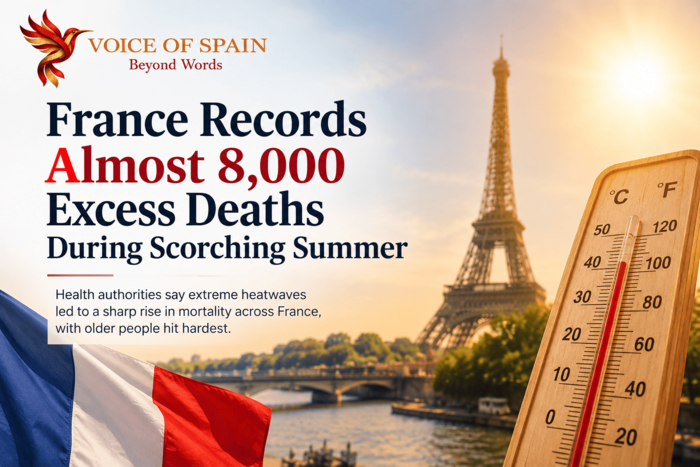
According to the French public health authority, 817 excess deaths were recorded between 27 July and 20 August, following several earlier periods of extreme heat. This brought the recorded total since late May to 7,919 excess deaths by 20 August. The authorities stressed that the figure remains provisional.
The earlier heatwaves also resulted in significant increases in mortality. Health authorities recorded 5,764 excess deaths between 17 June and 2 July, while another 1,243 excess deaths were recorded between 3 and 20 July. A further 95 excess deaths were recorded during an early heatwave period from 24 to 28 May.
The term “excess deaths” refers to deaths above the number normally expected during a particular period. The French figures include deaths from all causes and are calculated using death-certificate data; they do not mean that every individual death was directly caused by heat.
People aged 75 and over accounted for the largest share of the excess mortality, highlighting the particular vulnerability of older people during prolonged periods of extreme heat. The authorities also recorded a notable concentration of deaths among older people following the hottest days in mid-August.
The summer of 2026 has been described by French authorities as highly unusual because of the succession of heatwave episodes. France's weather service reported that the summer surpassed previous major heat events, including those of 2003 and 2022, in terms of average temperatures.
The figures have renewed attention on the country's ability to protect vulnerable populations during extreme weather. France experienced one of Europe's most significant heat-related mortality crises during the 2003 heatwave, when approximately 15,000 deaths were associated with the extreme temperatures.
Health authorities have cautioned that the current figure should not be treated as the final death toll for the 2026 summer. Data collection is expected to continue through October, with a final assessment expected later.
The unusually high temperatures have also occurred alongside drought conditions and water shortages in parts of France. Meteorological experts have linked the increasing frequency and intensity of extreme heat events to human-caused climate change, although individual mortality figures involve multiple factors.
VoS CLIMATE INSIGHT
France's provisional 7,919 excess deaths provide an indication of the public-health impact of the country's exceptionally hot 2026 summer. The figure remains subject to revision, but the concentration of excess mortality among older people underlines the importance of heat-health measures, particularly during prolonged periods of extreme temperatures.
Sources: French Public Health Agency / Reuters / AFP / Channel News Asia / VoS News Desk.