VoS NEWS DESK | INTERNATIONAL NEWS | 20 OCTOBER 2026
The cost of living remains a significant concern for many French households. Expenses related to housing, food, transport and energy can place considerable pressure on family budgets, particularly for lower-income households and younger people entering the labour market. When wages fail to keep pace with essential expenses, financial insecurity can contribute to dissatisfaction with government policies and public institutions.
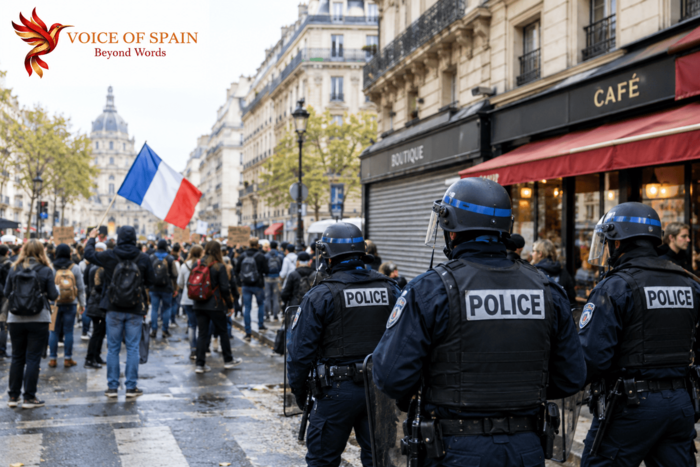
Public demonstrations have long played an important role in French political life. Citizens regularly take to the streets to express opposition to government decisions, demand better working conditions and call for improvements in public services. However, when demonstrations develop into violent confrontations, the authorities face the difficult task of protecting peaceful protesters while preventing attacks, vandalism and damage to businesses.
The response of law-enforcement agencies has therefore become an important part of the wider debate. Police must ensure that public spaces remain safe, transport networks continue to function and emergency services can reach people who need assistance. At the same time, security measures must remain proportionate and consistent with the law. The handling of demonstrations can influence public confidence in both the police and the government.
Businesses can also suffer significant consequences when protests turn violent. Shops, restaurants and other commercial premises may face damaged property, stolen goods and temporary closures. Such disruptions can be particularly difficult for small businesses, which often have limited financial resources to cover repairs and lost revenue. Employees may also experience reduced working hours or uncertainty if businesses are unable to operate normally.
The government must consequently consider both the immediate security situation and the broader economic circumstances affecting the population. Stronger policing may help prevent further disorder, but it cannot independently resolve concerns about affordable housing, employment opportunities, public transport and access to essential services. These issues require longer-term policy measures and meaningful engagement with affected communities.
Another important consideration is the distinction between peaceful demonstrations and criminal activity. The right to protest is a fundamental element of democratic society, allowing citizens to express disagreement and hold political leaders accountable. Violence and looting, however, can endanger residents, harm innocent business owners and undermine the credibility of legitimate public demands. Authorities must investigate alleged offences fairly and ensure that any legal action is based on evidence.
France’s political leadership also faces pressure to communicate clearly with the public. Transparent explanations of security measures, economic decisions and proposed reforms can help reduce uncertainty and demonstrate that citizens’ concerns are being considered. Where mistakes occur, independent scrutiny and appropriate accountability can play an important role in restoring confidence.
The wider European context adds further significance to these developments. Governments across the continent are dealing with questions involving household affordability, migration, employment, public spending and confidence in political institutions. Although the circumstances differ between countries, France’s experience illustrates how unresolved social and economic concerns can become major political challenges.
The situation also highlights the importance of dialogue between authorities, trade unions, community organisations, businesses and demonstrators. Negotiations and consultation cannot eliminate every disagreement, but they can provide opportunities to identify practical solutions before tensions intensify. Measures addressing the most immediate financial pressures may also help reduce frustration among vulnerable groups.
Ultimately, the government’s response will be judged by its ability to maintain public safety while respecting civil liberties and addressing legitimate social concerns. A sustainable solution requires more than restoring order after a disturbance; it also requires policies that improve economic security, strengthen public services and ensure that citizens have confidence in the institutions responsible for governing the country.
VoS STRATEGIC INSIGHT
France’s continuing debate over public order and economic hardship demonstrates the close relationship between social stability, effective governance and public confidence. When households experience persistent financial pressure, dissatisfaction can grow and political disagreements can become more intense. Governments must respond carefully, ensuring that security measures are effective without unnecessarily restricting peaceful protest.
The immediate priority is to protect residents, businesses and public infrastructure while ensuring that investigations are conducted fairly. Equally important is the need to address the underlying concerns that contribute to public frustration. Affordable housing, reliable public services, employment opportunities and transparent decision-making can all influence whether citizens feel that their needs are being taken seriously.
In the longer term, France’s stability will depend on its ability to combine effective law enforcement with constructive dialogue and credible economic policies. Protecting democratic freedoms while preventing violence is essential, but lasting public confidence also requires institutions that listen, respond and remain accountable. The challenge is not simply to restore calm, but to build the conditions necessary for a more secure and socially stable future.
Source: Reuters | The Guardian