VoS NEWS DESK | INTERNATIONAL | 21 OCTOBER 2026
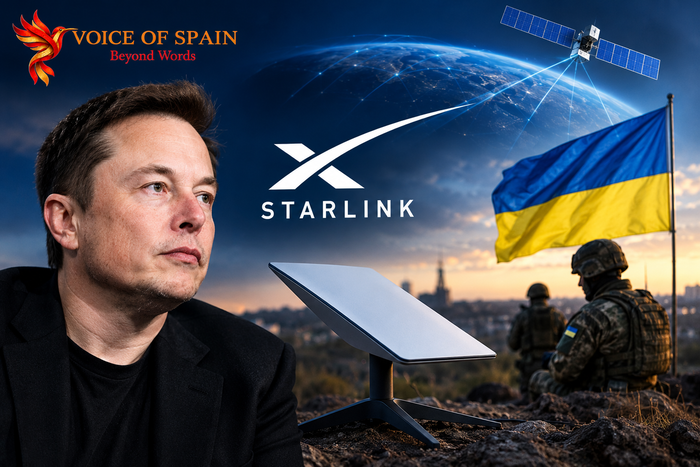
Starlink, operated by SpaceX, has become an important part of Ukraine’s communications infrastructure since Russia launched its full-scale invasion in February 2022. Its satellite network can provide connectivity in areas where conventional telecommunications infrastructure has been damaged, disrupted or become difficult to access. This capability has made satellite communications particularly valuable for military coordination, field communications and maintaining links between personnel operating in challenging conditions.
The latest reports have focused on restrictions affecting the military-grade satellite services used by Ukrainian forces. According to reporting by CBS News, people familiar with the matter said Musk’s decision led to restrictions on Ukraine’s use of SpaceX’s satellite communications network. The affected capabilities were reportedly used in connection with drone operations, attacks on certain targets and the protection of sites in Ukraine. The precise technical details and full operational consequences have not been independently established in the available reports.
The development is particularly significant because modern warfare increasingly depends on reliable communication between reconnaissance units, command centres, drones and defensive systems. Satellite connectivity can help forces exchange information across large areas, particularly when traditional networks are unavailable. Any interruption to such systems can create operational complications, although the scale of the impact depends on the services affected and the availability of alternative communications arrangements.
For Ukraine, the issue extends beyond a single technical disruption. It raises questions about how a country at war can maintain access to essential infrastructure when that infrastructure is operated by a private company based outside its territory. Governments can negotiate agreements and provide funding, but those arrangements do not necessarily give them complete control over a commercial provider’s network or its operating decisions.
Musk has previously played a prominent role in discussions surrounding Starlink’s use in the conflict. SpaceX’s satellite technology has supported connectivity in Ukraine, while questions about its use in military operations have generated debate over the responsibilities of private technology companies in international security. The latest reports have renewed that debate, particularly because decisions involving connectivity can have consequences beyond ordinary commercial service.
According to CBS News, Musk held several conversations with officials in the US administration before the restrictions were introduced. The report also said it remained unclear exactly how his order was carried out. Separate reporting described uncertainty within the US administration over the decision, illustrating the complicated relationship between private technology providers, government officials and Ukraine’s wartime requirements.
The issue has also drawn attention to the distinction between Starlink’s commercial satellite service and Starshield, a related SpaceX technology offering used by the US government. These systems operate within a wider environment of commercial and government partnerships, where technical capabilities, contractual arrangements and national-security considerations can overlap. Understanding which service is affected is therefore essential when assessing the operational and political implications of a reported restriction.
Ukraine’s reliance on satellite connectivity has encouraged wider discussion about the need for resilient communications systems. Military planners may seek alternative satellite providers, additional terrestrial networks, radio systems and other forms of redundancy to reduce the consequences of a single provider becoming unavailable. However, building and maintaining these alternatives during an active conflict can be costly, technically difficult and time-consuming.
The episode also raises questions for other countries that increasingly rely on privately owned digital infrastructure. Satellite communications, cloud computing and commercial cybersecurity services can offer governments valuable capabilities, but their availability may be influenced by corporate decisions, contractual terms and the policies of the countries in which providers operate. This creates a need for governments to consider both the advantages and the potential vulnerabilities of such arrangements.
Reports published in October also indicated that Ukrainian access to Starlink had subsequently been restored, according to comments by the UK Defence Secretary following a meeting with the US Defence Secretary. The restoration provided reassurance about the immediate availability of the service, but questions surrounding the original restriction and the reliability of future access remained significant.
VoS STRATEGIC INSIGHT
The Starlink controversy highlights a fundamental challenge in modern security: essential military capabilities can depend on technologies developed and controlled by private companies. Satellite connectivity is no longer merely a commercial convenience; in a conflict, it can form part of the communications infrastructure supporting military coordination and national defence.
For Ukraine, maintaining reliable communications will require a combination of international cooperation, contractual safeguards and technical alternatives. Diversifying providers and strengthening backup systems could help reduce dependence on a single network, although replacing an established satellite system is not a simple process.
For governments and technology companies, the situation underlines the importance of clearly defined responsibilities during armed conflicts. Agreements governing access to critical services need to address continuity, emergency procedures, consultation and the circumstances in which restrictions may be introduced. Greater clarity can help prevent uncertainty at moments when communications are particularly important.
The wider international lesson is that technological capability brings strategic influence. Private companies can provide infrastructure that governments cannot easily replace at short notice, making cooperation between commercial providers and public authorities increasingly important. The challenge is to preserve the benefits of innovation while ensuring that critical communications remain sufficiently reliable, accountable and resilient.
Source: CBS News — Reporting on Starlink restrictions; The Guardian — Ukraine war briefing