VoS NEWS DESK | INTERNATIONAL & HUMANITARIAN AFFAIRS | 11 OCTOBER 2026
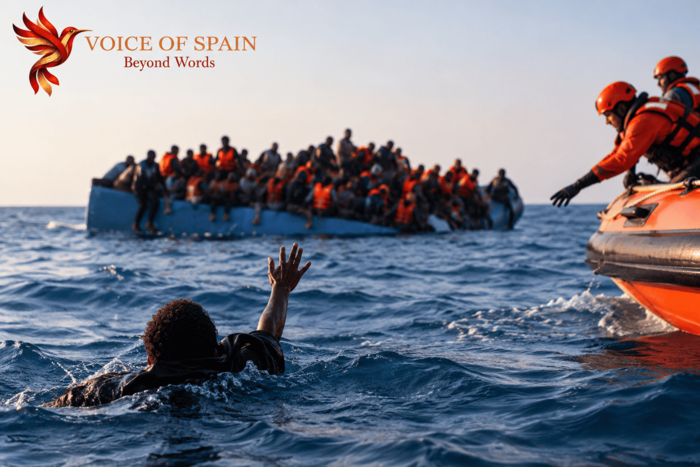
The disaster occurred near Guhere, north of the coastal town of Obock in Djibouti, during the night of 8–9 October, as the vessel travelled towards Yemen. According to updated reporting from the International Organization for Migration (IOM), at least 139 people have died, 84 remain missing and 82 have survived. The boat was carrying approximately 305 people, and search and recovery efforts have continued following the tragedy.
The latest death toll represents a significant increase from the initial reports, which recorded at least 109 deaths. The figures have changed as additional bodies have been recovered and authorities have worked to establish the scale of the disaster. The continuing search for missing passengers has left families waiting for information about their relatives, while survivors face the difficult task of recovering from a traumatic experience.
The IOM has been working alongside local authorities to provide emergency assistance to those who survived. This includes medical treatment, psychological support and other essential services. The agency has also highlighted the difficulty of identifying victims and informing families, particularly when people travelling along migration routes may have limited documentation or contact with relatives.
The tragedy has brought renewed attention to the dangerous migration corridor connecting the Horn of Africa with the Arabian Peninsula. Many migrants travel from Ethiopia and neighbouring countries through Djibouti before crossing the Bab el-Mandeb Strait towards Yemen. Some hope to continue onwards to Saudi Arabia and other Gulf countries in search of employment, better living conditions and financial security.
For many of these travellers, migration is driven by a combination of economic hardship, insecurity, limited employment opportunities and environmental pressures. The decision to undertake such a journey may involve considerable personal and financial sacrifice. Yet overcrowded vessels, unsafe maritime conditions and reliance on irregular transport arrangements can expose passengers to life-threatening risks.
The route remains active despite the dangers. According to figures cited by the IOM, more than 20,000 incoming movements from Ethiopia into Djibouti were recorded from 10 September onwards. The agency also reported that more than 900 migrants died or went missing along this migration corridor during 2025. These figures demonstrate the scale of the humanitarian challenge, although recorded movements do not necessarily represent distinct individuals
Yemen's continuing instability adds another layer of complexity. Although the country serves as a transit point for migrants hoping to reach Gulf destinations, conflict and insecurity have also forced people to seek protection elsewhere in the region. Djibouti consequently faces overlapping humanitarian pressures, including assisting migrants arriving from neighbouring countries and people escaping violence in Yemen.
International humanitarian organisations have repeatedly warned that people travelling through irregular migration routes can face exploitation, abuse and dangerous journeys across both land and sea. Smuggling networks may take advantage of individuals who lack access to safe travel options, while overcrowded boats can leave passengers with little protection if an emergency occurs.
The latest shipwreck has therefore renewed calls for stronger search-and-rescue capabilities, better coordination between countries and increased support for humanitarian organisations working along the route. Emergency response can save lives during a disaster, but preventing similar tragedies also requires addressing the circumstances that push people towards dangerous journeys.
Governments in countries of origin, transit and destination face the challenge of balancing border management with the protection of human life. Safer and more accessible legal migration pathways, reliable information about employment opportunities and stronger action against criminal smuggling networks could help reduce the number of people exposed to dangerous crossings.
At the same time, humanitarian assistance remains essential for survivors and the families of those who have died or disappeared. Medical treatment, psychological support, victim identification and communication with relatives are all important elements of the response. Families need accurate information, while survivors require continued support as they begin rebuilding their lives after the disaster.
The full consequences of the shipwreck will extend beyond the immediate loss of life. Communities in Ethiopia and elsewhere in the Horn of Africa may be left grieving relatives who were travelling in search of a better future. For families already facing financial difficulties, the loss of a family member can also create further economic uncertainty.
The incident is among the deadliest recent disasters reported along this migration route. It illustrates the human cost of a system in which people continue to undertake perilous journeys despite repeated warnings from international organisations. The challenge for the international community is not only to respond to individual emergencies, but also to develop practical measures that reduce the need for such dangerous travel.
VoS STRATEGIC INSIGHT
The Djibouti shipwreck highlights a fundamental contradiction in global migration: people continue to risk their lives at sea because the prospect of employment, safety or a more secure future can outweigh the dangers of the journey. When safe and accessible alternatives are limited, stricter border controls alone cannot eliminate irregular migration or the risks associated with it.
The immediate priority must be to support rescue operations, assist survivors and establish the identities of those who have died or remain missing. Governments and humanitarian organisations should also ensure that affected families receive accurate information and appropriate assistance.
Over the longer term, international cooperation must focus on safer migration routes, action against people-smuggling networks and improved economic opportunities in countries of origin. Cooperation between African countries, Yemen and Gulf destinations is particularly important because migration along this corridor crosses several jurisdictions.
The tragedy also demonstrates why migration policy should be assessed not only through border statistics, but through its impact on human lives. Preventing deaths requires a combination of effective enforcement, humanitarian protection and realistic legal alternatives for people seeking work and security abroad.
Ultimately, the loss of so many lives should serve as a warning that dangerous migration routes remain a serious international humanitarian concern. The responsibility now extends beyond recovering the missing and caring for survivors: it requires sustained action to prevent another disaster of this scale.
Source: Associated Press — 139 migrants die after boat capsizes off Djibouti | Euronews — At least 139 migrants dead after boat capsizes off Djibouti | Al Jazeera — At least 109 dead, over 100 missing as migrant boat capsizes off Djibouti