
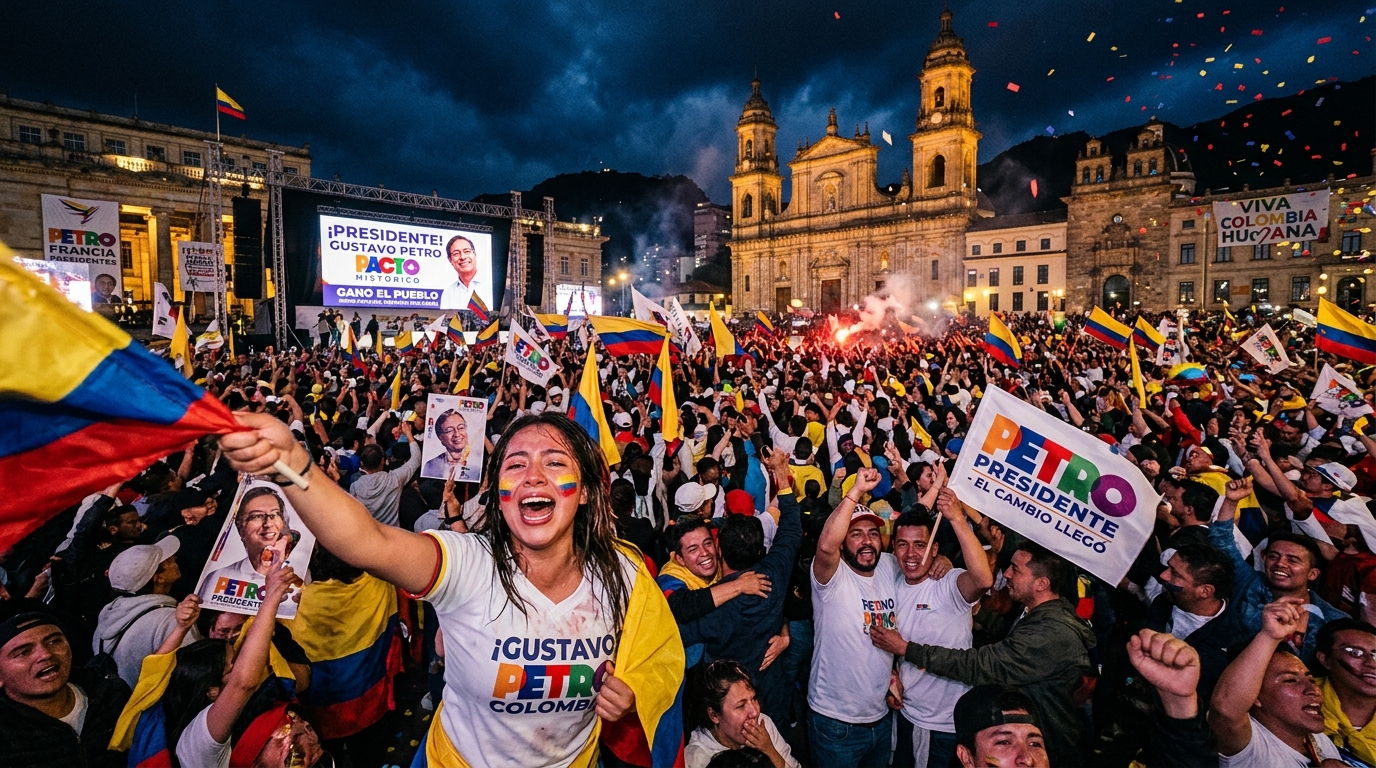
Colombia has experienced a significant political realignment following Sunday's presidential runoff election, in which Trump-backed far-right lawyer Abelardo de la Espriella declared victory with 49.7% of the vote, narrowly defeating leftist Senator Iván Cepeda who received 48.7% of the vote. De la Espriella, a political novice who rose to prominence representing right-wing paramilitary groups, represents a dramatic departure from the leftist governance of outgoing President Gustavo Petro. The election results reflect broader Latin American political trends toward rightward realignment, with Colombia joining Argentina, El Salvador, Chile, and Bolivia in shifting toward conservative governance. Cepeda, a prominent human rights defender and legislator whose father was assassinated by right-wing, U.S.-backed paramilitary groups in 1994, has indicated that he will recognize the official election results following completion of the formal canvassing process and verification procedures. The election outcome represents a significant victory for Trump administration foreign policy objectives in Latin America and reflects the influence of American political actors in shaping electoral outcomes across the region.
The Colombian election results have profound implications for Latin American political development and regional governance patterns. De la Espriella's victory signals a potential shift in Colombian domestic policy toward more conservative economic approaches and potentially more accommodating positions toward American foreign policy objectives. The election reflects broader patterns of political polarization and ideological conflict affecting Latin American democracies, with voters increasingly divided between leftist and rightist political movements offering fundamentally different visions for national development. The narrow margin of victory suggests that Colombian society remains deeply divided regarding the nation's political direction, with significant portions of the electorate supporting leftist alternatives to conservative governance. The election outcome will likely influence policy decisions regarding economic management, social programs, environmental protection, and international relations, with potential implications for regional stability and cooperation within Latin American institutions.
.png)
.png)
.png)
.png)
.png)
.png)
.png)
.png)