VoS NEWS DESK | INTERNATIONAL | 4 OCTOBER 2026
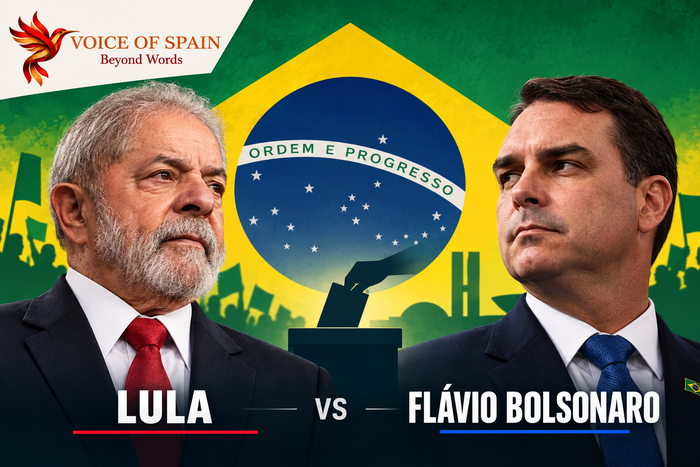
Lula, 80, is seeking another term in office after returning to the presidency in 2023. His campaign has focused on economic development, social programmes, employment, democratic institutions and maintaining Brazil's international role.
Flávio Bolsonaro, 45, has emerged as the principal conservative challenger. His campaign draws heavily on the political movement associated with his father and seeks to mobilise voters who support conservative policies, tougher approaches to crime and a stronger challenge to Lula's government.
The election comes after several years of intense political polarisation in Brazil. The political divide between supporters of Lula and the Bolsonaro movement has shaped national debate over the economy, public security, government spending, social policies and Brazil's relationship with other major powers.
Crime and public security have been particularly important campaign issues. Bolsonaro has presented himself as a candidate capable of adopting a tougher approach towards organised criminal groups, while Lula's campaign has highlighted government programmes and broader social and economic policies.
The economy is another central concern for voters. Brazil is one of the world's largest economies and a major producer of agricultural commodities, minerals and energy. Decisions taken by the next government could therefore influence not only Brazilian households but also international investors and trading partners.
Brazil's relationship with the United States is also attracting attention. Changes in Washington's trade and foreign-policy priorities could affect Brazilian exports, diplomatic relations and economic planning.
The election is also significant for environmental policy. Brazil contains a large portion of the Amazon rainforest, making decisions taken in Brasília important for international efforts to combat climate change and protect biodiversity.
Lula has traditionally presented Brazil as a country with an important role in international climate diplomacy, while the Bolsonaro political movement has frequently criticised what it considers excessive external pressure on Brazil's environmental policies.
The first-round election system means that winning the largest number of votes may not necessarily be enough to secure the presidency. A candidate must obtain more than half of the valid votes to win outright.
If no candidate reaches that threshold, the two strongest candidates move to a second round. This possibility means that even after the first vote, Brazil could face several additional weeks of political campaigning and negotiations.
The close nature of the contest has made turnout particularly important. Brazil has a large electorate, and voters in major urban centres, poorer regions and economically powerful states could all influence the final result.
The election is therefore more than a contest between two individuals. It represents a choice between two very different political visions for Brazil.
Lula represents the continuation of a left-leaning administration focused on social programmes, state involvement in development and international cooperation. Flávio Bolsonaro represents a conservative alternative connected to the political legacy of his father.
The result could also influence the political future of the Bolsonaro family. A strong performance by Flávio would demonstrate that the movement remains a major force in Brazilian politics, while a decisive Lula victory could strengthen the current government's political position.
VoS STRATEGIC INSIGHT
Brazil's election is strategically important because the country is simultaneously a major economy, agricultural power, environmental heavyweight and leading Latin American democracy.
The contest between Lula and Flávio Bolsonaro reflects a broader struggle over Brazil's political identity. The result could determine the country's approach to economic policy, social spending, public security, environmental protection and relations with Washington and other major powers.
If the election proceeds to a second round, the campaign could become even more competitive as defeated candidates and undecided voters become the focus of both leading campaigns.
Whatever the final result, Brazil's next government will inherit major challenges involving economic growth, inequality, crime, environmental protection and political polarisation.
Source: Reuters; Associated Press; Brazilian electoral authorities; campaign statements.