VoS NEWS DESK | GLOBAL HEALTH & HUMANITARIAN AFFAIRS | 17 OCTOBER 2026
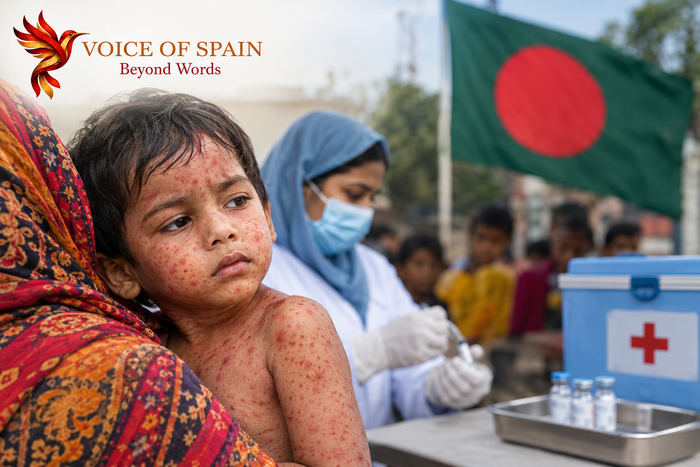
The outbreak has become one of Bangladesh's most serious public health emergencies of the year, with young children bearing the greatest burden of the disease. According to Reuters' report published on 17 October, the World Health Organization recorded more than 202,000 suspected measles cases from the beginning of the outbreak in mid-March until October, including approximately 22,000 laboratory-confirmed infections. The reported death toll includes suspected and confirmed measles-related fatalities, so the figures should not be interpreted as 1,147 laboratory-confirmed deaths.
Measles is a highly contagious viral disease that can cause fever, cough, a runny nose, inflamed eyes and a characteristic skin rash. In severe cases, it can lead to complications such as pneumonia, serious dehydration and inflammation of the brain. Children who are unvaccinated, under-vaccinated or otherwise vulnerable face a greater risk of serious illness.
The scale of the outbreak has raised questions about the effectiveness of routine immunisation programmes and the ability of health authorities to identify children who have missed essential vaccinations. Experts cited by Reuters have linked the crisis to disruptions in vaccination services during political turmoil in 2024 and 2025, alongside weaknesses in vaccine procurement, planning and public health data.
These disruptions left many children without adequate protection against measles. When vaccination coverage falls, the virus can spread rapidly through communities, particularly where people live in crowded conditions or have limited access to healthcare. Even when emergency vaccination campaigns are introduced, reaching every eligible child can be difficult.
Bangladesh has already undertaken emergency immunisation efforts, but significant gaps remain. According to the latest Reuters report, a new campaign launched in late September aims to vaccinate approximately 3.4 million children who were missed during earlier efforts. The campaign targets children aged six months to five years, including those who may have been overlooked by routine services.
However, health experts have warned that vaccination drives can struggle to reach children in remote areas, particularly where records are incomplete, transport is difficult or healthcare staffing is insufficient. Weak data systems can also make it harder for authorities to determine which communities remain unprotected and how resources should be distributed.
The challenge is not limited to administering vaccine doses. Effective outbreak control also requires reliable disease surveillance, timely diagnosis, appropriate treatment and clear communication with families. Health authorities must identify new infections quickly, monitor the spread of the disease and ensure that hospitals can manage patients requiring urgent medical attention.
The outbreak has also placed additional pressure on healthcare facilities already dealing with other infectious diseases. Bangladesh is simultaneously facing a serious dengue situation, increasing the demands on hospitals, medical staff and essential supplies. When multiple outbreaks occur together, health services may struggle to allocate resources while maintaining routine care for patients with other conditions.
Public confidence is another important factor. Parents need accurate information about vaccination schedules, vaccine safety and the risks associated with preventable diseases. Misinformation, limited access to healthcare and practical barriers such as transport costs can all contribute to missed vaccinations.
Health specialists emphasise that sustained routine immunisation is more effective than relying solely on emergency campaigns after an outbreak has begun. The World Health Organization has repeatedly highlighted the importance of maintaining high vaccination coverage to prevent measles transmission and protect children who are too young to receive routine doses or who cannot be vaccinated for medical reasons.
The situation in Bangladesh also has implications beyond its borders. In an interconnected world, infectious diseases can spread across communities and national boundaries through travel and population movement. Strong immunisation programmes, effective surveillance and cooperation between health authorities are therefore important components of international public health security.
Nevertheless, the immediate priority remains protecting children and bringing the outbreak under control. This requires ensuring that missed children receive appropriate vaccinations, improving access to healthcare in underserved communities and providing hospitals with the resources needed to treat severe cases.
The crisis demonstrates how quickly earlier public health progress can be undermined when routine services are disrupted. It also highlights the importance of accurate reporting: suspected cases, laboratory-confirmed infections and suspected or confirmed deaths must be clearly distinguished so that governments and international organisations can evaluate the situation properly.
Bangladesh's response will be judged not only by the number of children reached by emergency vaccination campaigns, but also by whether routine immunisation services can be strengthened for the future. Restoring reliable vaccination coverage will be essential to reducing transmission and preventing similar emergencies from recurring.
VoS STRATEGIC INSIGHT
Bangladesh's measles crisis demonstrates that strong public health systems depend on prevention as much as emergency response. Vaccination programmes must operate consistently, even during political instability or periods of financial pressure, because gaps in coverage can leave large numbers of children vulnerable to diseases that are preventable.
The outbreak also highlights the importance of accurate data and effective local outreach. Governments cannot protect children who are missing from vaccination records or communities that remain outside routine healthcare services. Investment in health workers, vaccine supply chains, surveillance and public communication is therefore essential.
International support can help address urgent needs, but sustainable progress requires national systems capable of delivering routine immunisation over the long term. Emergency campaigns are valuable, yet they cannot replace dependable healthcare services and regular follow-up.
For other countries, the warning is clear: declining vaccination rates can create serious consequences even where earlier progress against infectious diseases has been substantial. Protecting public health requires consistent investment, trustworthy information and cooperation between communities, governments and international health organisations.
Ultimately, the success of Bangladesh's response will depend on whether emergency measures can close existing vaccination gaps and restore confidence in routine healthcare. Protecting children today is essential, but preventing the next outbreak must remain an equally important priority.
Source: Reuters — Bangladesh is battling measles. It's a 'real warning' to other nations · World Health Organization — Nationwide Response Mobilized to Contain Measles Outbreak in Bangladesh