VoS NEWS DESK | INTERNATIONAL ENVIRONMENT | 19 October 2026
The Amazon rainforest is one of the world's most important ecological regions. It stores vast quantities of carbon, supports extraordinary biodiversity and plays a significant role in regional rainfall patterns. Its rivers and forests also sustain Indigenous peoples whose livelihoods, cultural traditions and territorial rights are closely connected to the natural environment.
However, criminal activities operating across parts of the Amazon have placed increasing pressure on this fragile ecosystem. Illegal gold mining can remove vegetation, damage riverbanks and introduce mercury into waterways. Unauthorised logging contributes to forest degradation, while drug-trafficking networks can use remote territories and transport routes to expand their operations.
These activities are often linked to broader criminal economies rather than isolated local incidents. The extraction and sale of valuable natural resources can generate substantial profits, while corruption, limited enforcement capacity and the remoteness of affected areas can make investigations difficult.
Indigenous representatives argue that the international response must therefore go beyond occasional enforcement operations. They want governments to cooperate in tracing criminal finances, strengthening territorial protection and ensuring that communities have a meaningful role in decisions affecting their ancestral lands.
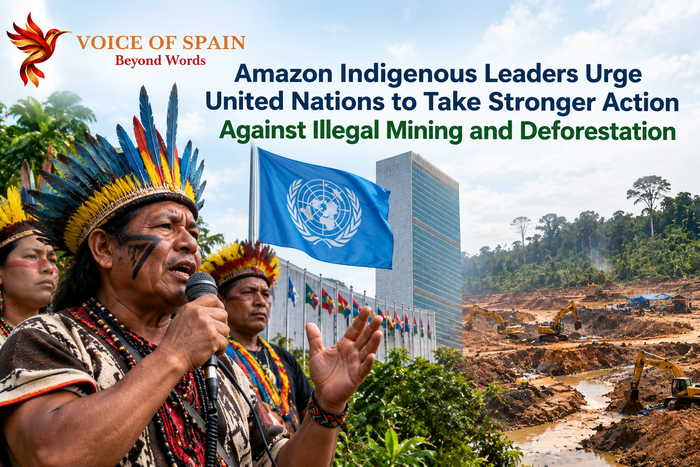
The United Nations conference on transnational organised crime, taking place in Vienna from 19 to 23 October 2026, provides an opportunity to raise these issues within wider discussions about international criminal networks. The participating Indigenous representatives are seeking stronger measures against environmental crimes and greater recognition of the people who face the consequences on the ground.
Illegal gold mining is among the major environmental concerns affecting parts of the Amazon. Mining operations may clear large areas of vegetation, disturb river systems and leave behind pits, sediment and contaminated water. Where mercury is used to separate gold from other materials, the chemical can enter aquatic ecosystems and pose risks to wildlife and human health.
Contamination can be particularly serious for communities that depend on rivers for drinking water, fishing, food supplies and transport. Mercury exposure can affect the nervous system, and long-term exposure is a recognised public-health concern. The precise risks vary according to local conditions, the level of contamination and the ways in which people are exposed.
The damage is not limited to the immediate mining site. Forest clearance can fragment habitats, threaten wildlife and weaken the ecological functions that help maintain the Amazon's environmental balance. Sediment and pollutants entering rivers can also affect communities located downstream from mining operations.
Illegal mining can be difficult to eliminate because equipment and operations may be moved quickly when authorities conduct enforcement actions. Some activities are carried out in remote locations, while the individuals financing or benefiting from the trade may operate far from the places where the environmental damage occurs.
Indigenous leaders argue that governments need to target the entire chain of illegal activity, including the financiers, intermediaries, transport networks and buyers who make the trade profitable. Without addressing these economic incentives, the closure of individual mining sites may provide only temporary relief.
The environmental crisis is also a question of community safety and territorial rights. Indigenous peoples have lived in the Amazon for generations, maintaining social structures, cultural practices and knowledge systems closely connected to their lands.
When criminal groups enter Indigenous territories, residents may face intimidation, violence and pressure to permit activities that threaten their environment. Community members who document illegal operations or defend their land can become targets of threats and attacks.
The Associated Press reported that more than 100 environmental defenders were killed in Latin America during 2025, illustrating the dangers faced by people who challenge environmental destruction. Such figures cover a wider regional problem and should not be interpreted as deaths exclusively linked to the Amazon or to the specific criminal networks under discussion.
Indigenous leaders are calling for stronger recognition of territorial rights and community-based protection systems. They argue that people living in affected areas often possess detailed knowledge of local waterways, forest routes and changes in land use that can help authorities identify illegal activities.
Recognising this knowledge could improve monitoring and early-warning systems, particularly in areas where government agencies have limited resources. However, community participation must be accompanied by adequate safeguards, training and protection against retaliation.
The issue also raises questions about land ownership and legal recognition. Where territorial boundaries remain disputed or enforcement is weak, criminal groups may find it easier to occupy land, exploit natural resources or intimidate residents. Stronger legal protections and effective implementation could therefore play an important role in reducing environmental crime.
The leaders' appeal to the United Nations reflects the cross-border nature of the problem. Criminal networks can operate across national boundaries, moving resources, money and equipment through different jurisdictions. Environmental damage may occur in one country while profits are transferred elsewhere or illegal products enter international supply chains.
This makes cooperation between governments essential. Authorities may need to exchange information, coordinate investigations, improve financial monitoring and strengthen the enforcement of environmental laws. Cooperation with Indigenous organisations can also help ensure that investigations reflect local realities and do not overlook the communities most affected.
The proposed international approach discussed by Indigenous representatives places particular emphasis on the financial systems behind environmental crime. Investigating money flows and identifying those who profit from illegal extraction could help governments target the organisations directing such activities, rather than focusing solely on workers at mining sites.
The leaders are also seeking meaningful participation in international negotiations. Their concern is that agreements designed without sufficient input from affected communities may fail to address the practical difficulties of protecting remote territories.
The United Nations Office on Drugs and Crime has undertaken monitoring initiatives with Indigenous communities, but the Associated Press reported that formal Indigenous participation in drafting the proposed protocol had not been confirmed. This distinction matters because consultation, monitoring and direct participation in negotiations are different levels of involvement.
The Amazon's environmental importance extends far beyond South America. Forest degradation can affect carbon storage, biodiversity, water cycles and the resilience of ecosystems under pressure from climate change. Protecting the rainforest is therefore relevant to international environmental commitments as well as the rights and welfare of its inhabitants.
Nevertheless, effective protection requires more than declarations of support. Governments need the resources and institutional capacity to enforce environmental legislation, investigate organised crime and ensure that legal protections are applied consistently. Cooperation between environmental agencies, police, prosecutors and local communities can help address the different dimensions of the problem.
Economic alternatives are also important. Communities require secure livelihoods, access to education and healthcare, and opportunities to earn income without becoming dependent on destructive or illegal activities. Responsible investment and sustainable forest-based enterprises may help reduce pressure on natural resources, provided that Indigenous land rights and local priorities are respected.
International businesses and consumers also have a role to play. Stronger supply-chain checks can help identify illegally sourced minerals and timber, while financial institutions can improve scrutiny of transactions associated with environmental offences. These measures require reliable information, appropriate safeguards and cooperation between countries.
The coming days of discussions in Vienna will be important in determining how far governments are prepared to translate these demands into practical commitments. The outcome will need to be assessed through the measures ultimately adopted, the level of Indigenous participation and the extent to which national authorities implement agreed actions.
For Indigenous communities, the issue is immediate: the loss of forest, the contamination of rivers and threats to environmental defenders can affect daily life long before international agreements produce results. Stronger enforcement and genuine cooperation are therefore essential if commitments to protect the Amazon are to have a meaningful impact.
VoS STRATEGIC INSIGHT
The call from Amazon Indigenous leaders demonstrates that environmental protection cannot be separated from the fight against organised crime and the defence of human rights. Illegal mining, deforestation and drug trafficking can reinforce one another, creating financial incentives for criminal networks while weakening the security of local communities.
International agreements will be most effective when they address the structures that allow environmental crime to remain profitable. This includes investigating financial networks, improving cross-border cooperation, strengthening territorial rights and ensuring that environmental laws are enforced consistently.
Indigenous participation is equally important. Communities living in and around the Amazon possess valuable knowledge of their territories and often experience the consequences of environmental destruction first-hand. Their involvement in monitoring, policymaking and international negotiations can improve both the legitimacy and effectiveness of conservation efforts.
Ultimately, protecting the Amazon requires a sustained partnership between national governments, international institutions, Indigenous organisations and responsible businesses. The objective should be not only to prevent further destruction but also to safeguard the people, biodiversity and natural systems that make the rainforest essential to the wider world.
Sources: