VoS NEWS DESK | INTERNATIONAL | 21 OCTOBER 2026
Alberta, one of Canada’s most economically significant provinces, has long played an important role in the country’s energy industry. Its oil and natural gas resources contribute substantially to employment, investment and government revenues. However, disagreements over energy regulation, taxation, environmental policy and the distribution of federal powers have periodically fuelled calls for greater provincial autonomy.
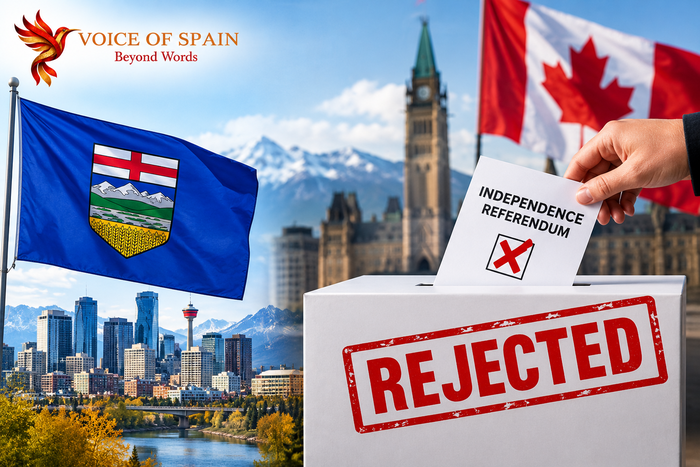
The latest vote centred on whether the Alberta government should begin the legal process necessary to hold a binding provincial referendum on separation from Canada. It was not itself a direct vote on whether Alberta should immediately become an independent country. Instead, the proposal would have moved the province towards a further constitutional and political process that could eventually have put independence to a binding public vote.
The rejection of the proposal therefore represents a setback for separatist campaigners, who have sought to turn dissatisfaction with federal policies into broader public support for independence. The reported result indicated that a substantial majority of participating voters preferred not to initiate the process at this stage.
The outcome is also significant for Canadian Prime Minister Mark Carney and his government. Separatist sentiment in Alberta has presented a political challenge to the federal government, particularly during periods of disagreement over energy development and provincial authority. The result offers a measure of reassurance to supporters of Canadian national unity, although it does not mean that every disagreement between Alberta and Ottawa has been resolved.
Alberta’s relationship with the federal government has been shaped by a range of economic and political issues. The province’s energy sector is especially important because oil and gas production supports thousands of jobs and contributes to public revenues. Disputes over pipelines, environmental requirements and energy policy have consequently become central to discussions about the province’s economic future.
Some supporters of greater autonomy argue that Alberta should have more control over the decisions affecting its industries and public finances. They contend that federal policies can place constraints on the province’s economic potential or fail to reflect its particular priorities. Separatist campaigners have used these concerns to argue that Alberta could exercise greater control over its resources and political direction outside the Canadian federation.
Opponents of independence, however, point to the economic, legal and practical difficulties that separation could create. Alberta benefits from access to the Canadian domestic market, established national institutions and existing interprovincial economic relationships. Leaving the federation would raise complex questions involving trade, taxation, citizenship, public debt, pensions, federal assets and constitutional arrangements.
Energy exports would present another major consideration. Although Alberta possesses substantial natural resources, its economic future is closely connected to transportation infrastructure, access to markets and relationships with other Canadian provinces and international customers. Any move towards independence would require careful negotiations over these matters, with potentially significant implications for businesses, workers and public finances.
The result also highlights the difference between dissatisfaction with a government and support for breaking away from a country. Voters may favour changes to federal policy or demand greater provincial authority without necessarily supporting independence. Political analysts have noted that some voters may use separatist campaigns to express frustration with Ottawa rather than to endorse the full consequences of secession.
Alberta Premier Danielle Smith has acknowledged the outcome and indicated that another referendum would not be pursued during her tenure, according to the Associated Press. Her position suggests that the immediate political emphasis is likely to remain on provincial autonomy within Canada rather than another attempt to initiate a separation vote. Separatist advocates, however, have indicated that they intend to continue campaigning for their cause.
The result does not eliminate the underlying disagreements that contributed to the independence debate. Questions about energy development, federal spending, taxation and provincial decision-making are likely to remain important in Alberta politics. The key challenge for provincial and federal leaders will be to address these concerns through political negotiation and established constitutional processes.
For the wider Canadian federation, the vote provides an indication of public resistance to beginning a formal separation process. Nevertheless, the strength of national unity will depend not only on electoral results but also on whether political institutions can respond effectively to regional concerns and maintain public confidence.
VoS STRATEGIC INSIGHT
Alberta’s vote demonstrates that regional dissatisfaction does not automatically translate into majority support for independence. While disagreements over federal policy can strengthen separatist movements, the practical implications of leaving a national federation may lead voters to favour reform and greater autonomy instead.
For the Canadian government, the result presents an opportunity to engage more constructively with Alberta on energy policy, economic development and the distribution of responsibilities between federal and provincial authorities. Addressing these issues through dialogue could help reduce tensions and strengthen confidence in the federation.
For Alberta’s leadership, the immediate challenge is to represent the concerns of residents who demand greater control while respecting the outcome of the vote. Economic stability, investment confidence and cooperation with other provinces are likely to remain important considerations as the province determines its political direction.
The result should not be interpreted as the end of separatism in Alberta. Rather, it represents a significant obstacle to the movement’s immediate objective of advancing towards a binding independence referendum. Its future prospects will depend on public opinion, political leadership and whether disagreements with Ottawa become more or less pronounced.
Ultimately, the vote reinforces the importance of democratic legitimacy and constitutional processes in debates over national unity. Canada’s long-term stability will depend on balancing provincial interests with shared national institutions, while Alberta’s political future will continue to be shaped by the relationship between regional autonomy and the benefits of remaining part of the federation.
Source: Associated Press — Alberta voters reject the separation process; Alberta Fact Check — Explanation of the referendum question.