
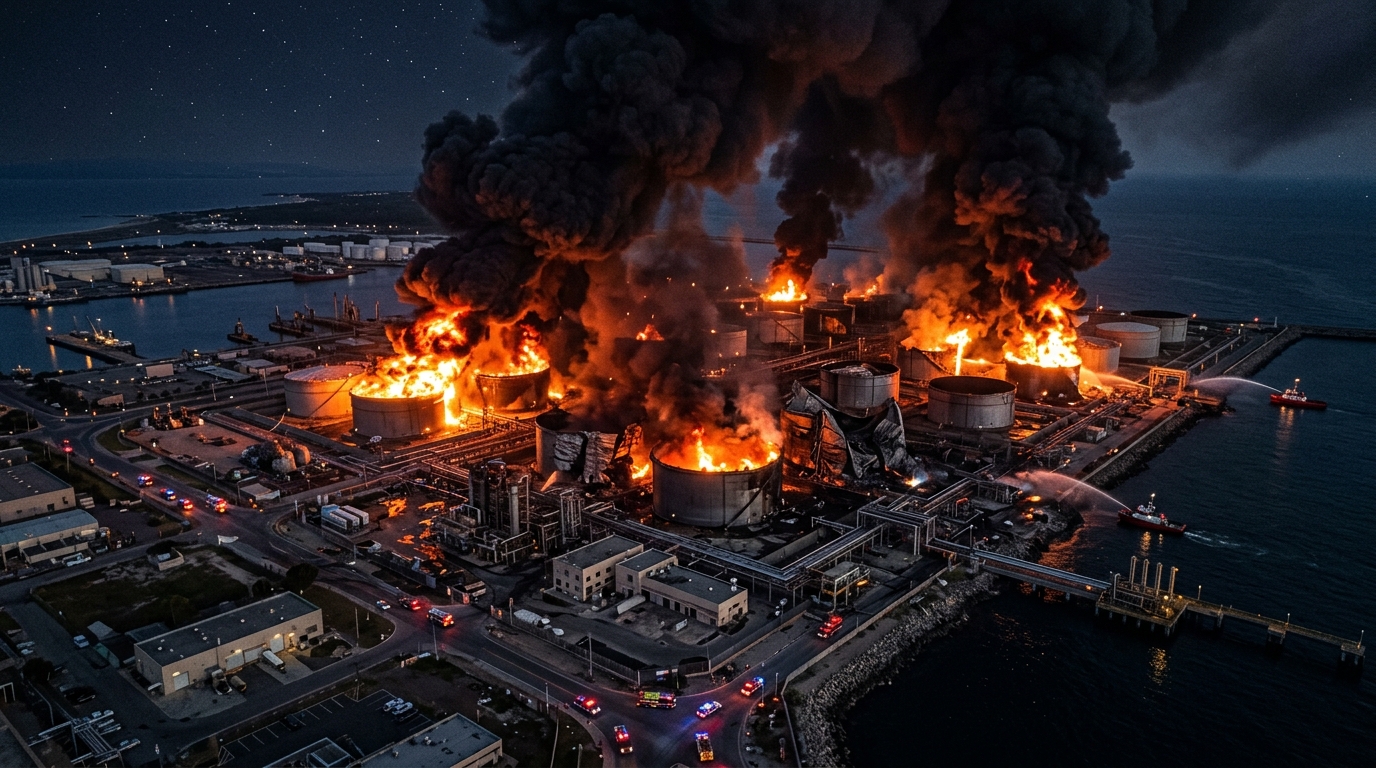
Ukraine has intensified its strategic military campaign by deploying long-range unmanned aerial systems to strike critical Russian energy infrastructure, marking a significant shift in operational tactics. Recent drone attacks have successfully targeted and destroyed an oil terminal in St. Petersburg, with Ukrainian unmanned systems traveling over 1,000 kilometers to reach their objectives. These operations represent a deliberate strategic choice to prioritize economic disruption over territorial conquest, with Ukrainian military analysts emphasizing that the destruction of Russian oil production facilities and weapons manufacturing centers serves to degrade Moscow's capacity to sustain prolonged military operations. The strikes on energy infrastructure are designed to create cascading economic consequences that extend beyond immediate military impact, affecting Russia's ability to finance its war effort and maintain domestic economic stability. Russian military analysts have responded by escalating air raids on major Ukrainian cities, with experts suggesting that these retaliatory strikes are intended to distract international attention from the effectiveness of Ukrainian long-range operations and to compensate for Russia's inability to achieve territorial gains on the ground.
The strategic implications of Ukraine's drone campaign extend beyond bilateral military considerations to encompass broader European security dynamics. The United Kingdom and Poland have recently formalized a comprehensive defense and security treaty designed to strengthen NATO's eastern flank and improve border security cooperation. British officials have characterized NATO's commitment to territorial defense as "unshakeable," while simultaneously acknowledging that the United States has demanded greater European investment in defense capabilities. Both Britain and Poland have pursued additional bilateral defense agreements with France and Germany, reflecting a broader European recognition that collective security arrangements must be supplemented by strengthened bilateral partnerships. This diplomatic realignment represents a significant recalibration of European security architecture in response to Russian aggression and perceived American demands for burden-sharing. The convergence of Ukrainian military innovation, NATO alliance strengthening, and European defense spending increases suggests a fundamental restructuring of the continent's security posture that will likely persist regardless of the ultimate outcome of the Ukraine conflict.
.png)
.png)
.png)
.png)
.png)
.png)
.png)
.png)