VoS NEWS DESK | INTERNATIONAL POLITICS & CIVIL LIBERTIES | 1 NOVEMBER 2026
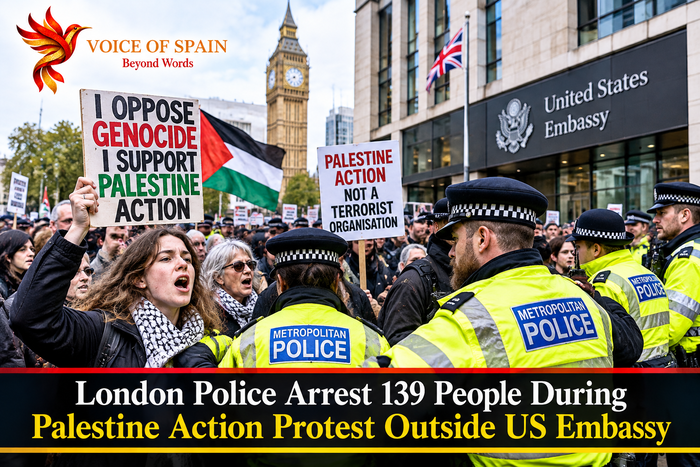
According to the Metropolitan Police, 139 people had been arrested by approximately 6.15pm on Saturday, with the majority detained for allegedly expressing support for a proscribed organisation. More than 100 people initially gathered outside the US Embassy in Nine Elms, although reports indicated that hundreds took part in the wider demonstration. Participants carried placards displaying messages opposing the organisation's proscription and expressing solidarity with Palestine. Some demonstrators held signs stating, "I oppose genocide, I support Palestine Action", while others chanted pro-Palestinian slogans as police officers detained participants and transferred them to police vehicles.
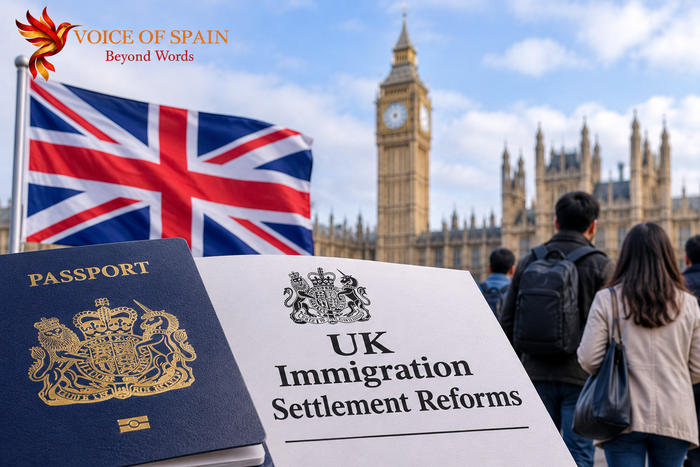
The demonstration was organised by Defend Our Juries, a campaign group that has been challenging the legal restrictions imposed on Palestine Action. Organisers argued that the arrests represented an unacceptable restriction on peaceful political expression and maintained that people should be able to demonstrate against government policies without facing criminal proceedings simply for expressing their views. The British Government proscribed Palestine Action in June 2025 under the Terrorism Act 2000. The decision followed a series of direct-action activities organised by the group against companies and facilities that it accused of having connections with Israel's military operations.
Founded in 2020, Palestine Action became known for campaigns involving occupations, protests and property damage at locations connected to the defence industry. Its activities included an incident involving an Elbit Systems facility and damage to aircraft at a Royal Air Force base. The Government argued that the group's actions justified the use of counter-terrorism legislation, while supporters and civil-liberties campaigners questioned whether the designation was proportionate. Under British law, membership of or support for a proscribed organisation can constitute a criminal offence. This means that displaying certain messages or publicly expressing support for a banned group may lead to arrest and possible prosecution, depending on the circumstances and the evidence involved.
The legal dispute has developed through several stages. In February 2026, the High Court ruled that the Government's decision to proscribe Palestine Action was disproportionate. However, the Court of Appeal subsequently ruled in June that the ban was lawful, leaving the organisation's designation in place while further legal proceedings continued. The latest London demonstration took place ahead of a Supreme Court appeal scheduled to begin on 4 November 2026. The case is expected to examine the legal challenge surrounding the organisation's proscription and the arguments concerning the powers of the Government under terrorism legislation.
Defend Our Juries has maintained that the restrictions have created serious concerns for democratic participation. The group says that more than 4,000 people have been detained for supporting Palestine Action since the ban came into force in July 2025. This figure is the campaign group's estimate rather than an official total confirmed by the police. Police Commander Adam Slonecki defended the operation, stating that participants had been warned that expressing support for a proscribed organisation was unlawful. The Metropolitan Police maintained that officers were carrying out their responsibilities under existing legislation and that the demonstration required a substantial policing response.
The arrests also attracted attention because many participants appeared to be older demonstrators, including retirees. Some were seen being carried or escorted by officers towards police vehicles. The scenes prompted further criticism from campaigners, who argued that the authorities were taking an unnecessarily heavy approach towards people participating in a political demonstration. The protest was not limited to London. A separate vigil took place outside the US Consulate in Edinburgh, where demonstrators also expressed support for Palestine Action. Police Scotland reported that no arrests had been made at the Edinburgh gathering, although the authorities said they were investigating the demonstration.
The issue has become particularly controversial because the protests are connected to the wider international debate surrounding the conflict in Gaza. Demonstrations supporting Palestinian rights have taken place across Britain and other European countries, with participants calling for humanitarian assistance, political accountability and an end to civilian suffering. The British Government continues to defend its decision to proscribe Palestine Action, arguing that the designation concerns the organisation's activities and does not prevent lawful demonstrations in support of Palestinian rights. However, campaigners insist that the legislation has created uncertainty about the limits of political expression and the legal risks faced by demonstrators. With the Supreme Court proceedings approaching, the latest arrests are likely to intensify public attention on the case. The legal outcome could have wider implications for the relationship between counter-terrorism powers and the rights of individuals to participate in political campaigns and peaceful protests.
VoS STRATEGIC INSIGHT
The London arrests have brought one of the most sensitive questions facing modern democracies back into public debate: how far should governments be allowed to go when balancing national security against freedom of expression? The British authorities maintain that counter-terrorism legislation must be enforced when an organisation is legally proscribed. However, campaigners argue that the application of these laws to public demonstrations risks discouraging peaceful political participation. The forthcoming Supreme Court proceedings are particularly important because they will place the legal dispute under the scrutiny of Britain's highest court. The central debate extends beyond the activities of one organisation and concerns the legal standards that must be met when the Government uses its powers to proscribe a group.
For civil-liberties organisations, the key issue is proportionality. They argue that legislation intended to prevent terrorism must be applied carefully and should not create unnecessary restrictions on political debate, peaceful assembly or public criticism. For the Government, the challenge is to demonstrate that its decisions are legally justified and necessary to protect public safety. The controversy also reflects the growing impact of international conflicts on domestic politics. The war in Gaza and the wider humanitarian situation have generated strong public reactions across Europe, bringing thousands of people into demonstrations, campaigns and political discussions. Governments have consequently faced pressure from different sections of society, including those demanding stronger action on humanitarian issues and those calling for stricter enforcement of national security laws.
Another important dimension is public confidence in the police and judicial institutions. The handling of demonstrations can influence how communities perceive the fairness of law enforcement. If police operations are viewed as excessive or politically influenced, public trust may suffer. Equally, authorities must be able to maintain public order and respond to conduct that breaches the law. The Supreme Court appeal may therefore become a defining moment in the wider debate over Britain's approach to protest rights and counter-terrorism legislation. Its legal implications will be closely watched by campaigners, political observers and organisations concerned with civil liberties. Ultimately, the strength of a democratic system is measured not only by its ability to protect national security but also by its commitment to legal accountability, judicial independence and fundamental freedoms. The events outside the US Embassy demonstrate how difficult that balance can become when national security legislation intersects with highly contested international political issues.