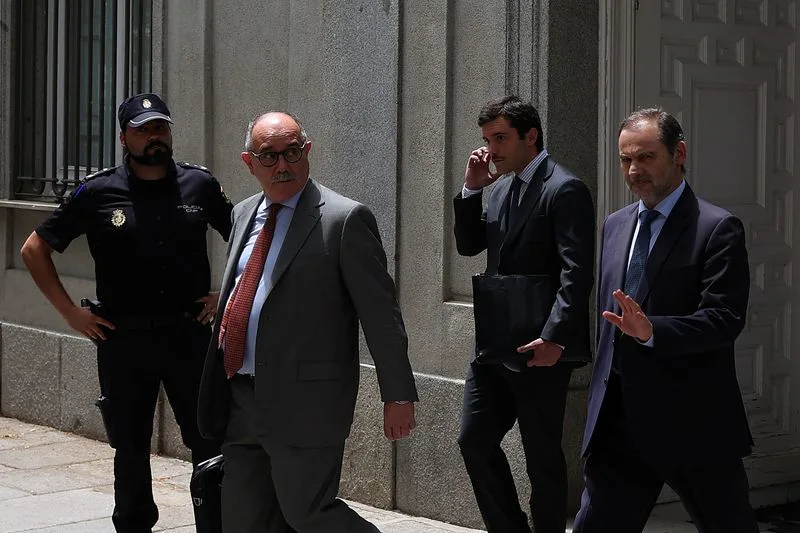
Spain's Supreme Court delivered a significant verdict on Monday, June 22, 2026, sentencing former Transport Minister Jose Luis Abalos to 24 years in prison for multiple corruption offenses that have shaken the ruling Socialist Party. The unusually lengthy sentence reflects the accumulation of serious felonies committed by Abalos, including kickbacks from facemask purchases during the COVID-19 pandemic and the substantial damage to public trust caused by a minister of his rank breaching fundamental rules of conduct. According to the court's verdict, a society that perceives those in positions of power acting guided by private interests rather than public service experiences a loss of institutional legitimacy that compromises the stability of the entire system. The court noted that while the effective time Abalos will serve is capped under Spanish law at approximately 16.5 years, the severity of the sentence demonstrates the judiciary's commitment to holding high-ranking officials accountable for corruption. The verdict represents the first major conviction in a series of court cases linked to Prime Minister Pedro Sanchez's Socialist government, marking a watershed moment in Spain's ongoing battle against political corruption.
The Abalos conviction comes amid a broader corruption crisis affecting the Spanish government, with more than a dozen people close to Prime Minister Sanchez currently under investigation or facing trial, including his wife Begoña Gómez and his brother. The Supreme Court uncovered evidence of corruption in the awarding of a contract for 13 million facemasks to a company linked to businessman Aldama, as well as monthly payments of €10,000 to Abalos for "fixed expenses" and the hiring of two of his associates in public companies, one of whom had housing costs covered by the government. The conviction has renewed calls from the opposition for Sanchez to step down and call an election, though the government has ruled out this option before the term ends in August 2027. Political scientist Luis Cornago-Bonal warned that with allegations now hanging over both the government and opposition, Spain risks drifting into a prolonged phase of public discontent and deeper polarization. Public concern over corruption, while below levels from a decade ago, is drifting upwards in voters' classification of the country's top problems, suggesting that the corruption scandals could have significant political consequences for the Socialist government.
.png)
.png)
.png)
.png)
.png)
.png)
.png)
.png)