VoS NEWS DESK | INTERNATIONAL | 30 August 2026
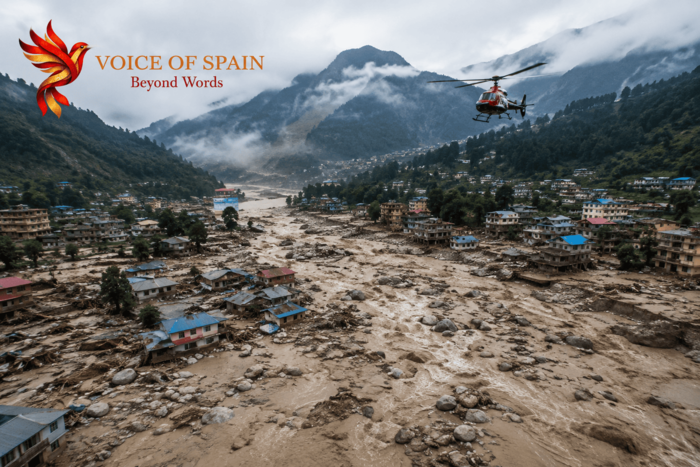
Rescue operations are continuing across the Himalayan border region after a devastating glacier collapse triggered torrents of water, rock and debris through communities in Nepal and China's Tibet.
The latest figures indicate that the disaster has caused an enormous loss of life. Nepal has reported 675 deaths and 2,498 people missing, while Chinese authorities have recorded 16 deaths in Gyirong County and 546 people still missing on the Tibetan side of the border.
The international dimension of the disaster has also become increasingly clear. China says 261 foreign nationals from 23 countries are among those missing in Tibet. The largest groups include nationals from Nepal, India, Latvia, the United States and the United Kingdom.
The flooding followed the collapse of a glacier in the high Himalayas, sending enormous quantities of water and debris into rivers and low-lying areas. Roads, bridges, homes and other essential infrastructure were destroyed, leaving some communities extremely difficult to reach.
Rescue teams are operating in exceptionally challenging conditions. Damaged roads, unstable terrain, poor weather and the possibility of further flooding have complicated efforts to reach isolated areas and determine the fate of missing people.
A major concern in recent days was the formation of a lake created by debris from the disaster. Chinese authorities said the risk of a sudden lake outburst has since decreased as the water level has begun to fall, although officials continue to monitor the area closely because other unstable water bodies remain a potential threat.
The humanitarian impact is substantial. The International Federation of Red Cross and Red Crescent Societies estimates that more than 90,000 people have been affected, increasing the need for emergency shelter, food, clean water and medical assistance.
The disaster has also caused serious disruption to transport and communications across the border. Key crossing points and surrounding infrastructure have been badly damaged, making it difficult for rescue teams and relief supplies to reach affected populations.
The international community is closely monitoring the crisis, while China has deployed more than 2,100 rescue and relief personnel and provided significant emergency funding and technical support. Nepal and China are also working together to identify missing people and coordinate the response.
Scientists and climate experts are examining the causes of the glacier collapse. Researchers have increasingly warned that rising temperatures and the rapid melting and destabilisation of glaciers can increase the risk of sudden high-altitude disasters in the Himalayas.
For Nepal, the crisis comes at an especially difficult time. The country's mountainous geography, limited infrastructure and dependence on vulnerable transport routes make large-scale disasters particularly difficult to manage.
The search for missing people remains the immediate priority. Families across Nepal, China and several other countries are still waiting for information about relatives and friends caught in the disaster.
Authorities are also preparing for possible secondary hazards, including additional landslides, flooding and unstable glacial conditions. The continued monitoring of rivers, lakes and glaciers will therefore remain essential even as rescue operations progress.
The scale of the disaster has transformed what initially appeared to be a localised Himalayan flood into a major international humanitarian emergency involving multiple countries and a large number of foreign nationals.
VoS STRATEGIC INSIGHT
The Himalayan disaster highlights the growing risks faced by communities living in high-altitude regions as glaciers and mountain ecosystems become increasingly unstable.
Beyond the immediate humanitarian emergency, the crisis raises wider questions about climate resilience, disaster preparedness and cross-border cooperation between Nepal and China. The destruction of transport links and critical infrastructure demonstrates how vulnerable remote Himalayan communities remain when extreme natural events strike.
The international presence among the missing also underlines the importance of stronger emergency systems for tourists, pilgrims and foreign visitors travelling through remote mountain regions.
The priority now is to locate survivors, support displaced communities and prevent secondary disasters. In the longer term, governments across the Himalayan region may face growing pressure to strengthen early-warning systems, glacier monitoring and climate adaptation measures.
Source: Reuters / VoS News Desk