VoS NEWS DESK | EUROPEAN POLITICS & INTERNATIONAL AFFAIRS | 2 NOVEMBER 2026
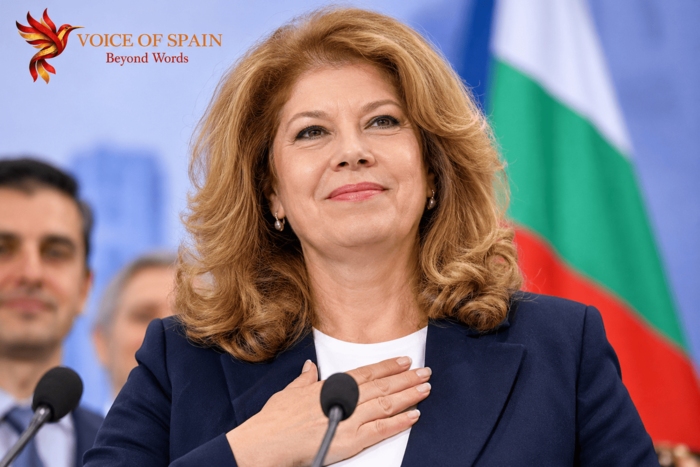
According to preliminary figures released by Bulgaria's Central Election Commission, Iliana Iotova and her running mate Kiril Valchev received 57.95 per cent of the votes after 52.42 per cent of polling station protocols had been processed. Their opponents, Andrey Gyurov and Georgi Kandev, secured 39.01 per cent, while approximately 3.04 per cent of voters indicated that they did not support either candidate. Gyurov subsequently conceded defeat, acknowledging the strong performance of his political opponents. The final official results are expected following the completion of the electoral counting and verification process.
Iotova entered the presidential contest with considerable political experience, having served as Bulgaria's acting president since January 2026. She assumed the position after former President Rumen Radev resigned to pursue a role in parliamentary politics. Her campaign focused on national interests, economic stability, diplomatic engagement and the importance of maintaining Bulgaria's independent voice within European politics. She attracted support from voters who favoured a more cautious foreign policy and stronger emphasis on domestic priorities. Her opponent, Andrey Gyurov, represented a more openly pro-Western political approach. A former caretaker prime minister, he received support from reformist and pro-European political groups that advocated stronger cooperation with Western partners, particularly regarding Ukraine's security.
The contrasting foreign policy positions made the election particularly significant. Bulgaria is a member of both the European Union and NATO, and its leadership plays an important role in discussions concerning European security, regional cooperation and relations with Russia. Iotova has supported diplomatic engagement with Moscow and called for negotiations to end the war in Ukraine. She has also emphasised that Bulgaria should maintain its own foreign policy priorities rather than automatically follow the positions of other international partners.
Gyurov, meanwhile, has supported stronger cooperation with Ukraine and closer coordination with Western allies. During his time as caretaker prime minister, he signed a security cooperation agreement with Kyiv, demonstrating his support for a more active Bulgarian role in European security arrangements. The Black Sea security situation was another important issue during the presidential campaign. Recent drone attacks on merchant vessels in the region have raised serious concerns about maritime safety and the growing geographical impact of the war in Ukraine.
Reports indicated that approximately two dozen seafarers were feared dead following incidents involving commercial ships. The attacks increased pressure on regional governments to strengthen maritime security and seek additional cooperation with international allies. Both presidential candidates condemned the attacks and called for diplomatic efforts to end the conflict. However, their differing approaches towards Russia and Ukraine highlighted the broader political divisions within Bulgaria.
Bulgaria's geographical position makes these developments particularly important. Its Black Sea coastline connects it to major commercial shipping routes and places it within a strategically important security environment involving Romania, Turkey and other regional partners. The election has also attracted attention from European institutions. European leaders are expected to maintain close cooperation with Sofia on issues including defence, energy security, economic competitiveness and regional stability.
Although the Bulgarian presidency is largely ceremonial, the office carries important constitutional responsibilities. The president serves as commander-in-chief of the armed forces, represents the country internationally, signs treaties, appoints ambassadors and can return legislation to parliament for reconsideration. Therefore, Iotova's political influence could extend beyond the symbolic responsibilities of the presidency, particularly in shaping national discussions about foreign policy and Bulgaria's international position. Voter participation also remained an important feature of the election. Preliminary estimates placed turnout at approximately 27 to 29 per cent, slightly higher than the first round, which recorded participation of around 23 per cent. Despite the improvement, relatively low turnout reflects continuing concerns about public confidence in political institutions and the country's political environment.
VoS STRATEGIC INSIGHT
Iliana Iotova's electoral victory represents an important development in Bulgaria's political landscape and could influence the country's future relationship with European partners and Russia. Her approach towards diplomacy, national sovereignty and regional security will be closely observed by international governments.
One of the biggest challenges will be maintaining a balance between Bulgaria's European commitments and Iotova's preference for greater diplomatic engagement with Moscow. As a member of the EU and NATO, Bulgaria must maintain cooperation with its Western allies while addressing its own national security and economic priorities. The war in Ukraine will remain another major test. Developments in the Black Sea have direct implications for Bulgaria's maritime security, international trade and regional stability. Effective diplomatic engagement and stronger cooperation with neighbouring countries will be necessary to address these challenges.
Domestically, economic stability and public confidence will also be important priorities. The relatively low voter turnout suggests that political institutions still face difficulties in encouraging wider public participation. The new leadership will need to demonstrate that democratic processes can deliver meaningful improvements in people's lives. Iotova's election also represents a historic milestone for women's political representation in Bulgaria. Becoming the country's first elected female president would provide an important example of women's participation in national leadership. Ultimately, her success will depend on her ability to maintain political stability, strengthen international relationships and represent Bulgaria's interests during a period of considerable geopolitical uncertainty.