VoS NEWS DESK | INTERNATIONAL AFFAIRS | 16 August 2026
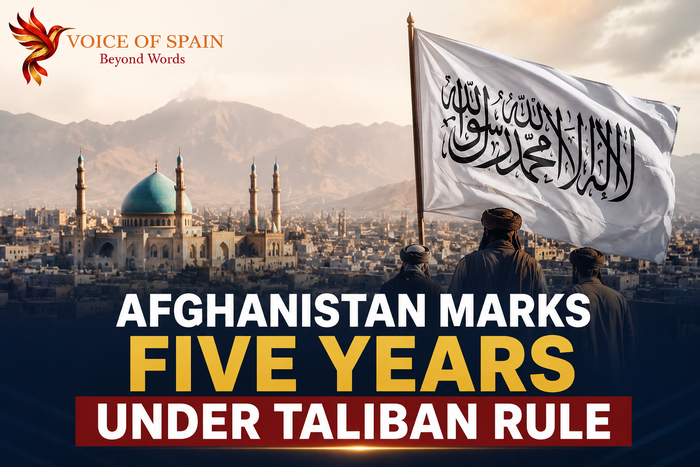
The fifth anniversary has highlighted the complicated situation facing Afghanistan. The Taliban have maintained control of the country and established working relationships with several neighbouring and regional states, gradually seeking to reduce their international isolation. At the same time, many governments and international organisations continue to express serious concerns about restrictions imposed on women and girls.
Human Rights Watch said ahead of the anniversary that Taliban policies had entrenched a severe human rights crisis, particularly affecting women and girls. Girls remain barred from education beyond the sixth grade, while women face extensive restrictions on employment, movement and participation in public life. The organisation described the situation as one of the world's most serious ongoing rights crises.
The humanitarian situation also remains extremely difficult. Afghanistan continues to face widespread poverty, unemployment and food insecurity, while international aid has become increasingly important for vulnerable communities. Reduced humanitarian funding has created additional pressure on organisations attempting to provide healthcare, food and other essential services.
At the same time, the Taliban have sought closer relations with countries in the region. Several governments have maintained diplomatic contacts with Kabul because of shared concerns over trade, border security, migration and regional stability. Russia has gone further than most countries by formally recognising the Taliban government, while other states have continued practical engagement without granting full diplomatic recognition.
Security remains another major issue. Although the Taliban have maintained control over most of Afghanistan, armed attacks and militant activity continue to pose risks. Human rights organisations have also reported killings, arbitrary detention and restrictions on peaceful political activity during the five years since the Taliban takeover.
The anniversary has consequently produced two contrasting narratives. Taliban authorities have sought to present their rule as one of stability and national independence, while human rights groups have focused on restrictions, repression and the deteriorating position of women and girls. The international community continues to face the difficult task of balancing engagement with the authorities against pressure for improvements in human rights.
VoS STRATEGIC INSIGHT
Five years after the Taliban returned to Kabul, Afghanistan remains at a complicated crossroads. Greater engagement with regional countries could provide opportunities for trade, investment and economic development, but international acceptance remains difficult while restrictions on women and girls continue.
For Afghanistan’s neighbours, practical cooperation is increasingly important because instability, migration, terrorism and economic difficulties can have consequences beyond the country’s borders. For Western governments and international organisations, however, engagement must be balanced with demands for human rights and inclusive governance.
The future of Afghanistan will therefore depend heavily on whether the Taliban can translate their growing regional relationships into sustainable economic development while addressing international concerns over rights and political inclusion. Without progress on these issues, the country may continue to experience a combination of diplomatic engagement, humanitarian dependence and international criticism.
Source: VoS News Desk