VoS NEWS DESK | INTERNATIONAL HUMANITARIAN CRISIS | 29 OCTOBER 2026
The humanitarian situation in Gaza remains one of the most pressing international concerns, with food insecurity, damaged infrastructure, limited access to essential services and continuing insecurity creating severe difficulties for civilian communities. The latest warning from the World Food Programme highlights the urgent need to sustain food assistance while ensuring that humanitarian personnel can carry out their work safely. Although improvements in aid access have helped some families, the situation remains fragile, and funding shortages threaten to reverse important progress.
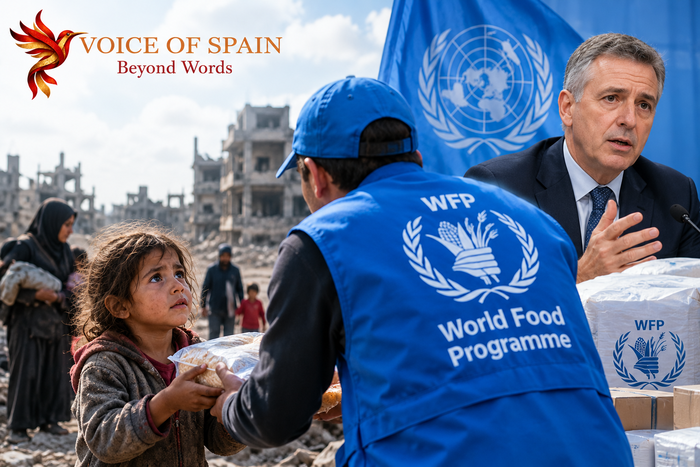
Speaking at the UN headquarters in New York, WFP chief Luke Lindberg emphasised the seriousness of the situation and the importance of protecting humanitarian staff. He said the agency faced significant needs in Gaza, while financial constraints were limiting its ability to provide assistance on the scale required. His remarks also highlighted a broader challenge facing humanitarian organisations: the gap between the needs of people affected by conflict and the resources available to help them.
Food assistance is particularly important in Gaza because many families have experienced displacement, loss of income and disruption to their normal access to markets and essential services. For households already struggling to meet basic needs, a reduction in humanitarian support can mean fewer meals, poorer dietary quality and increased difficulty in obtaining nutritious food for children and other vulnerable family members.
The WFP has previously warned that funding shortages were forcing it to reduce food assistance in Gaza. In an announcement dated 19 October, the agency said approximately 500,000 people would lose access to critical assistance following a reduction of around one-third in its food support programme. The agency also highlighted the need for additional resources to sustain emergency operations and prevent malnutrition among vulnerable groups.
These reductions demonstrate how financial pressures can directly affect humanitarian operations. Delivering food in a conflict-affected area requires more than purchasing supplies. Aid organisations must also arrange transport, secure storage, manage distribution points, coordinate with other agencies and ensure that assistance reaches people facing the greatest difficulties. When funding becomes insufficient, organisations may be forced to reduce the number of people they can support, limit the size of food packages or prioritise assistance for those considered most vulnerable.
Children, pregnant women, breastfeeding mothers, older people and individuals with existing nutritional needs can be particularly affected by reductions in food assistance. Inadequate nutrition can weaken health, increase vulnerability to illness and make recovery from injury or disease more difficult. For children, prolonged shortages of nutritious food can also affect physical development and general well-being.
The WFP's warning therefore goes beyond the immediate question of whether enough food is available. It also concerns the ability of families to maintain adequate diets over time. Even where some food reaches local markets, households without regular employment or sufficient income may be unable to afford it. Humanitarian assistance can provide an essential lifeline for families who have lost homes, livelihoods or access to normal sources of income.
The agency has identified funding shortages as a major obstacle to its operations. In its October announcement, the WFP said it had received less than half as much funding for its Palestine operation in 2026 as in previous years. It reported that approximately US$450 million was needed to maintain critical operations in Gaza and the West Bank over the six-month period from October 2026 to March 2027.
The funding shortfall presents international donors with difficult choices. Humanitarian organisations must respond to several emergencies simultaneously, including conflicts, displacement, natural disasters and food insecurity in different parts of the world. When available resources fall short of overall requirements, agencies face pressure to distribute assistance according to the urgency of needs while maintaining essential services in multiple locations.
Lindberg has called for broader donor support, stressing that the humanitarian challenge cannot be addressed by one country or institution alone. International contributions are important not only for the immediate provision of food but also for the logistical systems required to deliver assistance consistently. Predictable funding allows agencies to plan procurement, organise transport and maintain programmes rather than repeatedly adjusting operations in response to financial uncertainty.
Another major concern is the safety of humanitarian workers. Aid personnel operate in difficult and sometimes dangerous environments, where damaged roads, insecurity, interrupted communications and the threat of violence can prevent supplies from reaching their intended destinations. Attacks or threats against humanitarian staff can also disrupt the work of entire teams, reducing the assistance available to civilians who depend on them.
Lindberg stressed that protecting staff was the organisation's foremost concern. He pledged to stand up for WFP employees wherever they were working and expressed concern over the high number of humanitarian workers killed while attempting to save lives in recent years. His comments underline the importance of ensuring that humanitarian personnel can operate without being exposed to unacceptable risks.
The protection of humanitarian workers is also closely connected to the effectiveness of aid delivery. When staff members cannot travel safely, organisations may be unable to assess local needs, supervise distribution or verify that food reaches the intended recipients. Security incidents can force the suspension of activities, delay deliveries and increase operational costs. Civilians then face the consequences of disruptions to services that may already be limited.
International humanitarian principles emphasise the need to protect civilians and enable impartial humanitarian assistance. Aid organisations must be able to assess needs independently and deliver assistance according to humanitarian priorities. Ensuring the safety of workers and respecting humanitarian operations are therefore essential to maintaining effective relief efforts in conflict zones.
The WFP's concerns also reflect the wider difficulties of delivering aid in Gaza, where the condition of infrastructure and the security environment can complicate the movement of supplies. Food distribution depends on reliable access routes, functioning logistics facilities and arrangements that allow aid convoys to reach communities. Where these conditions are disrupted, the time and resources required to deliver assistance can increase substantially.
Humanitarian assistance alone, however, cannot resolve all the problems facing Gaza's population. Emergency food programmes can help families survive immediate shortages, but a more sustainable recovery requires improved access to essential services, the restoration of livelihoods and the rebuilding of damaged infrastructure. Stable access to water, sanitation and healthcare is also important because food insecurity can become more severe when families lack basic services or face additional health risks.
International diplomacy consequently remains an important part of the wider response. Governments, international organisations and humanitarian agencies must work towards arrangements that improve civilian protection, facilitate the movement of relief supplies and reduce the risks faced by aid workers. Continued dialogue is also necessary to address the underlying conflict and create conditions in which humanitarian assistance can be delivered more reliably.
Donor governments face growing pressure to ensure that humanitarian commitments translate into practical support. Financial pledges must be converted into resources that agencies can use to purchase food, maintain transport networks and support frontline personnel. Clear coordination between donors and relief organisations can help reduce duplication and ensure that available resources are directed towards the most urgent needs.
The situation also highlights the importance of maintaining public awareness of humanitarian emergencies. International attention can fluctuate as new conflicts and crises emerge, but the needs of affected communities do not necessarily decline when media coverage decreases. Sustained engagement is therefore essential to maintaining funding and ensuring that vulnerable populations are not overlooked.
For the WFP, the immediate priorities remain the protection of its personnel, the continuation of essential food assistance and the mobilisation of additional resources. The agency must balance urgent demands with the practical limitations imposed by insecurity and funding shortages. Its ability to continue operations will depend partly on the support provided by international donors and the conditions under which humanitarian teams are permitted to work.
In the coming weeks, the international community will need to consider how emergency assistance can be maintained through the winter period and beyond. Funding decisions, access arrangements and the protection of humanitarian personnel will all influence the level of support available to civilians. Without sustained resources and safer operating conditions, the risk remains that vulnerable families will face further reductions in essential assistance.
The latest warning from the WFP chief is therefore a reminder that humanitarian crises require consistent attention rather than short-term responses. Food assistance can prevent further suffering, but it must be supported by adequate funding, secure access and international co-operation. Protecting those who deliver aid is equally important, as humanitarian workers play a critical role in reaching communities affected by conflict.
VoS STRATEGIC INSIGHT
The WFP's warning over Gaza's hunger crisis highlights the close relationship between humanitarian funding, civilian protection and the delivery of emergency assistance. Financial shortages can quickly translate into fewer meals for vulnerable families, while threats against aid workers can prevent essential supplies from reaching those who need them most. International donors should prioritise predictable funding, and all parties to the conflict should respect humanitarian personnel and facilitate safe aid delivery. In the longer term, sustainable improvements will require reliable humanitarian access, the restoration of essential services and diplomatic efforts to reduce the suffering of civilians. The effectiveness of the international response will ultimately be measured not by statements of concern, but by whether families receive sufficient food and aid workers can carry out their duties safely.
Source: World Food Programme (WFP); Anadolu Agency; Bernama.