
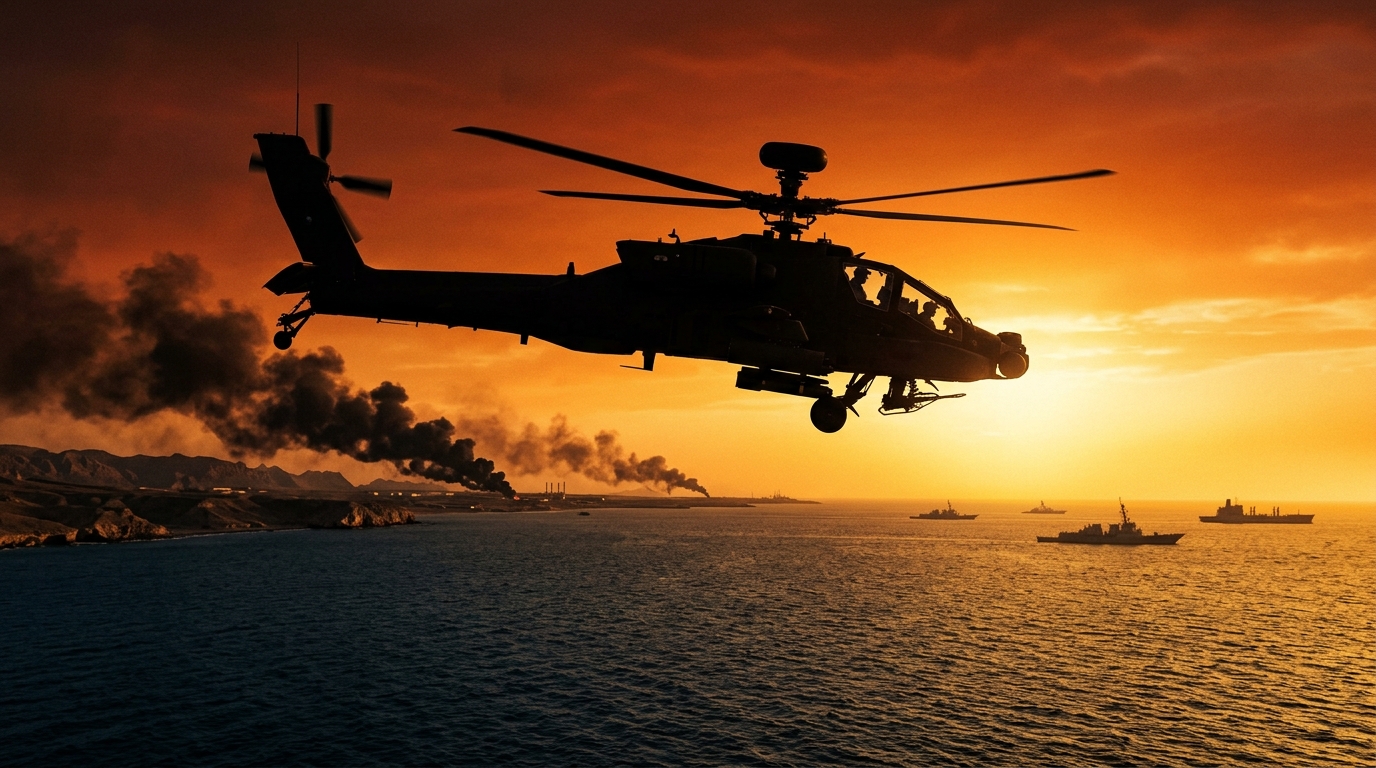
Tensions in the Middle East reached a critical juncture on Tuesday when a U.S. Army Apache helicopter crashed near the Strait of Hormuz, triggering an immediate military response from Washington. President Trump attributed the incident to Iranian action, claiming Tehran had deliberately shot down the aircraft in what he characterized as an unprovoked attack on American forces conducting routine maritime patrols. The two crew members were successfully rescued by an unmanned drone system, avoiding potential casualties that could have further inflamed the volatile situation. Trump's administration swiftly authorized retaliatory strikes against Iranian military installations, marking a significant escalation in the ongoing conflict that has already claimed hundreds of lives and destabilized regional commerce. The incident exposed the fragility of existing ceasefire agreements and raised international concerns about the potential for broader military confrontation involving multiple regional actors and global powers.
The helicopter incident represents a dangerous turning point in the Iran-U.S. conflict, threatening to unravel diplomatic efforts aimed at establishing a sustainable peace framework. Military analysts warn that the tit-for-tat escalation pattern—where each side responds to perceived provocations with increasingly forceful measures—creates conditions for miscalculation and unintended consequences. The Strait of Hormuz, through which approximately one-third of global maritime oil trade passes, remains a critical chokepoint where military incidents carry immediate economic implications for worldwide energy markets. Iran's Revolutionary Guards responded to American strikes by launching counterattacks against U.S. military bases in Jordan and the Persian Gulf region, demonstrating their capacity for rapid mobilization and sustained offensive operations. International observers expressed alarm that the cycle of retaliation could spiral beyond current containment, potentially drawing in allied nations and disrupting global supply chains. The incident underscores the urgent need for diplomatic channels and de-escalation mechanisms to prevent further deterioration of an already precarious regional security environment.
.png)
.png)
.png)
.png)
.png)
.png)
.png)
.png)