VoS NEWS DESK | Moscow | 31 July 2026
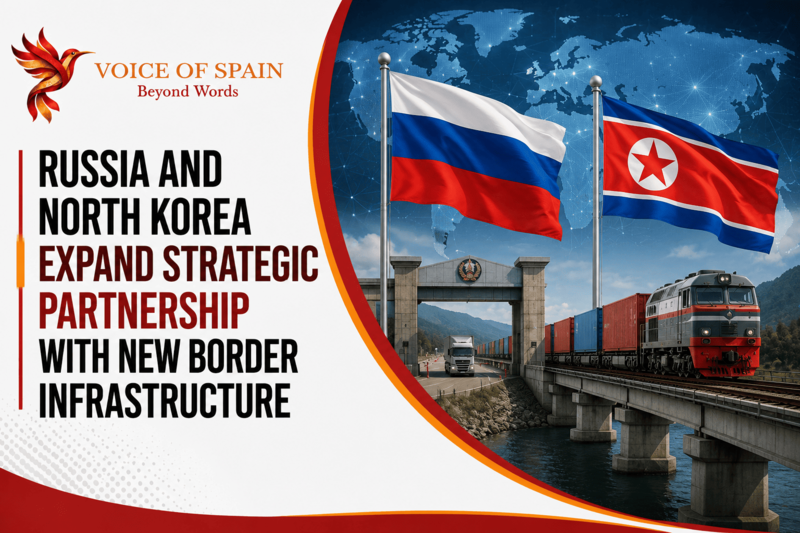
Government representatives from both nations have confirmed that work on key transportation links and supporting infrastructure is progressing under bilateral cooperation agreements. The projects are expected to improve regional trade capacity, strengthen supply routes, and create new opportunities for economic collaboration. Officials have emphasized that the infrastructure initiatives are designed to support long-term development and increase cross-border efficiency.
International analysts believe the expanding partnership reflects broader strategic objectives shared by both governments. The growing cooperation extends beyond infrastructure and includes discussions on trade, energy, transportation, and regional security. While both countries describe the projects as economic in nature, several governments are closely monitoring the developments because of their potential geopolitical implications.
Experts note that stronger transport connectivity could reshape trade patterns in Northeast Asia over the coming years. Regional observers also point out that infrastructure investment often serves as a foundation for deeper diplomatic and economic engagement. As construction progresses, international institutions and neighboring nations are expected to continue assessing the broader impact of the partnership on regional stability and global diplomacy.
VoS STRATEGIC INSIGHT
Strategic analysts say improved cross-border infrastructure can significantly strengthen long-term economic cooperation while also influencing regional geopolitical dynamics. Continued collaboration between Russia and North Korea may reshape trade networks and diplomatic relationships across Northeast Asia, making future developments closely watched by the international community.
Source: VoS News Desk