
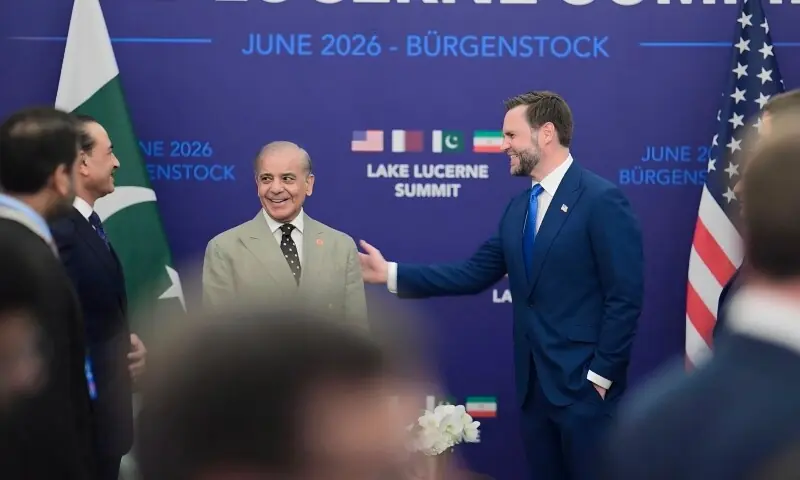
Pakistan's Prime Minister Muhammad Shehbaz Sharif and military chief Field Marshal Syed Asim Munir arrived in Switzerland on Sunday, June 21, 2026, to participate in high-level technical negotiations aimed at implementing the preliminary memorandum of understanding between the United States and Iran to end the devastating West Asia conflict. The Pakistani delegation's arrival at the Burgenstock luxury resort overlooking Lake Lucerne represented a significant diplomatic commitment by Islamabad to support the peace process and to ensure that Pakistan's interests and perspectives were represented in the negotiations. Pakistan's Foreign Ministry announced that the Prime Minister and military chief would participate in technical-level talks designed to address outstanding issues not resolved in the preliminary agreement, including Iran's nuclear program, the timeline for lifting international sanctions, and mechanisms for verifying compliance with the ceasefire terms. The Pakistani government emphasized its continued support for the implementation of the memorandum of understanding and indicated that Prime Minister Sharif would hold bilateral interactions with participating delegates on the sidelines of the formal negotiations. Pakistan's role as a key mediator in the US-Iran peace process reflected Islamabad's geographic position between Iran and the broader international community, as well as its historical relationships with both Tehran and Washington. The participation of Pakistan's Prime Minister and military chief underscored the high-level political commitment that Islamabad had made to the peace process and its recognition that the success or failure of the agreement would have profound implications for regional stability and Pakistan's own security interests.
The technical-level talks in Switzerland represented a critical juncture in the peace process, as both the United States and Iran sought to bridge significant gaps on contentious issues that had not been resolved in the preliminary memorandum of understanding. Pakistan's mediation efforts, alongside those of Qatar, were designed to facilitate compromise and to help the parties identify common ground that could serve as the basis for a comprehensive final agreement. The Pakistani government recognized that the continued Israeli military operations in Lebanon threatened to undermine the entire peace process and that Iran's closure of the Strait of Hormuz represented a significant escalation in tensions. Prime Minister Sharif's participation in the talks reflected Pakistan's desire to use its diplomatic influence to encourage both parties to remain committed to the negotiation process and to work toward a mutually acceptable resolution of outstanding disputes. The success of the peace process was crucial not only for regional stability but also for Pakistan's own security interests, as continued conflict in the Middle East could have spillover effects on Pakistan and the broader South Asian region. Pakistan's role as a mediator also reflected its desire to enhance its international standing and to position itself as a responsible actor in global diplomacy capable of facilitating dialogue between major powers on issues of international significance.
.png)
.png)
.png)
.png)
.png)
.png)
.png)
.png)