
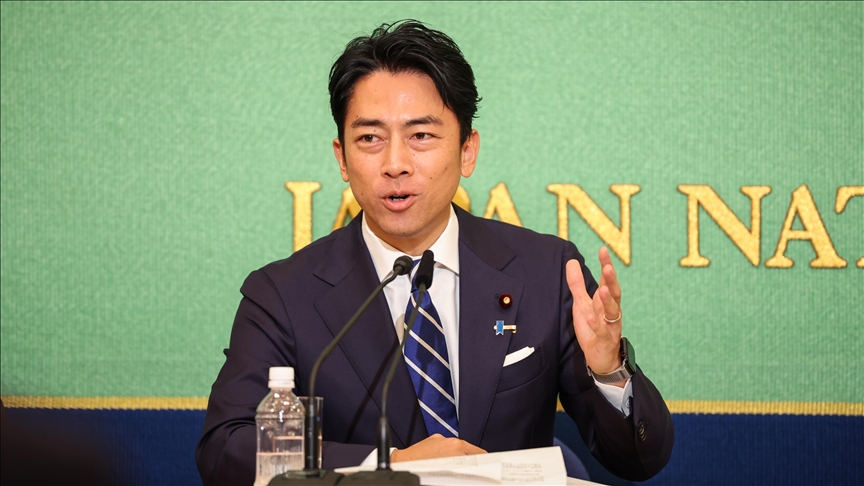
Japan's Defense Minister Shinjiro Koizumi delivered a stark assessment of his nation's security posture during an interview with BBC correspondents on June 17, 2026, arguing that Japan must fundamentally reconsider its post-World War II pacifist constitution to adequately address emerging regional military threats. Speaking from Tokyo, Koizumi emphasized that Japan's traditional reliance on defensive capabilities and constitutional restrictions on military engagement has become increasingly untenable in an era marked by China's rapid military modernization, North Korea's accelerating weapons development, and Russia's demonstrated willingness to employ military force to achieve geopolitical objectives. The Defense Minister outlined a comprehensive modernization agenda that would expand Japan's Self-Defense Forces' operational capabilities, increase defense spending beyond current budgetary constraints, and potentially enable Japan to conduct offensive military operations in coordination with allied nations. Koizumi stressed that these measures are not aggressive in intent but rather represent necessary adaptations to preserve regional stability and protect Japanese citizens. He highlighted China's military buildup in the East China Sea, North Korea's recent ballistic missile tests, and Russia's activities in the Pacific as specific catalysts for Japan's strategic reassessment. The minister's remarks reflect broader discussions within Japan's political establishment regarding the nation's security architecture, with some policymakers advocating for constitutional amendments that would formally permit military action beyond strictly defensive parameters.
The Defense Minister's statements have generated considerable domestic debate within Japan, where pacifist sentiment remains strong among significant portions of the population. Anti-war activists and opposition political parties have criticized Koizumi's proposals as dangerous departures from Japan's historical commitment to non-militarism and as potentially destabilizing to regional security dynamics. However, government officials and defense analysts argue that Japan's current constitutional framework, drafted during the American occupation following World War II, no longer reflects contemporary security realities. Koizumi emphasized that Japan seeks to strengthen its alliance with the United States while developing enhanced capabilities for independent defense. He noted that Japan's defense budget, while substantial in absolute terms, represents a smaller percentage of GDP than comparable nations and that increased spending is necessary to maintain technological superiority and operational readiness. The Defense Minister's remarks come amid broader discussions at the G7 summit regarding collective security arrangements and responses to authoritarian military expansion. Japan's strategic positioning as a technologically advanced, economically powerful nation with significant military potential makes its defense policy decisions consequential for broader Indo-Pacific security architecture and alliance dynamics.
.png)
.png)
.png)
.png)
.png)
.png)
.png)
.png)