VoS NEWS DESK | NATIONAL NEWS | 3 NOVEMBER 2026
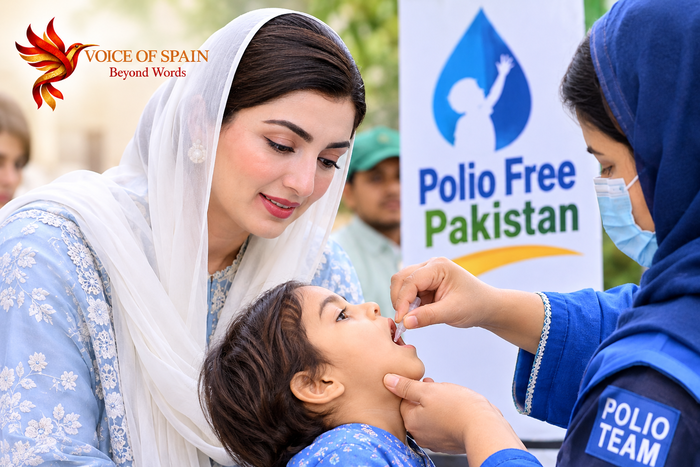
Aseefa Bhutto Zardari urged parents across Pakistan to ensure that every child under the age of five receives polio drops during vaccination campaigns. She stressed that families should welcome frontline health workers and cooperate with them when they visit homes, schools and communities. According to her message, protecting children from polio is a shared responsibility, and no child should be left without access to vaccination because of a lack of awareness, hesitation or misinformation. The November sub-national polio vaccination campaign began on 2 November and is scheduled to continue until 8 November 2026. The campaign aims to vaccinate approximately 24 million children across 97 selected districts of Pakistan. More than 200,000 frontline workers are involved in the operation, travelling across urban centres, rural settlements and remote communities to administer vaccine drops and ensure that eligible children are reached.
The First Lady highlighted that repeated vaccination is essential to building strong protection against the poliovirus. Even when a child has received polio drops during previous campaigns, parents are encouraged to ensure that the child receives the vaccine again whenever health authorities conduct an immunisation drive. Repeated doses help strengthen immunity and reduce the possibility of the virus spreading within communities. She also emphasised the importance of routine immunisation alongside special vaccination campaigns. While door-to-door campaigns play a major role in reaching children, regular visits to healthcare centres and completion of recommended childhood vaccinations remain important parts of protecting public health. Parents and caregivers have therefore been encouraged to maintain awareness of their children's immunisation schedules and seek guidance from qualified healthcare professionals whenever necessary.
Pakistan has made significant progress in its fight against polio since the launch of the National Polio Eradication Programme in 1994. The country has achieved a reported reduction of 99.8 per cent in polio cases over this period. Nevertheless, the continued detection of cases demonstrates that the virus remains a public-health concern. Seven cases had reportedly been recorded in Pakistan during 2026 at the time of the campaign announcement, underlining the need for continued vigilance and vaccination coverage. Polio is a highly infectious viral disease that mainly affects young children. It can attack the nervous system and, in serious cases, cause permanent paralysis. There is no cure for the disease, making prevention through vaccination the most effective means of protection. Health experts have consistently emphasised that high vaccination coverage is necessary to prevent outbreaks and protect children who may be particularly vulnerable.
Aseefa Bhutto Zardari also acknowledged the commitment of frontline polio workers, who continue to carry out vaccination activities in challenging circumstances. These workers play a vital role in the national programme by reaching households, identifying children who have missed earlier doses and providing information to families. Their responsibilities often involve travelling long distances and working in areas where access to healthcare services can be limited. The First Lady's appeal also places emphasis on public awareness and community participation. Local representatives, teachers, religious leaders and community organisations can help explain the importance of vaccination and encourage families to cooperate with health teams. Building confidence in the programme is particularly important in areas where misinformation or misunderstandings about vaccines may discourage parents from participating.
Pakistan has set a target of becoming polio-free by June 2027. Reaching this goal will require sustained efforts, effective monitoring and strong coordination between federal and provincial health authorities. The November campaign is another important step towards improving vaccination coverage and preventing further transmission of the virus. The message from the First Lady reinforces the need for a nationwide commitment to child protection. Government institutions can organise vaccination campaigns and deploy health workers, but their efforts depend on the cooperation of families and communities. Ensuring that every eligible child receives the vaccine remains central to Pakistan's ambition of ending polio transmission permanently.
VoS STRATEGIC INSIGHT
Polio eradication represents one of Pakistan's most important public-health priorities because the consequences of continued transmission can affect children, families and the wider healthcare system. Although the country has made considerable progress over the past three decades, the remaining cases show that vaccination efforts cannot be reduced or interrupted. Even a small number of infections can create a risk of further transmission if communities are not adequately protected. The November vaccination campaign demonstrates the importance of combining government planning with public participation. The deployment of more than 200,000 frontline workers is a major operational effort, but the campaign's effectiveness ultimately depends on reaching children in every targeted household. Parents must understand that vaccination during each campaign is an important part of maintaining protection, rather than an unnecessary repetition of previous doses.
Public trust is equally important. Health authorities need to communicate clearly with families, respond to concerns and ensure that vaccination teams are properly supported. Community leaders and educational institutions can help strengthen awareness by explaining the benefits of immunisation and encouraging parents to cooperate with healthcare workers. Such local engagement can make vaccination campaigns more accessible and effective. Pakistan's June 2027 polio-free target provides a clear national objective, but achieving it will require consistent progress rather than short-term improvements. Strong surveillance, reliable vaccination services, effective public communication and continued support for frontline workers will all be necessary. Protecting children from polio is ultimately a shared responsibility, and a sustained national effort can help secure a healthier future for the next generation.