
Education
 Back to home
.png)
.png)
.png)
.png)
.png)
.png)
.png)
.png)
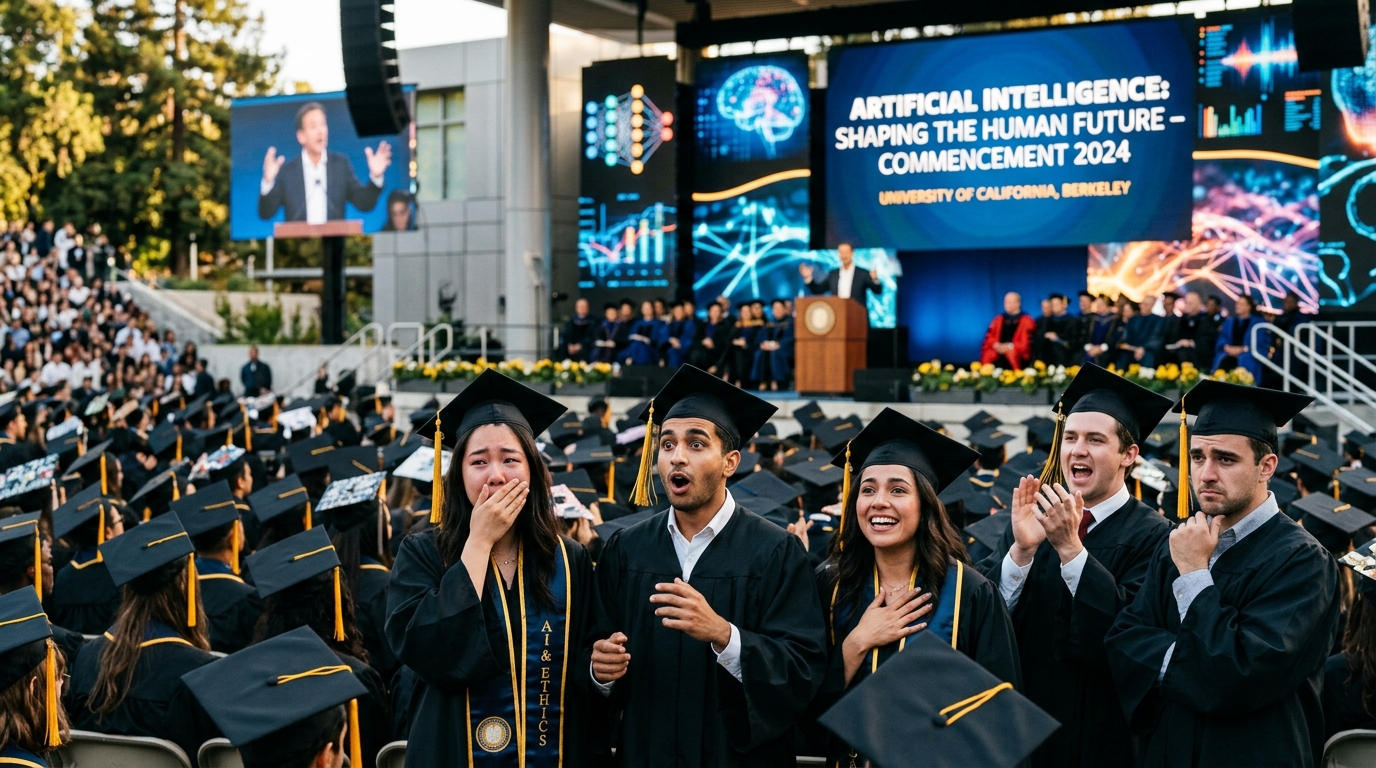
Graduates push back as AI speeches dominate commencement season
Artificial intelligence has become an unexpectedly unwelcome theme at a number of U.S. college commencement ceremonies, where graduates have interrupted speakers with boos and visible frustration when the technology is invoked as a defining force of the future. What is normally a celebratory ritual has in some cases turned into a public display of generational unease, reflecting anxiety over automation, job security and the growing influence of tech leaders on education and employment. According to reporting from the Associated Press, students at several campuses reacted sharply when commencement speakers framed AI in optimistic or inevitable terms, suggesting that for many graduates the issue is no longer abstract innovation but an immediate economic and ethical concern. The backlash comes as universities increasingly market AI-related programs, employers accelerate experimentation with generative tools and public debate intensifies over whether the technology will expand opportunity or narrow it. Graduation season, traditionally a stage for reassurance and aspiration, has instead exposed how deeply divided young adults are about the promises being made in the name of technological progress.
The reaction from students also suggests a widening gap between institutional messaging and lived uncertainty among new degree holders entering a volatile labor market. For graduates who have spent years paying for higher education, speeches celebrating AI can sound less like inspiration and more like a warning that parts of the professional future they prepared for may already be shifting beneath them. Commencement speakers often try to cast disruption as opportunity, but many students appear to be demanding a more honest reckoning with displacement, authorship, inequality and the concentration of power in a handful of companies shaping the digital economy. The controversy is notable because it does not come from anti-technology margins; it is coming from educated young people who use advanced digital tools yet remain unconvinced by triumphant narratives around them. Universities now face a more complicated role: not simply training students to work with AI, but helping them question who benefits from it, what safeguards are missing and how human skills are to be valued in the transition. The commencement protests may not stop speeches about artificial intelligence, but they have made one point unmistakable: graduates want the future discussed with realism, not slogans, and they are willing to challenge ceremony itself to make that demand heard.
Enjoyed this article?
Subscribe to get exclusive news and daily updates delivered to your inbox.
Related News
Europe Battles Record-Breaking Wildfires as Thousands Evacua...
United States Launches New Round of Airstrikes as Iran Tensi...
Top Diplomats Gather in Manila for High-Level ASEAN Security...
NASA's Perseverance Rover Completes a Marathon Distance on M...
Hungary Launches Major Investigation with Raids on Oppositio...
France Approves Landmark Social Media Restrictions for Child...
Annu Kapoor Questions Shah Rukh Khan's 'Last Superstar' Rema...