VoS NEWS DESK | INTERNATIONAL | 29 August 2026
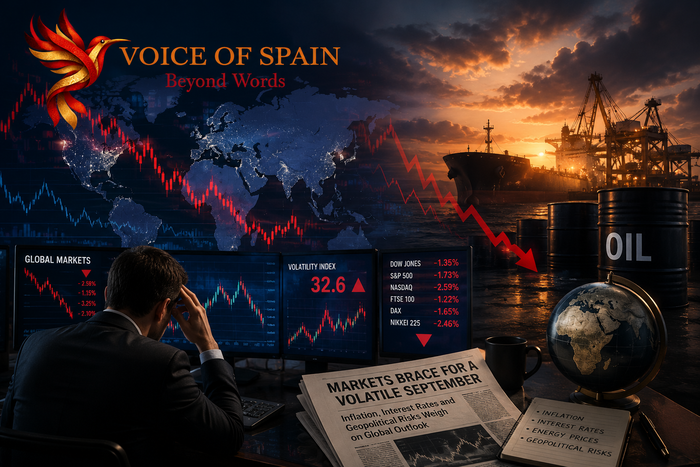
Global investors are preparing for a challenging September as several major economic and geopolitical risks converge at the same time.
Markets are entering the new month with concerns over persistent inflation, elevated government borrowing and uncertainty surrounding the future direction of monetary policy. These risks are being amplified by continuing tensions in the Middle East, particularly the disruption surrounding the Strait of Hormuz, one of the world's most important energy corridors.
The Iran conflict remains one of the most important factors influencing the global economic outlook. Disruptions to shipping through the Strait of Hormuz have raised concerns over energy supplies and contributed to uncertainty surrounding oil and gas prices.
Although oil prices recently moved lower, the wider energy market remains vulnerable to sudden changes. Reuters reported that Brent crude and US West Texas Intermediate both recorded weekly declines, while speculation about a possible agreement affecting access through Hormuz added further volatility to prices.
Investors are also closely watching the US Federal Reserve. Fed Chair Kevin Warsh has warned that policymakers may need to consider further interest-rate increases if inflation does not move convincingly towards the central bank's 2% target.
The comments have already affected financial markets. Gold prices fell sharply on Friday as traders increased their expectations of higher US interest rates, while the dollar strengthened against major currencies.
The possibility of higher rates creates a difficult environment for governments, companies and consumers. Higher borrowing costs can make government debt more expensive to service, while businesses may face greater financing costs and households can experience increased pressure through mortgages and other forms of credit.
Europe is also facing its own economic challenges. Rising energy costs, fiscal pressures and political uncertainty in major economies such as France and Germany are adding to concerns about the region's economic outlook.
Meanwhile, investors are preparing for important central-bank decisions in September, including meetings by the US Federal Reserve and the Bank of Japan. Any unexpected change in interest-rate expectations could trigger significant movements across global financial markets.
Financial markets have already shown signs of caution. Global equity funds experienced their first weekly outflow since May, ending a 13-week streak of inflows as investors became more cautious about valuations, monetary policy and geopolitical risks.
Technology stocks remain an important source of optimism, particularly because of continued investment in artificial intelligence. However, investors are increasingly questioning whether high technology valuations can be sustained if borrowing costs remain elevated.
The combination of geopolitical instability, energy uncertainty and changing expectations about interest rates means September could become an important test for the resilience of the global economy.
VoS STRATEGIC INSIGHT
The economic outlook for September is being shaped by an unusually wide range of risks. Energy security, inflation, interest rates, government debt and geopolitical tensions are increasingly interconnected, meaning developments in one region can quickly affect markets around the world.
The Federal Reserve's approach to inflation will be particularly important. If US policymakers signal that rates may remain higher for longer, global borrowing conditions could tighten and pressure could increase on emerging markets.
At the same time, any improvement in the Iran conflict or reopening of the Strait of Hormuz could ease some pressure on energy markets and provide relief to global investors.
For businesses, governments and investors, September is therefore likely to be a month of heightened uncertainty — with central-bank decisions and geopolitical developments capable of moving markets sharply in either direction.
Source: Reuters / VoS News Desk