VoS NEWS DESK | GERMANY AND EUROPEAN POLITICS
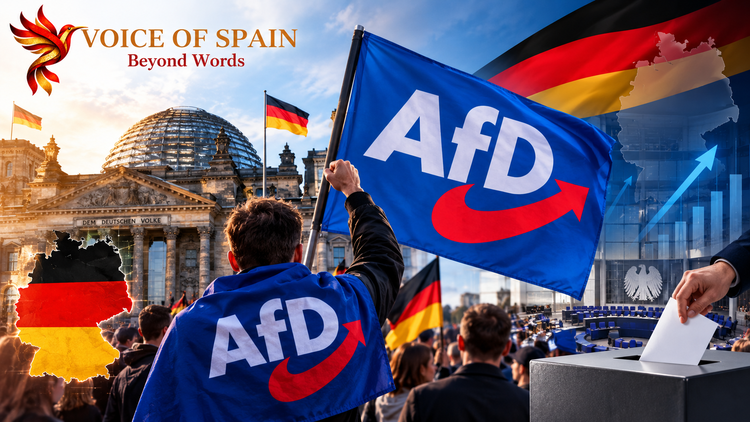
The AfD received approximately 43.8% of the vote in Saxony-Anhalt, more than twice the result of Chancellor Friedrich Merz's CDU, which secured roughly 17–18%. The result represents the party's strongest breakthrough at state level and a major setback for Germany's established political parties.
Although the AfD won the largest share of the vote, it did not secure an outright majority and therefore cannot automatically govern alone. Other mainstream parties have historically maintained a political firewall against cooperation with the AfD, meaning that forming a state government could prove difficult.
The result has nevertheless been described as historic because the AfD's advance marks a major challenge to Germany's post-war political consensus. The party has built support around tougher immigration policies, nationalism and criticism of Germany's support for Ukraine, while also advocating closer relations with Russia.
The election has also increased pressure on Chancellor Friedrich Merz. His coalition government is already facing dissatisfaction over living costs, pensions and economic reforms, and the AfD's success has provided further evidence of growing frustration among German voters.
The political impact extends beyond Saxony-Anhalt. Germany remains the largest economy in the European Union, meaning major shifts in German domestic politics can influence debates over European integration, migration, defence spending and support for Ukraine.
The AfD's victory is also being closely watched ahead of future elections. Party leaders have presented the result as evidence that their political influence is expanding and have indicated that their ambitions extend beyond regional politics towards national power.
At the same time, the result has triggered concern among minority communities and opponents of the far right. Critics fear that the AfD's growing influence could normalise harder-line positions on immigration and challenge Germany's established political consensus.
VoS STRATEGIC INSIGHT
The Saxony-Anhalt result represents more than a regional election victory. It highlights a broader political transformation taking place across parts of Europe, where dissatisfaction over immigration, economic insecurity and confidence in traditional parties is increasingly benefiting populist and far-right movements.
For Chancellor Merz, the challenge is now twofold: stabilising his governing coalition while addressing the economic and social concerns that are driving voters towards the AfD.
For the European Union, the development is equally significant. A stronger AfD could complicate Germany's approach to EU integration, migration policy, relations with Russia and support for Ukraine if the party continues expanding its electoral base.
The central question for Germany now is whether the country's mainstream parties can rebuild public confidence before the AfD's regional breakthrough develops into a much broader national political transformation.
Source: Reuters • Associated Press • The Guardian • VoS News Desk.