
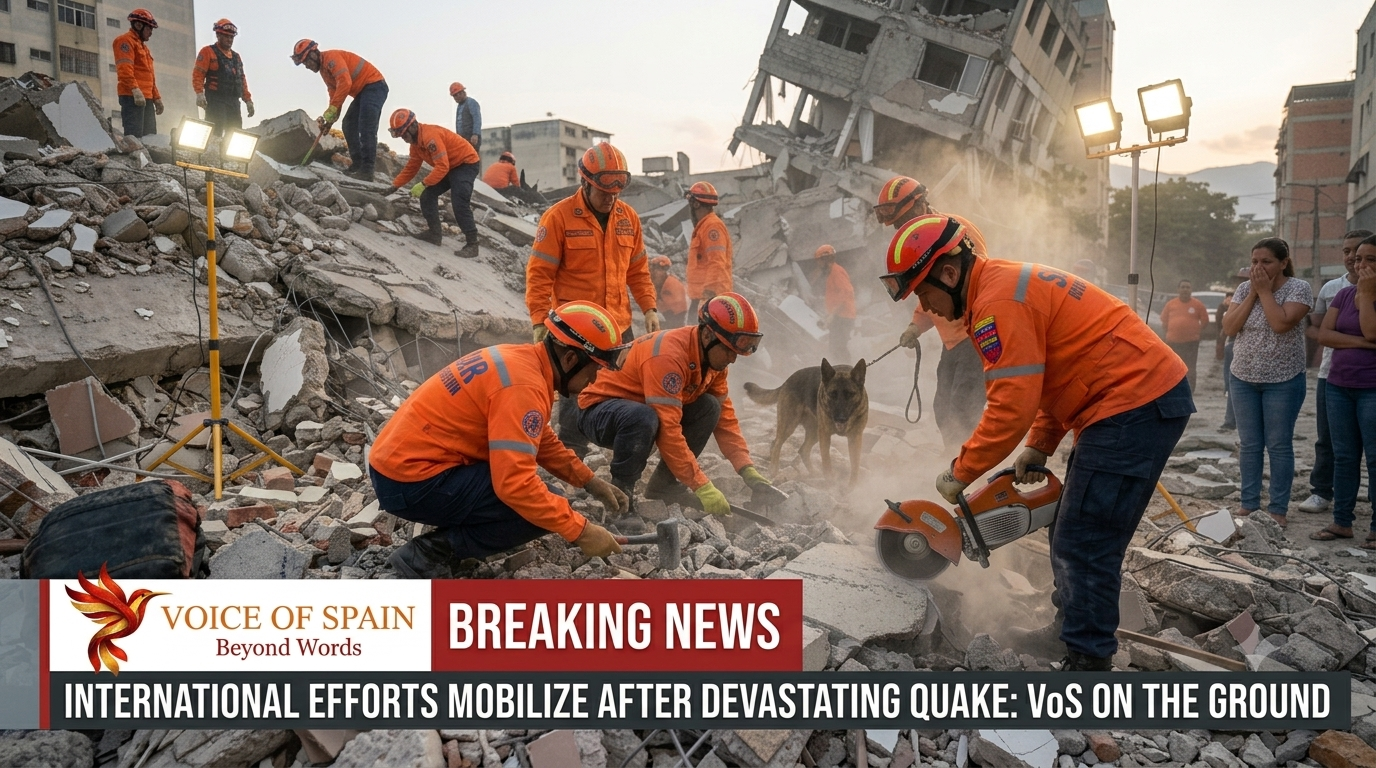
The collective trauma and psychological strain on the affected population intensified early this morning when a powerful 4.8 magnitude aftershock struck the nation's coastal zone. The violent tremor caused immediate panic, sending thousands of terrified citizens fleeing into the open streets from damaged structures that engineers had not yet cleared as structurally safe. While no major new building collapses were immediately reported following this latest tremor, seismologists have warned the public that the local fault lines remain highly unstable, and significant aftershocks are highly likely to continue over the coming weeks.
On the humanitarian front, the logistical challenges facing the rescue operation are proving to be almost insurmountable. Although the United States government has temporarily relaxed its strict financial and economic sanctions to permit the unhindered entry of specialized disaster-relief equipment, the local infrastructure is in ruins. Acute shortages of heavy excavators, cutting machinery, and sub-zero medical storage equipment are severely limiting the efficiency of search teams. With United Nations coordinators estimating that more than 50,000 residents are still officially listed as missing under the debris, the window of survival for those trapped is rapidly closing.
.png)
.png)
.png)
.png)
.png)
.png)
.png)
.png)