VoS NEWS DESK | LIMA | 29 November 2026
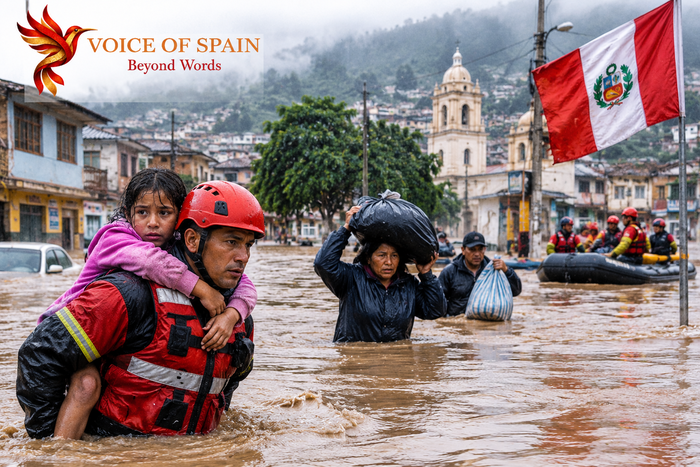
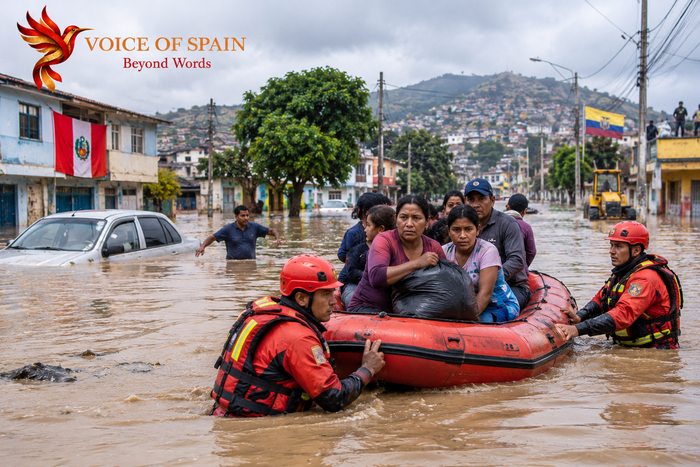
Powerful El Niño-related rainfall has triggered widespread flooding across northern Peru and coastal Ecuador, causing rivers to overflow, damaging homes and roads, and forcing residents to evacuate affected communities. The extreme weather conditions have created a growing humanitarian challenge, with emergency services responding to flooding and landslides across several regions.
In northern Peru, the city of Piura has experienced particularly severe flooding after hours of torrential rainfall. Streets and residential neighbourhoods were submerged under waist-high water, leaving families struggling to protect their homes and belongings. Preliminary reports indicated that approximately 2,000 families had been affected in the Piura region.
The situation has been particularly concerning along the Tumbes River, which rose to nearly twice its dangerous level. Floodwaters inundated homes, schools and agricultural land, while parts of the Pan-American Highway were also affected. Rescue teams have been deployed to assist residents and people trapped by rising water levels.
Ecuador has also experienced significant damage from the prolonged rainfall. According to the country's disaster management authorities, at least 34 people have died in weather-related incidents since late August. Flooding and landslides have damaged more than 50 sections of roads, with at least 10 routes closed, including the main highway connecting Quito with coastal areas.
In north-western Ecuador, emergency personnel evacuated families after rivers burst their banks. Residents in affected communities have faced difficult conditions as muddy floodwaters entered homes and disrupted access to essential services.
The flooding has also created challenges for transportation and agricultural production. Damaged roads have disrupted the movement of goods, while excessive rainfall threatens crops and livelihoods. In Peru, the impact of El Niño has extended beyond flooding, contributing to unusual temperatures and pressure on fishing and agricultural activities.
The situation has also affected preparations for local elections in Ecuador. Electoral authorities have moved polling stations in several provinces because of the severe weather and warned that further disruption could occur.
Meteorological authorities have warned that unusual El Niño conditions and heavy rainfall could persist into February. Both countries therefore face continued pressure to strengthen emergency preparedness and protect vulnerable communities.
Governments are coordinating relief operations, evacuations and infrastructure assessments, while Peru has announced emergency financial assistance for affected families and is seeking international support.
VoS STRATEGIC INSIGHT
The flooding across Peru and Ecuador demonstrates how powerful climate phenomena can affect public safety, economic stability and essential infrastructure simultaneously. El Niño-related rainfall creates particular challenges for communities located near rivers, coastal areas and vulnerable transport corridors. Long-term investment in drainage systems, flood barriers, early-warning technology and climate-resilient infrastructure will be essential. Regional cooperation and effective disaster management policies will also play a significant role in reducing the impact of future extreme weather events.