VoS NEWS DESK | LIMA | 29 November 2026
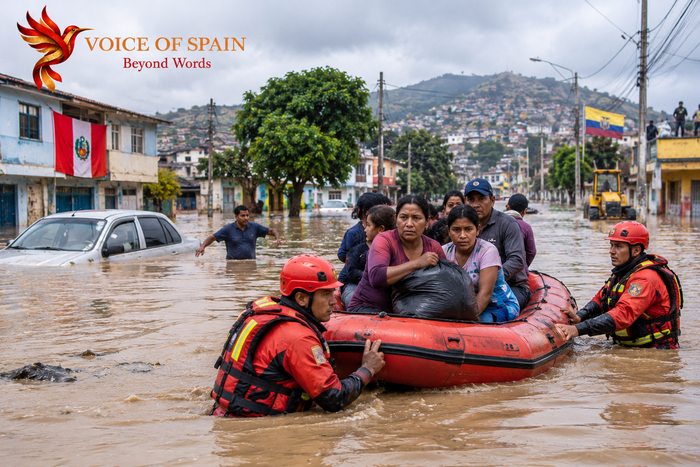
Severe rainfall associated with an exceptionally strong El Niño phenomenon has triggered widespread flooding across parts of Peru and Ecuador, leaving neighbourhoods underwater, disrupting transport networks and affecting thousands of families. The extreme weather conditions have raised concerns about public safety, infrastructure damage and the growing economic consequences of climate-related disasters across South America.
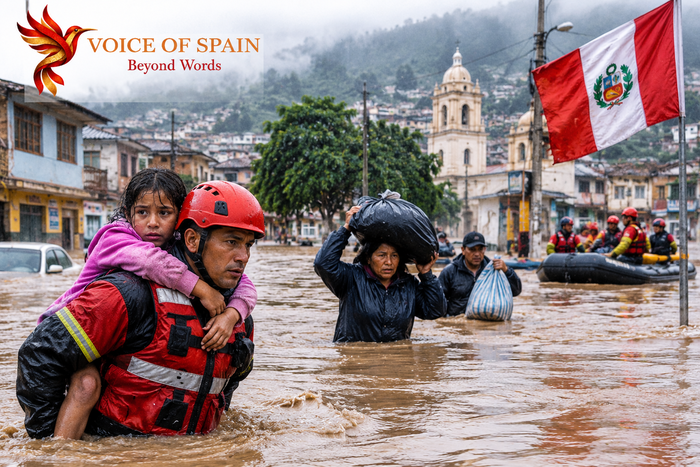
In northern Peru, the city of Piura has experienced particularly severe flooding following hours of intense rainfall. Several streets were submerged under waist-high water, while residential neighbourhoods, schools and agricultural areas faced significant disruption. Preliminary reports indicated that approximately 2,000 families had been affected by the flooding in the Piura region.
The situation has also deteriorated in Ecuador, where heavy rainfall has caused rivers to overflow and triggered landslides in multiple provinces. According to authorities, at least 34 people have died in weather-related incidents since late August. Flooding and landslides have damaged more than 50 sections of roads, while at least 10 roads have been closed, including an important highway connecting Quito with coastal areas.
The disruption has affected transportation, access to essential services and the movement of agricultural goods. Communities located near rivers and vulnerable slopes remain particularly exposed to further rainfall and possible landslides.
In Peru, authorities have also reported unusually high river levels, with the Tumbes River approaching twice its critical threshold. Floodwaters have damaged homes and farmland, while sections of the Pan-American Highway have also been affected.
Government agencies in both countries are coordinating emergency assistance, evacuations and infrastructure assessments. Peru's government has announced emergency financial support for affected families and is coordinating international assistance to strengthen the response.
Meteorological and disaster management authorities have warned that unusual weather conditions could continue into the coming months, with further rainfall expected to create additional challenges for vulnerable communities.
The crisis also highlights the wider economic consequences of El Niño, including disruptions to agricultural production, fishing activities, food supplies and regional trade. Rising temperatures and changing rainfall patterns are placing additional pressure on already vulnerable economies.
VoS STRATEGIC INSIGHT
The flooding in Peru and Ecuador demonstrates how extreme climate patterns can threaten economic stability, food security and public infrastructure simultaneously. El Niño-related disasters require more than immediate emergency assistance; they demand long-term investment in flood protection, early-warning systems, resilient transport infrastructure and sustainable urban planning. Regional cooperation and effective disaster preparedness will be essential to protecting vulnerable communities as climate-related risks continue to intensify.