
VoS NEWS DESK | BOSTON, UNITED STATES | 27 NOVEMBER 2026
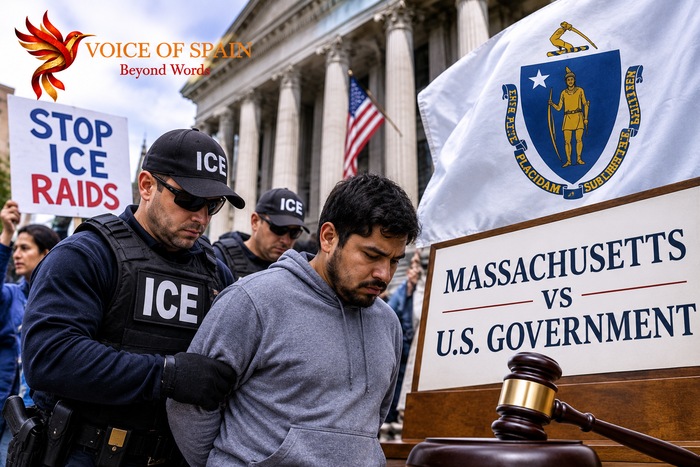
The state of Massachusetts has filed a lawsuit against the US federal government, challenging immigration enforcement operations conducted by Immigration and Customs Enforcement (ICE) agents inside state courthouses. The legal action, announced on 23 November 2026 by Massachusetts Attorney General Andrea Joy Campbell, seeks to prevent federal immigration officers from carrying out civil immigration arrests in state court facilities without judicial warrants. The dispute centres on the state's PROTECT Act, which establishes restrictions on immigration enforcement activities within courthouses and aims to protect access to the judicial system.
According to the Massachusetts Attorney General's Office, ICE has continued conducting arrests despite the introduction of legal protections that took effect on 3 November 2026. The state argues that federal immigration authorities are disregarding these restrictions and interfering with Massachusetts' constitutional authority to administer its own court system.
Attorney General Andrea Campbell stated that the enforcement activities have created fear and uncertainty among residents, making it increasingly difficult for individuals to attend court hearings, report crimes and participate in legal proceedings. She argued that people should be able to approach the judicial system without fearing immigration detention simply because they are fulfilling a legal obligation or seeking protection through the courts.
Figures released by the Attorney General's Office indicate that ICE arrested more than 600 people at Massachusetts state courthouses during 2025 and more than 500 during the first ten months of 2026. Since the courthouse protections under the PROTECT Act came into effect, at least 38 additional arrests without judicial warrants have reportedly taken place within approximately two and a half weeks.
The lawsuit specifically challenges an ICE directive introduced in May 2025 that allows federal immigration agents to conduct civil arrests in state courthouses. Massachusetts argues that the policy conflicts with state legislation and violates constitutional principles concerning the division of authority between federal and state governments. The state is asking the federal court to block the enforcement policy and prevent further arrests that violate the protections established under Massachusetts law.
The Attorney General's complaint also highlights the wider consequences of immigration enforcement inside judicial facilities. According to the lawsuit, some survivors of domestic violence have become reluctant to seek restraining orders because of fears that they could be detained by immigration authorities. Another reported case involved a woman who declined to report an alleged rape because she was concerned about possible arrest if she attended court as a witness.
Massachusetts officials further argue that courthouse arrests can disrupt criminal proceedings by removing defendants, witnesses and other individuals who are required to appear before judges. The lawsuit describes an incident on 3 November in Medford, where ICE arrested a defendant scheduled to attend a criminal trial, preventing the individual from appearing in court. The state also reported damage to courthouse security barriers during enforcement activity.
The federal government has defended immigration enforcement at courthouses, with the Department of Homeland Security describing such operations as an efficient use of law enforcement resources. Federal authorities have also maintained that state governments cannot control the actions of federal immigration officers.
The dispute raises important constitutional questions concerning the balance between federal immigration powers and state authority over judicial administration. Massachusetts is relying on the Tenth Amendment, which protects powers retained by individual states, while federal authorities maintain that immigration enforcement falls within the responsibilities of the national government.
The lawsuit follows similar legal challenges in other states, including California, where officials have also questioned federal immigration arrests at state courthouses. The outcome could have broader implications for immigration enforcement practices and the ability of state governments to establish legal protections for people accessing public institutions.
VoS STRATEGIC INSIGHT
The Massachusetts lawsuit highlights an increasingly important legal debate surrounding immigration enforcement, constitutional authority and access to justice in the United States. While federal authorities maintain responsibility for enforcing national immigration laws, state governments are seeking to protect the independence of their judicial systems and ensure that residents can participate in legal proceedings without intimidation. The case could establish important legal boundaries concerning the use of state facilities for federal immigration operations. Its outcome may also influence similar challenges across the country, particularly in states seeking stronger protections for immigrant communities, witnesses and individuals involved in court proceedings.