VoS NEWS DESK | NATIONAL NEWS | 3 NOVEMBER 2026
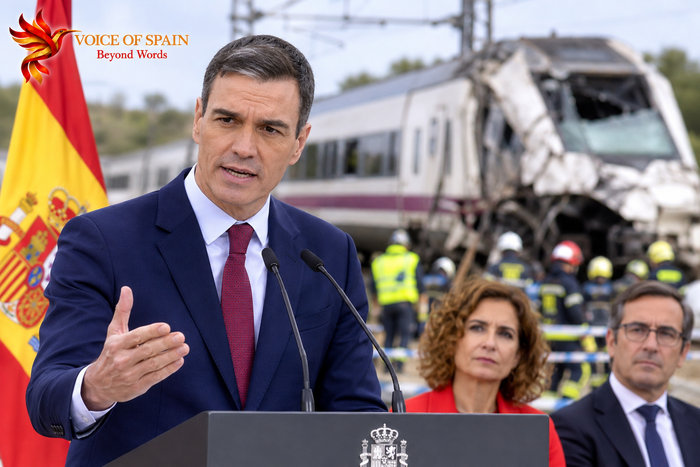
The support package was announced by Sánchez on 2 November during his address at the World in Progress Barcelona 2026 forum. He said the government would approve a Royal Decree establishing a framework of assistance based on the system previously introduced for victims of the Adamuz railway accident. The proposed measures cover financial compensation, advance payments, improved temporary incapacity support and dedicated assistance offices for victims and their relatives.
One of the central elements is a compensation scheme that will double the amounts provided under the compulsory passenger insurance framework. The government has also proposed a specific mechanism for advancing compensation payments so that families do not have to wait until lengthy legal and insurance procedures are completed before receiving financial assistance. According to reporting by Cadena SER, families of those who died could receive up to €216,000 through the combination of direct state aid, advances against future civil-liability compensation and compulsory passenger insurance.
The package also addresses the needs of passengers who survived the accident but suffered physical injuries. A specific temporary-incapacity procedure is intended to provide improved coverage for affected people who are unable to work while recovering. The level of financial assistance for injured victims will depend on the seriousness of their injuries and the applicable compensation scale. This approach recognises that the consequences of a major railway accident can continue long after the immediate emergency has ended, affecting employment, household income and access to medical care.
Another important measure is the establishment of comprehensive and personalised assistance offices in government delegations and sub-delegations across the autonomous communities where affected people live. These offices are intended to help victims and families understand the available support, complete documentation, submit applications and navigate the compensation process. By providing assistance closer to people's places of residence, the government aims to reduce administrative difficulties at a time when many families are dealing with grief, injuries and uncertainty.
Sánchez has also promised that the investigation into the accident will be conducted thoroughly and transparently. Independent investigators and the judicial authorities are working to establish what happened and identify the factors that contributed to the tragedy. The Prime Minister said families should receive support not only with immediate practical needs but also in their search for answers. He acknowledged the damage the accident had caused to public confidence in Spain's high-speed rail network and said restoring that confidence was a priority for the government.
The tragedy has placed renewed attention on railway safety, infrastructure maintenance, signalling systems and the procedures followed by railway control centres. While the compensation package is focused on supporting those directly affected, the wider public debate is also centred on preventing similar accidents in the future. Families, passengers and railway workers are awaiting clear findings from the investigation and information about the measures that will follow.
VoS STRATEGIC INSIGHT
The government's response highlights the importance of providing timely assistance after a major public disaster. Financial compensation can help families manage immediate expenses, while advance payments can reduce the uncertainty created by lengthy legal proceedings. However, effective support also depends on accessible information, coordinated medical care, employment protection and sustained attention to the needs of people who may face long-term physical or emotional consequences.
The creation of personalised assistance offices could make the process easier for victims, particularly for families unfamiliar with insurance claims and government procedures. Their effectiveness will depend on how quickly they become operational, how clearly the eligibility rules are explained and whether applications are processed without unnecessary delays. Transparent communication about payment schedules and required documents will also be essential.
Beyond financial assistance, the accident has raised important questions about public confidence in Spain's railway system. Compensation addresses some of the consequences of the tragedy, but restoring confidence will require credible investigation findings, clear accountability where failures are established and practical improvements to railway safety. The experience of the Urda victims and their families will remain central to assessing whether the government's commitments translate into meaningful support.