
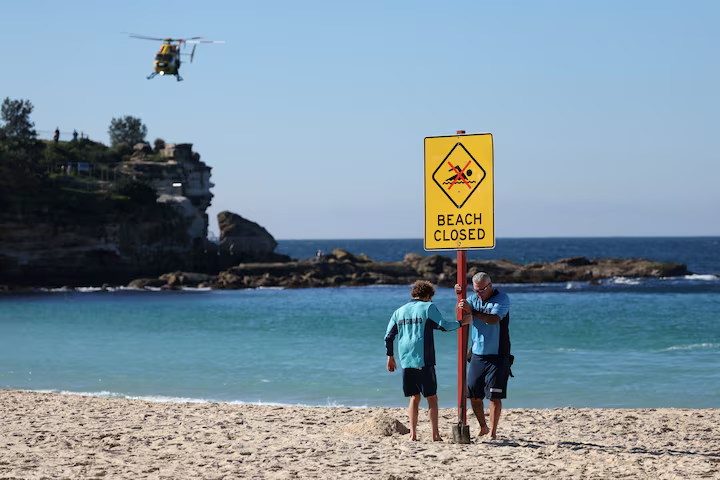
Following a serious shark attack incident at Coogee Beach in Sydney's eastern suburbs that left a 35-year-old woman critically injured, New South Wales authorities have initiated a comprehensive review of existing drone flight restrictions that previously prevented unmanned aerial vehicles from conducting surveillance operations over popular swimming beaches. The attack, which occurred on Saturday morning when the victim was swimming in relatively shallow water, has prompted urgent reconsideration of regulatory frameworks that prioritized privacy concerns over public safety considerations. Regulatory officials now recognize that drone technology could provide valuable real-time surveillance capabilities enabling lifeguards and emergency responders to identify shark presence and provide early warning to swimmers before dangerous encounters occur. The incident has catalyzed broader discussions within the Australian maritime safety community regarding the appropriate balance between privacy protections and public safety imperatives, particularly given the increasing frequency of shark encounters along Australia's coastlines. The woman's critical condition has galvanized public support for regulatory changes that would permit drone surveillance at beaches during peak swimming hours, with community members expressing willingness to accept modest privacy intrusions in exchange for enhanced safety protections.
The regulatory review reflects evolving technological capabilities and changing public attitudes toward surveillance technologies, particularly when such technologies can demonstrably enhance personal safety and reduce risks of serious injury or death. Drone surveillance systems can provide continuous monitoring of beach areas, enabling rapid identification of shark activity and immediate communication with swimmers and beach authorities. The technology has proven effective in other jurisdictions, including South Africa and parts of the United States, where drone surveillance programs have successfully detected sharks and prevented numerous potential attacks through timely warnings. New South Wales authorities are examining international best practices and regulatory models that have successfully implemented drone surveillance while maintaining appropriate privacy protections and establishing clear operational guidelines. The review process will likely involve consultation with privacy advocates, maritime safety experts, technology providers, and community stakeholders to develop balanced regulatory frameworks that maximize safety benefits while minimizing privacy intrusions. Implementation of drone surveillance programs would require investment in equipment, training, and operational infrastructure, but authorities argue that such investments are justified given the severity of shark attack injuries and the psychological impact on beach communities. The incident at Coogee Beach has transformed what was previously a marginal policy discussion into an urgent priority, with political leaders recognizing that public safety concerns now outweigh previous regulatory caution regarding drone operations.







.webp)