
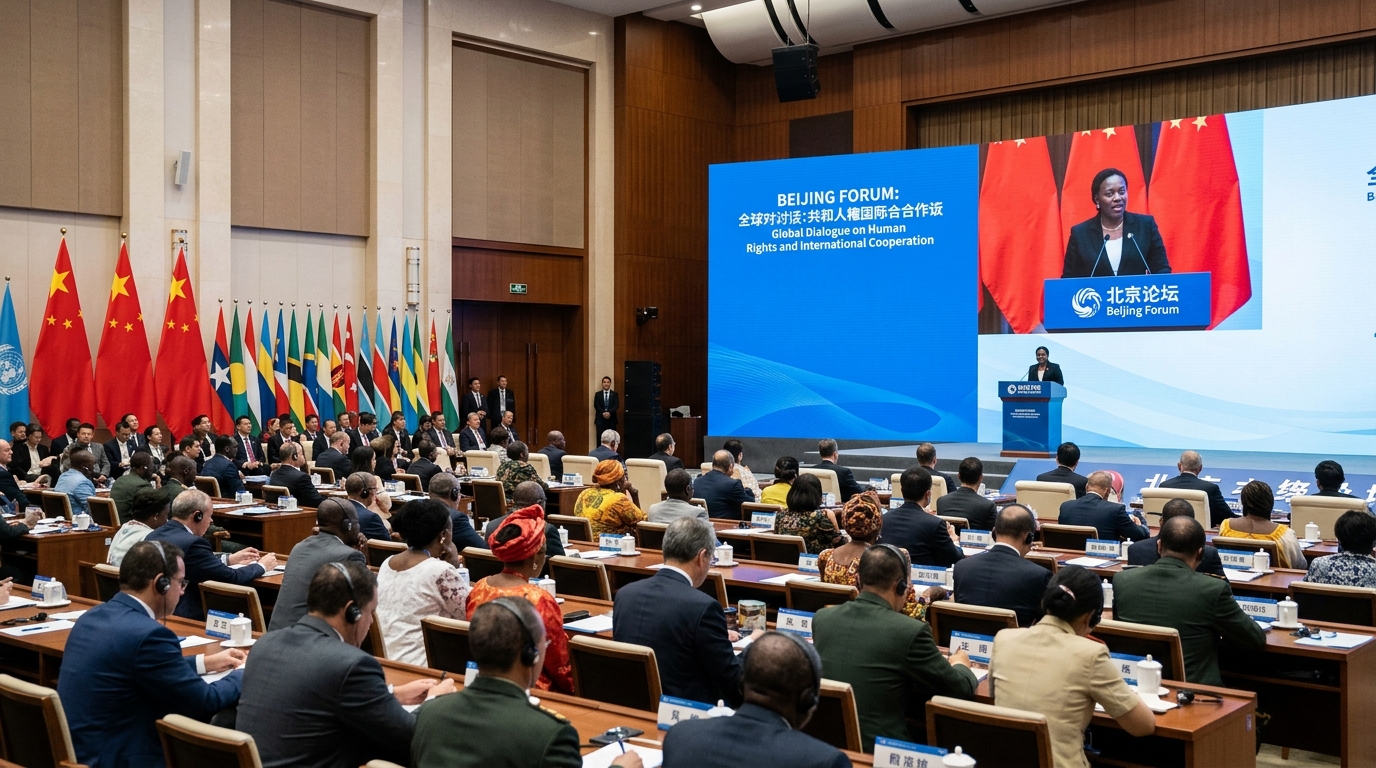
China has hosted the 2026 Forum on Global Human Rights Governance in Beijing on June 11-12, 2026, bringing together more than 400 participants from approximately 100 countries to discuss international approaches to human rights protection and governance. The forum represents China's effort to shape global human rights discourse and present alternative perspectives on human rights concepts and implementation strategies. Participants included government officials, human rights experts, academics, and representatives from international organizations, reflecting the forum's broad international participation. The forum's central theme emphasized "joint development and shared human rights," reflecting China's perspective that economic development and poverty reduction are fundamental human rights that should be prioritized alongside civil and political rights. Chinese officials presented the country's human rights achievements, including poverty alleviation programs, healthcare expansion, and educational improvements. The forum provided a platform for discussing diverse approaches to human rights governance across different cultural, political, and economic contexts.
The 2026 Forum on Global Human Rights Governance reflects China's broader strategy to influence international human rights discourse and challenge Western-centric approaches to human rights advocacy. Chinese officials have argued that development-oriented human rights approaches are more appropriate for developing nations facing poverty and underdevelopment challenges. The forum included discussions of China's human rights practices, with Chinese representatives highlighting achievements in poverty reduction, healthcare access, and educational development. However, international human rights organizations have criticized China's human rights record, citing concerns about religious freedom, ethnic minority rights, and political freedoms. The forum's emphasis on "shared human rights" reflects China's effort to build consensus among developing nations on alternative human rights frameworks that prioritize economic and social rights over civil and political rights. Participants from various nations presented diverse perspectives on human rights governance, reflecting the complexity of implementing universal human rights standards across different political and cultural contexts. The forum concluded with discussions of mechanisms for international cooperation on human rights issues and commitments to ongoing dialogue on human rights governance approaches.




.webp)