
Immigration & Law
 Back to home
.png)
.png)
.png)
.png)
.png)
.png)
.png)
.png)
Trump Administration Overhauls Green Card Process, Requiring Applicants to Return to Home Countries
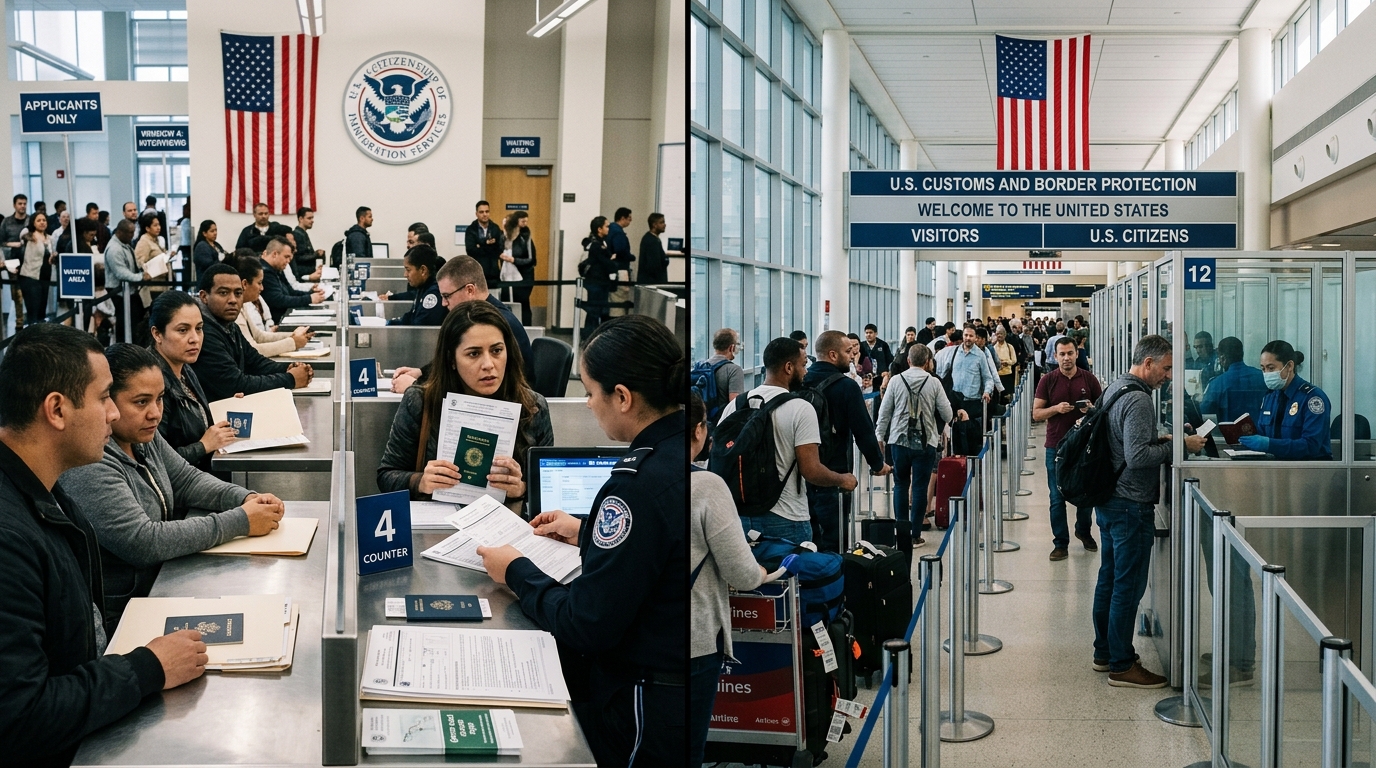
The Trump administration announced a sweeping policy change on May 22, 2026, requiring most foreigners seeking permanent residency in the United States to return to their home countries to apply for green cards through the State Department rather than adjusting status while remaining in America. The U.S. Citizenship and Immigration Services (USCIS) issued a policy memo directing officers to consider relevant factors on a case-by-case basis when determining whether extraordinary relief warranting adjustment of status within the United States is warranted. The Department of Homeland Security stated that "an alien who is in the U.S. temporarily and wants a Green Card must return to their home country to apply," arguing that this policy "allows our immigration system to function as the law intended instead of incentivizing loopholes." The new directive represents the latest in a series of restrictive immigration measures implemented by the Trump administration over the past year, following previous actions including shortened visa durations for students, cultural exchange visitors, and media professionals, as well as the revocation of more than 100,000 visas since Trump took office. USCIS officials claim the policy will free up agency resources to focus on processing other cases and reduce administrative backlogs. However, immigration advocacy organizations have sharply criticized the measure, arguing that it effectively forces survivors of human trafficking, abused and neglected children, and other vulnerable populations to return to dangerous countries they fled in order to process their applications for permanent residency.
The policy change has profound implications for millions of foreign nationals currently in the United States on temporary visas, including students, workers, and humanitarian visa holders. Critics argue that requiring applicants to leave the country during the green card application process creates significant hardship, particularly for individuals fleeing persecution or violence in their home countries. The measure disproportionately affects low-income applicants who lack resources to travel internationally multiple times during the application process. Immigration attorneys have warned that the policy may violate international humanitarian law and existing treaty obligations regarding refugee protection. The American Immigration Lawyers Association and other professional organizations have called for legal challenges to the directive. Humanitarian organizations including HIAS, which provides services to refugees and other vulnerable immigrant populations, have condemned the policy as cruel and counterproductive. The administration argues that the policy change reflects a broader commitment to enforcing immigration law strictly and reducing what it characterizes as abuse of the immigration system. However, the measure has sparked significant controversy within business communities that rely on immigrant workers, with technology companies and other industries warning that restrictive immigration policies may harm economic competitiveness and innovation. The policy is expected to face legal challenges in federal court, with civil rights organizations preparing lawsuits arguing that it violates due process rights and humanitarian obligations.
Enjoyed this article?
Subscribe to get exclusive news and daily updates delivered to your inbox.
Related News
US Resumes Immigrant Visa Processing for Hungary and Poland ...
China Opens Xiangshan Defence Forum as Tensions Rise Across ...
Saudi Oil Pipeline Damage Raises Fresh Global Supply Fears a...
Philippine Ferry Disaster Death Toll Rises to 76 as Dozens o...
Sweden Votes in Knife-Edge Election as Far Right Eyes Histor...
Elena Rybakina Wins First US Open Title and Rises to World N...
Houthis Tighten Grip on Red Sea Shipping Corridor as Yemen O...